6 mins read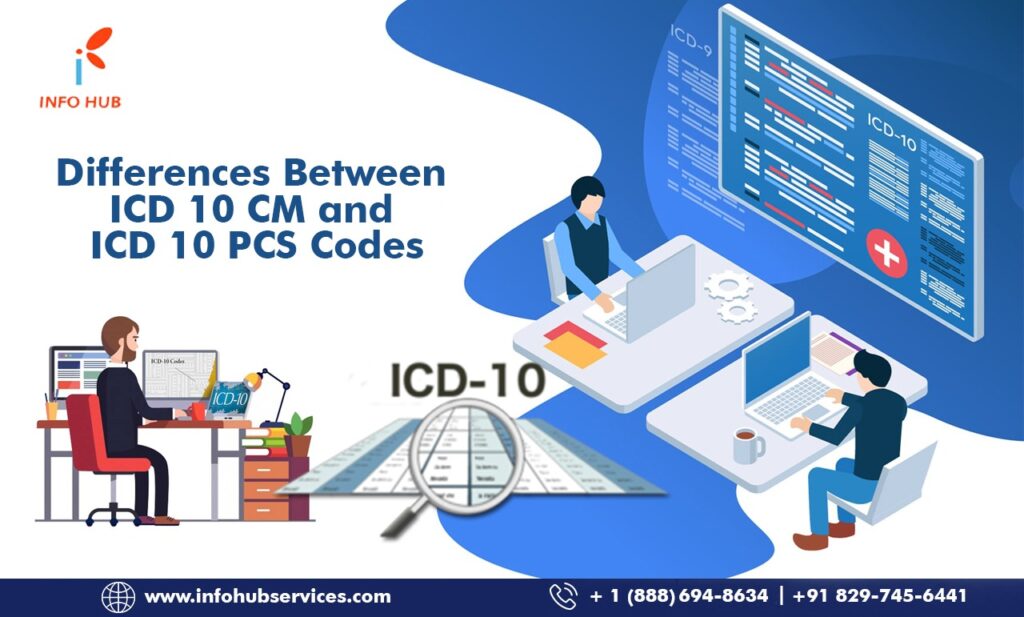
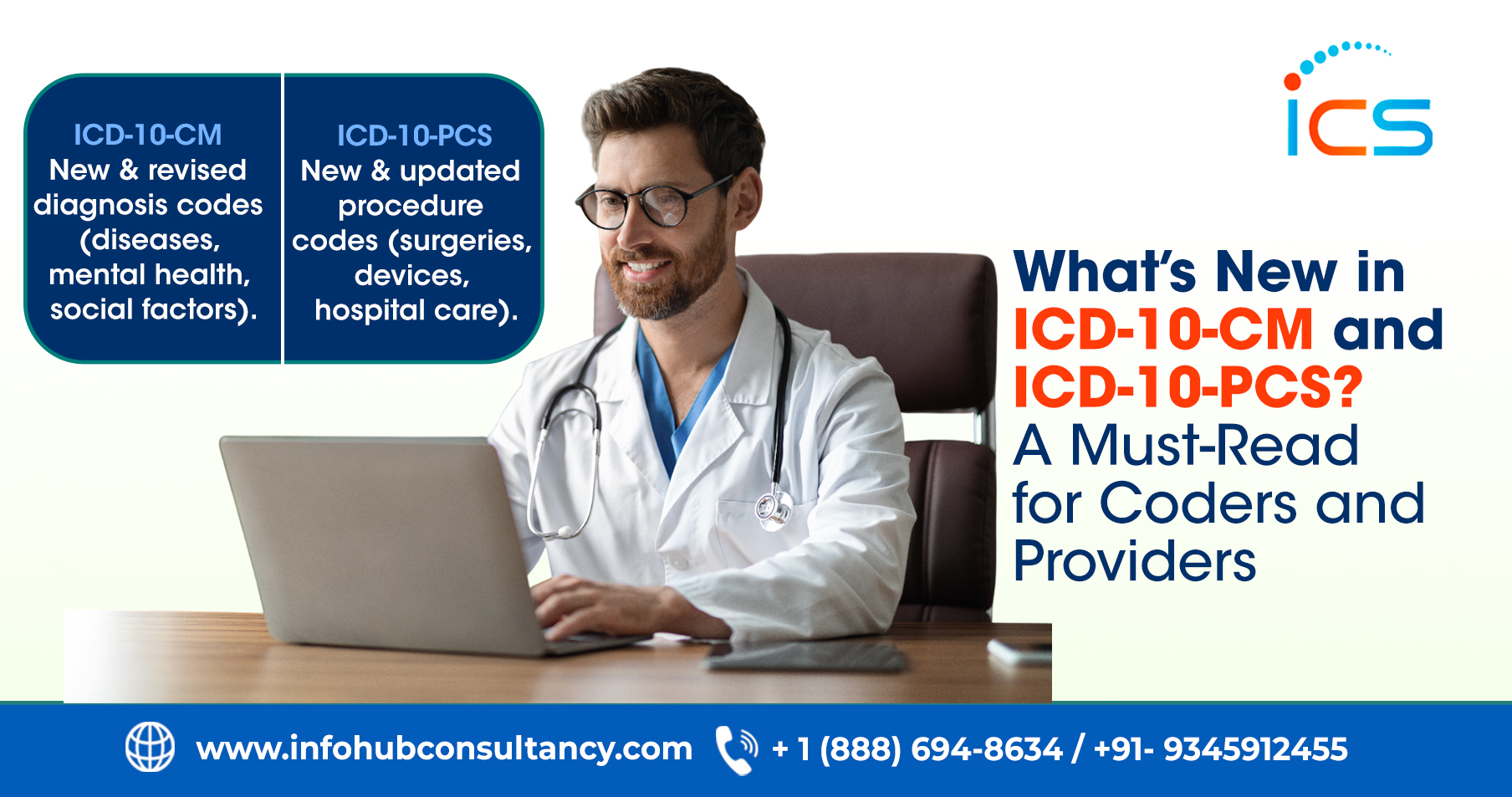
ICD-10-CM and ICD-10-PCS are not interchangeable. ICD-10-CM reports diagnoses and reasons for encounters across US healthcare settings. ICD-10-PCS reports procedures performed during inpatient hospital stays. A claim may require both code sets, but each answers a different question: why did the patient receive care? and what inpatient procedure was performed?
This guide explains the difference between ICD-10-CM and ICD-10-PCS, when each system applies, how their formats differ, and which coding errors commonly delay or deny US claims.
InfoHub Consultancy supports medical billing, coding, and revenue-cycle workflows for U.S. healthcare providers. Discuss your needs and proposed scope with our team.
Get a Free Consultation →ICD-10-CM vs ICD-10-PCS at a Glance
| Comparison | ICD-10-CM | ICD-10-PCS |
|---|---|---|
| Primary purpose | Diagnoses, conditions, injuries and reasons for visits | Procedures performed during inpatient hospital stays |
| Where it is used | All US healthcare settings | US inpatient hospital facility reporting |
| Maintained by | CDC’s National Center for Health Statistics, with official guidance from the Cooperating Parties | Centers for Medicare & Medicaid Services |
| Code structure | Three to seven characters; applicable seventh characters and placeholders must be reported | Seven characters; each character represents an aspect of the procedure |
| What it does not replace | Does not replace CPT or HCPCS procedure reporting | Does not replace CPT/HCPCS on professional or outpatient claims |
| Typical users | Physician practices, outpatient departments, hospitals and other providers | Inpatient facility coding teams |
Scroll left or right to read all columns.
What Is ICD-10-CM?
ICD-10-CM stands for the International Classification of Diseases, Tenth Revision, Clinical Modification. It is the US diagnosis classification used to report diseases, injuries, symptoms, conditions and reasons for encounters. The CDC’s National Center for Health Statistics maintains ICD-10-CM, while CMS and NCHS publish official coding guidance with the other Cooperating Parties.
ICD-10-CM applies across healthcare settings. Physician offices use it to support medical necessity on professional claims. Outpatient departments use it with CPT or HCPCS procedure codes. Inpatient hospitals also use ICD-10-CM to report the principal diagnosis and applicable secondary diagnoses.
ICD-10-CM format
- Codes contain three to seven characters.
- The first character is a letter; later characters may be letters or numbers.
- A decimal follows the third character when additional characters are present.
- The placeholder “X” and an applicable seventh character are required when instructed by the Tabular List.
- Only a complete, valid code—not a category heading—should be reported on a claim.
What Is ICD-10-PCS?
ICD-10-PCS stands for the International Classification of Diseases, Tenth Revision, Procedure Coding System. CMS develops and maintains it for procedures performed in US inpatient hospital settings. It is designed for facility reporting and does not describe diagnoses.
Every ICD-10-PCS code contains seven characters. Depending on the section, those characters describe elements such as the section, body system, root operation, body part, approach, device and qualifier. Coders build the code from the documented procedure rather than selecting a code solely from the wording of a procedure name.
When Should You Use CM, PCS, CPT or HCPCS?
| Claim scenario | Diagnosis reporting | Procedure or service reporting |
|---|---|---|
| Physician office visit | ICD-10-CM | CPT/HCPCS |
| Hospital outpatient service | ICD-10-CM | CPT/HCPCS |
| Emergency department visit | ICD-10-CM | CPT/HCPCS for outpatient facility/professional reporting |
| Inpatient hospital stay | ICD-10-CM | ICD-10-PCS for inpatient facility procedures; professional services still follow the applicable CPT/HCPCS rules |
Scroll left or right to read all columns.
The setting is decisive. A procedure performed after a patient is formally admitted as an inpatient may require ICD-10-PCS on the facility claim. A similar procedure performed as outpatient care is generally reported with CPT or HCPCS instead. Admission status, documentation and payer rules must be confirmed before code selection.
2026 ICD-10 Effective-Date Rules
For services and discharges from April 1 through September 30, 2026, use the applicable April 1, 2026 ICD-10-CM and ICD-10-PCS files. FY 2027 files take effect on October 1, 2026. Coding teams should validate the code set against the encounter or discharge date rather than relying on the date the claim is prepared.
- CMS ICD-10 code files and official resources
- CDC ICD-10-CM files and release dates
- FY 2026 ICD-10-CM official guidelines, April update
- 2026 ICD-10-PCS official guidelines
Common ICD-10-CM and ICD-10-PCS Claim Errors
Using ICD-10-PCS for an outpatient procedure
PCS is limited to inpatient hospital procedure reporting. Outpatient and professional claims generally require CPT or HCPCS for the service, paired with ICD-10-CM diagnoses.
Selecting a PCS code from the procedure name alone
The operative report must support the correct root operation, body part, approach, device and qualifier. Similar procedure names can produce different PCS codes when the documented objective or approach differs.
Reporting an incomplete ICD-10-CM code
A category or subcategory is not reportable when a more complete code is required. Missing placeholder characters, laterality or an applicable seventh character can make a diagnosis code invalid.
Using the wrong fiscal-year release
October and April updates can change valid codes, descriptors and instructions. Claims should be validated against the code set effective for the date of service or inpatient discharge.
Allowing diagnosis and procedure documentation to conflict
The diagnoses, operative note and procedure code must tell a consistent clinical story. Queries should be compliant and used to clarify incomplete or conflicting documentation—not to direct a particular reimbursement result.
Pre-Submission Coding Checklist
- Confirm inpatient, outpatient or professional billing context.
- Use the code set effective for the service or discharge date.
- Validate the complete ICD-10-CM code in the Alphabetic Index and Tabular List.
- For inpatient procedures, derive the PCS characters from the operative documentation and official tables.
- Confirm principal diagnosis, additional diagnoses and principal procedure sequencing under the applicable official guidelines.
- Check payer edits, medical-necessity rules and claim-specific requirements.
- Resolve documentation gaps before claim submission.
Medical Coding Support for US Providers
ICS supports US healthcare providers with diagnosis and procedure coding workflows, documentation review, coding quality checks and denial feedback. Scope, systems access, specialties, audit samples and approval responsibilities are defined before production begins.
ICD-10-CM vs ICD-10-PCS FAQs
Is ICD-10-CM used for inpatient claims?
Yes. Inpatient hospital claims use ICD-10-CM for diagnoses. ICD-10-PCS is additionally used for reportable inpatient facility procedures.
Is ICD-10-PCS used in physician offices?
No. Physician and outpatient services generally use CPT or HCPCS for procedures and services, with ICD-10-CM supporting diagnoses and medical necessity.
How many characters are in an ICD-10-PCS code?
Every valid ICD-10-PCS code contains seven characters.
Can ICD-10-CM describe procedures?
ICD-10-CM is a diagnosis classification. Procedures are reported with ICD-10-PCS for inpatient facility reporting or CPT/HCPCS in applicable outpatient and professional settings.
Who maintains ICD-10-CM and ICD-10-PCS?
The CDC’s National Center for Health Statistics maintains ICD-10-CM in the United States. CMS develops and maintains ICD-10-PCS.
Need support with medical coding?
ICS provides medical coding services for US healthcare organizations through an India-based delivery team, with the current code sets and payer guidance applied for the date of service.