Revenue Cycle Management
  Medical Billing Services
  Medical Coding Services
  Specialty Medical Billing
 Healthcare Medical Billing
  Healthcare Medical Coding
  Insurance Verification
  Prior Authorization
  Appointment Scheduling
  Charge Entry
  Charge Review & Auditing
  Claims Submission
  Denials Management
  AR Follow-Up
  Payment Posting
  Patient Statements
  Reporting & Analytics
  Credentialing & Enrollment
  Compliance & Audit Readiness
  Clearing House & EDI Management
  Healthcare BPO
  Healthcare Back Office
  Full-Time Equivalent (FTE) Model
Medical billing is where clinical work becomes collected revenue. If a claim is delayed, denied, or underpaid, the impact shows up quickly in cash flow, staffing pressure, and patient billing issues.
InfoHub Consultancy Services is an India-based offshore medical billing company supporting USA healthcare providers including hospitals, clinics, physicians, doctors, practitioners, and specialty practices. We help organizations outsource medical billing to India so they can reduce denials, improve collections, and strengthen the full RCM cycle in medical billing without building a larger in-house billing department.
We support providers across the United States, including high-volume markets such as California, Texas, Florida, New York, Illinois, Georgia, Arizona, Washington, New Jersey, and Pennsylvania, while operating from India (Coimbatore and Chennai).
For a solo provider or a small clinic, billing work often competes with scheduling, patient calls and daily administration. ICS provides India-based billing support for US practices. Start by defining which tasks your team needs help with, who will retain responsibility for each step, and how progress will be reported.
Review eligibility checks, claim preparation and submission, payment posting, unpaid claims and denial follow-up. Identify the queues that need support and the tasks your practice will continue to handle. Your specialty, payer mix, claim volume and existing billing system help determine the appropriate scope.
Prepare a summary of your specialty, provider count, payer mix, billing system and outstanding claims. Agree on system access, a point of contact, escalation steps and the handover plan. Define the reporting you need, such as submitted claims, rejections, unresolved denials, collections and accounts-receivable aging.
Explore our specialty billing services for your clinical area, or request a billing consultation to discuss your small practice’s billing requirements. Please do not include patient information in the enquiry form.
Medical billing is the administrative process of translating healthcare services into claims and ensuring reimbursement from insurance payers and patients. It includes patient information validation, coding alignment, claim submission, follow-ups, denial resolution, payment posting, and reporting.
 Medical coding converts clinical documentation into CPT, ICD-10, and HCPCS codes.Medical billing uses those codes to submit claims, track payments, resolve denials, and close revenue gaps.
Both functions must work together for clean claims and faster reimbursements.


Many providers ask, “what is RCM in medical billing?” Medical billing is a key part of revenue cycle management, but RCM covers the full journey from patient access through final payment and analytics. When billing teams integrate with RCM workflows, denial rates drop and cash flow improves.
Even strong clinical teams can face revenue loss due to billing friction:

Eligibility mistakes

Missing authorizations

Documentation gaps

Incorrect modifiers

Payer-specific rules

Delayed AR follow-ups

Underpayment and denial trends
First-pass claim acceptanceFewer denialsFaster AR turnoverCleaner patient statementsBetter reporting and revenue visibility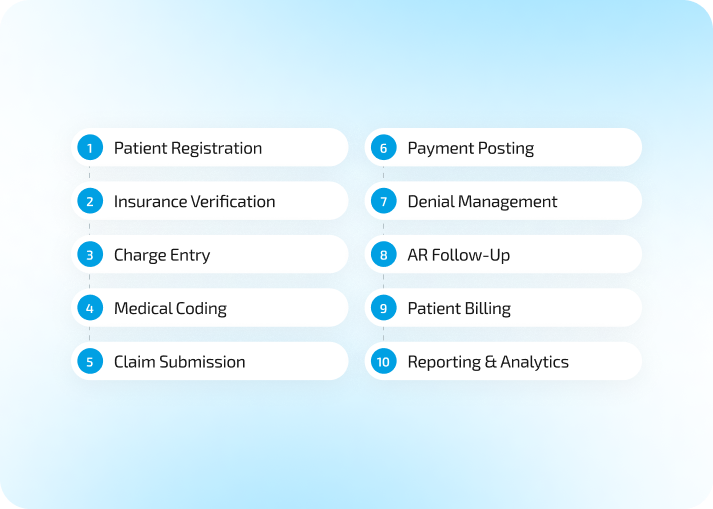

Many providers ask, “what is RCM in medical billing?” Medical billing is a key part of revenue cycle management, but RCM covers the full journey from patient access through final payment and analytics. When billing teams integrate with RCM workflows, denial rates drop and cash flow improves.
Common reasons providers outsource medical billing include:
staffing shortages and turnoverrising payroll costsinconsistent follow-upsdenial backlogslimited reporting visibilityWe are an offshore medical billing company in India serving the US healthcare market. Our delivery model focuses on:
Common reasons providers outsource medical billing include:
workflow SOPsrole-based teamsmeasurable KPIstimely communicationsecure handling of PHI through client-approved systems
We provide full-cycle medical billing support that aligns with the payer rules and operational needs of US providers.
Patient demographic verificationInsurance eligibility and benefits verificationAuthorization checks as part of the billing workflowClean intake and documentation readinessWe support clean claims by coordinating coding accuracy and charge integrity:
coding support collaborationmodifier checks and code validationcharge review and auditing workflowsclaim scrubbing readiness (payer edit checks)coding support collaborationmodifier checks and code validationcharge review and auditing workflowsclaim scrubbing readiness (payer edit checks)AR follow-ups and denial control are where collections improve the most:
structured AR follow-up cadencedenial management and appeals supportroot-cause denial analysis to prevent repeatstracking by payer and denial categorypayment posting support when included in workflowreconciliation assistance (EOB/ERA alignment)revenue cycle reporting and analyticsperformance dashboards and trend reportsDifferent specialties have different coding patterns, payer requirements, and denial risks. We support multi-specialty billing workflows, including:

dermatology medical billing

orthopedic medical billing

radiology medical billing

psychiatry and behavioral health medical billing

solo and small practices
multi-specialty clinics
hospitals and health systems
urgent care centers
home health and hospice providers
ambulatory and specialty groups
Hospitals and multi-location provider groups can also review our healthcare billing operations model for automation, reporting and shared-service workflows.
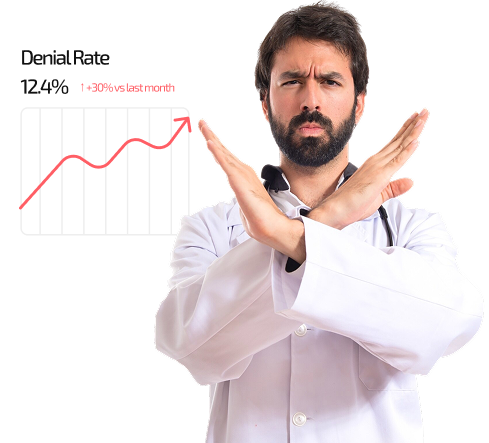
Denials in medical billing are often predictable. The fix is not only appealing denials, but correcting the upstream causes.
eligibility and benefits not verifiedauthorization missing or expiredcoding mismatch with documentationmodifier misusetimely filing issuesdemographic errorspayer policy changes
We reduce repeat denials through:
denial categorization and trackingtrend analysis by payer and CPT categorycorrections at front-end and mid-cycle stepsAR follow-up disciplineUS billing is complex because payers differ by region, contract terms vary, and claim edits change frequently. That’s why providers need a billing partner that follows strict process discipline and adapts quickly.
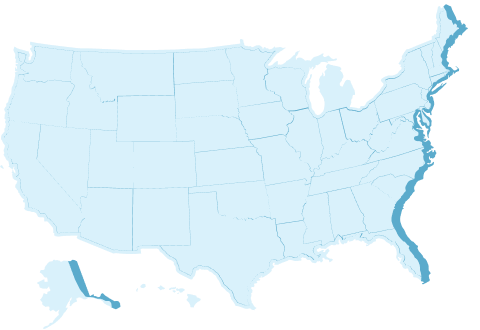
We support healthcare organizations across the US, including (not limited to):
California (Los Angeles, San Diego, San Jose)Texas (Houston, Dallas, Austin)Florida (Miami, Orlando, Tampa)New York (NYC and surrounding areas)Illinois (Chicago region)Georgia (Atlanta region)Arizona (Phoenix region)Washington (Seattle region)New Jersey and Pennsylvania marketsWe mention cities to help patients and providers understand coverage, but our delivery is built for nationwide support.
Healthcare billing changes continuously due to payer rule updates, code updates, and evolving reimbursement models. Providers ask about “latest updates” because small changes can cause major denial spikes. We work inside your existing EHR or practice-management system rather than asking you to move to ours.
We support stability by focusing on:
 payer-specific rules and claim editsconsistent documentation and coding alignmentreporting-driven process adjustmentsdenial trend tracking and prevention
Automation helps with speed and visibility, but billing still requires trained teams for:
exceptions and rejectionsdenial appealsunderpayment resolutionpayer communications and documentationWe are an India-based medical billing partner built to serve the US market with consistent delivery and reporting.
From small practices to multi-location groups, offshore staffing helps scale without operational disruption.
We focus on measurable outcomes and structured workflows, not generic “billing promises.”
If you want fewer denials, cleaner claims, faster reimbursements, and better reporting visibility, we can support your billing operations from India to the USA.
Review these focused guides for common coding, payer and reimbursement questions that affect claim quality and collections.
US market support
Our national medical billing service is the main owner for broad US requirements. State guides are published only after we add materially useful payer, enrollment and workflow information; we do not create duplicate city doorway pages.
Need coding, full RCM or staffing in addition to billing? Compare the connected options in our medical billing and RCM company overview.
What is medical billing?
Medical billing is the process of submitting claims, following up on payments, resolving denials, and reconciling reimbursement for healthcare services.
What is medical billing and coding?
Coding converts documentation into codes; billing uses those codes to submit claims and collect payments.
What is the difference between medical billing and coding?
Coding is code assignment; billing is claim submission, follow-up, denial resolution, payment posting, and reporting.
What is RCM in medical billing?
RCM is the full revenue cycle, and medical billing is a core part of it.
What is the RCM cycle in medical billing?
It includes eligibility, coding readiness, claims submission, AR follow-ups, denial management, payment posting, and reporting.
Why do providers outsource medical billing?
To reduce costs, stabilize staffing, improve denial performance, and speed up collections.
What is offshore medical billing?
Offshore medical billing is billing support delivered from outside the USA, commonly from India, using secure workflows and defined KPIs.
Are outsourced medical billing services suitable for small practices?
Yes. Small practices often benefit from consistent follow-up and cost-effective staffing.
What are common denials in medical billing?
Eligibility errors, missing authorizations, coding issues, modifier errors, timely filing, and payer policy mismatches.
What is denial management in medical billing?
The process of analyzing denials, correcting claims, appealing when appropriate, and preventing repeat denials.
Do you handle medical billing for hospitals?
Yes. Hospitals often need structured support for claims, AR backlogs, denial trends, and reporting.
Do you provide medical billing in California, Texas, and Florida?
Yes. We support providers nationwide, including major states like California, Texas, Florida, New York, and Illinois.
Do you support specialty medical billing?
Yes, including cardiology, orthopedics, dermatology, radiology, ophthalmology, gastroenterology, oncology, and more.
What is a medical billing clearinghouse?
A clearinghouse is an intermediary that checks claims for formatting and edits before sending them to payers.
What is an ERA and EOB in medical billing?
ERA is an electronic remittance advice; EOB is an explanation of benefits showing payment details and adjustments.
What is COB in medical billing?
COB is coordination of benefits, used when a patient has multiple insurance plans.
What is ABN in medical billing?
An ABN (Advance Beneficiary Notice) is a form used when Medicare may not cover a service.
How does billing automation help?
Automation reduces manual work, but expert teams still handle denials, exceptions, and payer follow-ups.
How soon can we see improvements after outsourcing billing?
Many providers see improvements in AR and denials within 60–90 days, depending on starting performance.
How do you measure billing performance?
Through denial rates, AR aging, clean claim rate, turnaround times, and reporting visibility.
Tell us which medical billing or RCM workflow needs support.
Build a dedicated offshore team or align billing fees with collections.

“ Partnering with ICS transformed our revenue cycle. Claim approvals are faster, denials have dropped significantly, and we finally have clear visibility into our billing performance. ”
Founder, Sunrise Family Clinic

“ The ICS team is knowledgeable, responsive, and deeply committed to helping our practice grow. Their customized dashboard gives us real-time insights we never had before. ”
Orthopedic Surgeon, CareAxis Hospital
“ We were drowning in paperwork and delays before ICS stepped in. Their team streamlined everything, from eligibility checks to patient billing, and gave us time to focus on care. ”
Practice Manager, Lotus Women's Health Center
“ ICS is more than a billing service—they’re a strategic partner. Their compliance-first approach gives us confidence, and their results speak for themselves. ”
Pulmonologist, Airway Specialty Clinic
“ With ICS, we saw a 35% increase in collections within the first quarter. Their billing accuracy and follow-up on aging claims are unmatched. ”
Dermatologist, ClearSkin Clinic