Why claim denials are increasing
Review documentation, authorization, payer-edit and follow-up gaps that can increase denial volume.



Denied and rejected claims create follow-up work across billing, coding, authorization and front-office teams. A useful denial program separates payer adjudication issues from submission rejections, records the root cause and assigns the next action before the filing or appeal deadline.
InfoHub Consultancy Services provides India-based denial management support for US healthcare organizations. The agreed scope can include denial intake, categorization, corrected-claim or appeal preparation, payer follow-up, escalation and root-cause reporting inside client-approved systems.
Before transition, the organization and ICS define payer queues, denial categories, documentation access, authorization limits, filing deadlines, escalation contacts, quality review and reporting fields.
Our denial management services connect root-cause correction, appeals and prevention with AR follow-up services. Teams that prefer to operate the workflow internally can use our denial management software.
A denial in medical billing occurs when an insurance payer refuses to pay a claim either partially or fully. Denials can happen at different stages of the revenue cycle and often repeat if the root cause is not fixed.
 Rejection: Claim is rejected before processing due to format or data errorsDenial: Claim is processed but payment is refused due to payer rules
Understanding the difference between rejection and denial in medical billing is critical for correct follow-up action.
 cash flowAR daysstaff workloadpayer performance metricsaudit risk
A structured denial management workflow in RCM connects correction and appeal activity with feedback to the upstream owner.

Effective revenue cycle denial management focuses on:
early identification of denial patternscorrective action at front-end and mid-cyclecorrected-claim and appeal routingfeedback to eligibility, authorization, coding and billing teamsA denial inventory should distinguish categories, payer reason codes, claim context and required next action.

Eligibility denials

Authorization denial codes

Medical necessity denials

Bundled denial codes

Duplicate claim denials

Global period denials

Non-covered service denials

Timely filing denials

COB (coordination of benefits) denials

A workable denial record should capture:
denial category and payer reason codeclaim, adjustment and remark-code contextassigned owner, deadline and next actionThe agreed workflow preserves these fields so each denial can be routed, followed and audited.
Denial prevention workflow
A denial root-cause analysis should connect the payer response to the failed workflow step, the responsible owner and a corrective action that can be checked later.
Capture the claim identifier, payer, service line, billed and allowed amounts, adjustment group, CARC, RARC, filing or appeal deadline, and the supporting record available to the team.
Separate eligibility, authorization, documentation, coding, charge entry, claim-format, timely-filing, contractual and payment-posting causes. Do not treat the payer reason code alone as the operational root cause.
Record the correction, appeal or escalation owner and due date. Feed confirmed causes to the upstream team, then compare later denial patterns to verify whether the corrective action changed the result.
Reference context: X12 maintains the official Claim Adjustment Reason Codes and Remittance Advice Remark Codes. Payer guidance and the organization’s approved workflow determine the final action.
missing informationminor coding errorsdemographic issuesThese issues may be correctable when the required information is available. Payment still depends on coverage, documentation, payer rules and the applicable deadline; prompt correction does not guarantee reimbursement.
 authorization expirednon-covered servicesmedical necessity issuestimely filing exceeded
Hard denials require deeper analysis and workflow correction.
Our medical billing denial management process follows a structured approach:
 analyze EOB/ERA dataidentify denial codes and payer remarksclassify denial type
 front-end eligibility gapscoding and documentation issuesauthorization failurespayer policy conflicts
 claim correction and resubmissionappeal documentation preparationinternal workflow fixes
 denial trend reportingpayer-specific rules mappingfront-end and mid-cycle corrections
Hospitals face high-volume denials due to:
complex billing structuresmultiple departmentsbundled and global period rulesICS can support assigned hospital denial queues, documentation follow-up and escalation within the confirmed operating scope.
Physician practices benefit from:
defined work queues and follow-up cadenceroot-cause feedback to the responsible teamdocumented payer response and next-action tracking
We handle denial management across multiple specialties, including:
behavioral health denial managementdermatology and cosmetic billing denialscardiology denial managementorthopedic billing denialsradiology and oncology denialspediatric and urgent care denialsEach specialty has unique denial patterns that require targeted handling.

Healthcare organizations may outsource denial management to:
reduce internal workloadadd capacity to denied and aged work queuesalign staffing with confirmed scope and volumeensure consistent follow-ups
As an offshore denial management services provider, we deliver:
dedicated denial analystspayer-specific expertisestructured escalation workflowsmeasurable performance trackingThis India-based model adds defined queue ownership and operating capacity without requiring the same work to be added to the internal team.
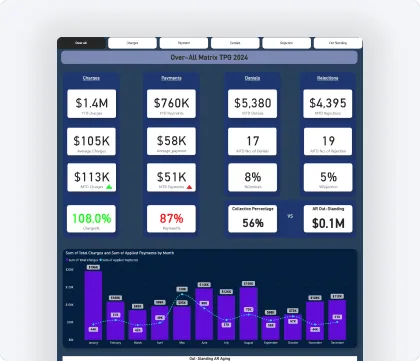
We monitor:
denial rate percentagedenial agingrecovery success ratepayer-wise denial trendsReports can help operating teams:
identify denial concentrations and unresolved balancesprioritize high-impact denialsroute recurring causes to the responsible upstream owner
proactive eligibility verification

authorization tracking

coding validation

timely AR follow-ups

denial trend analysis

workflow optimization
This approach connects current denial work with documented feedback for eligibility, authorization, coding, charge entry and claim-submission teams.
 India-based offshore denial specialistsUSA healthcare billing expertisestructured RCM denial workflowsscalable support modeltransparent reporting
Denial management resources
Use these practical guides to review denial trends, appeal preparation and preventable claim rejections before scoping managed support.
Review documentation, authorization, payer-edit and follow-up gaps that can increase denial volume.
Map evidence, payer requirements, ownership and deadlines before an appeal enters the queue.
Connect recurring rejection categories with upstream eligibility, coding and claim-submission controls.
Build a dedicated offshore billing team for predictable capacity, or align fees with collections through a percentage-based model. Compare both options before choosing the structure that fits your organization.
Explore dedicated FTE medical billing teams | Explore percentage-based medical billing | Discuss your requirements with ICS
What is included in denial management services?
A defined scope can include denial intake, payer reason-code review, categorization, documentation requests, corrected-claim or appeal preparation, payer follow-up, escalation, status tracking and root-cause reporting.
How does an India-based denial management team work with US staff?
ICS documents payer queues, system access, work hours, deadlines, approval limits, escalation contacts, quality review and reporting responsibilities before production. The client retains the decisions and approvals assigned to its team.
How are claim rejections separated from denials?
Rejections generally occur before payer adjudication and are routed for data or submission correction. Denials follow adjudication and may require correction, documentation, appeal or other payer-specific action.
Can ICS prepare corrected claims and appeals?
Yes, when included in scope and when the required records, payer guidance and client authorization are available. Items outside the approved rules are escalated rather than submitted automatically.
How are filing and appeal deadlines controlled?
The operating plan defines the source of deadline data, work-queue priority, aging rules, documentation dependencies and escalation timing. Deadline handling depends on the payer information and system data available to the team.
What denial reports can be provided?
Reporting can include denial category, payer, reason and remark codes, aging, assigned owner, action taken, unresolved documentation, corrected-claim or appeal status and recurring root causes. Final fields are agreed with the client.
Can ICS work in our current billing or practice-management system?
Yes, when the system, user roles, security requirements and workflow are approved by the client and confirmed during onboarding.
What information is needed to evaluate a transition?
Useful inputs include denial inventory by payer and category, aging, filing deadlines, appeal volume, current ownership, documentation sources, system access, escalation paths, reporting needs and target transition timing.
Tell us which medical billing or RCM workflow needs support.
Build a dedicated offshore team or align billing fees with collections.

“ Partnering with ICS transformed our revenue cycle. Claim approvals are faster, denials have dropped significantly, and we finally have clear visibility into our billing performance. ”
Founder, Sunrise Family Clinic

“ The ICS team is knowledgeable, responsive, and deeply committed to helping our practice grow. Their customized dashboard gives us real-time insights we never had before. ”
Orthopedic Surgeon, CareAxis Hospital
“ We were drowning in paperwork and delays before ICS stepped in. Their team streamlined everything, from eligibility checks to patient billing, and gave us time to focus on care. ”
Practice Manager, Lotus Women's Health Center
“ ICS is more than a billing service—they’re a strategic partner. Their compliance-first approach gives us confidence, and their results speak for themselves. ”
Pulmonologist, Airway Specialty Clinic
“ With ICS, we saw a 35% increase in collections within the first quarter. Their billing accuracy and follow-up on aging claims are unmatched. ”
Dermatologist, ClearSkin Clinic