
Medical claims submission connects coded encounters with clearinghouse and payer workflows. Missing data, formatting errors and unresolved front-end rejections can delay adjudication and create avoidable rework. ICS provides India-based claims submission support for US healthcare organizations within agreed systems, payer rules and escalation procedures.
The workflow can cover claim creation, required-field validation, batch control, clearinghouse acknowledgments, front-end rejection correction and resubmission tracking. Scope, access, turnaround expectations and reporting responsibilities are defined before production begins.
The claims filing procedure serves as a financial link between healthcare providers and insurance companies. When completed correctly, claims are rapidly evaluated and refunded. When done incorrectly, the consequences include delayed payments, increased administrative burden, and possible compliance violations.
A well-structured claims filing procedure requires:

Obtain accurate patient, provider, and service data.

Follow the payer-specific formatting and coding standards.

Include all needed documents.

Avoid duplicates, omissions, and mismatches.

ICS works in client-approved billing, EHR, practice-management and clearinghouse environments. A defined access model helps the team:
 Use agreed data sources and validation steps.Submit approved claims through your existing workflow.Record acknowledgments, rejections and correction ownership.
Compatibility is confirmed during discovery using the client’s current system, clearinghouse connection, user roles and security requirements.
Select the claims-submission functions that fit your current team, payer mix and operating model.
Select the claims-submission functions that fit your current team, payer mix and operating model.

End-to-end encryption and compliance with HIPAA standards protect your data during the claims process.
Track each claim from creation to adjudication. We promptly follow up on any delays or errors.
Payer-ready validation helps reduce avoidable resubmissions and appeals.
From radiology and cardiology to urgent care and mental health, we customize the claims procedure for your specialty.
Track submission batches, clearinghouse acknowledgments, front-end rejection reasons, correction ownership and resubmission status through defined claim-submission views.
ICS can work within client-approved billing, EHR and clearinghouse systems when access, roles, security controls and workflow responsibilities are defined during onboarding.
Documented procedures can be updated for applicable payer guidance, coding changes and client-approved compliance requirements.


The claims-submission workflow combines configured system checks with documented human review. The exact steps depend on the client system, clearinghouse and agreed scope:
Before submission, the team reviews the agreed claim fields and exceptions, which may include:
Eligibility verification Validate provider credentials Code auditing (ICD-10, CPT, and HCPCS) Cross-checking payer-specific regulations Review the completeness of the documentationConfigured validation and scrubbing rules may identify:
Modifier mismatches Inconsistencies between diagnosis and procedure Frequency limit breaches Missing NPI/taxonomy codesFlagged claims are routed for correction or client clarification before submission according to the agreed responsibility matrix.
Claims are transmitted through the client-approved clearinghouse and security workflow. Depending on available system functions, the team can:
Monitor available claim and acknowledgment status Review front-end edits before payer adjudication Capture payer and clearinghouse responses for assigned follow-upSubmission routing and required fields are aligned with applicable payer categories, including:
Medicare/Medicaid Commercial Insurance Providers Managed Care Organizations Workers’ compensation and vehicle insurance companiesEvery claim is directed to the appropriate payer format and channel.
Claims can be prepared in the electronic transaction format supported by the client workflow, commonly the ANSI 837. Required data is sourced from the approved billing, EHR or practice-management system and reviewed against agreed validation rules.
Submission cadence is agreed during onboarding and may use scheduled batches or available transaction-level workflows. Priority exceptions and clearinghouse responses follow defined ownership and escalation rules.

Speak to our Experts on
India-based medical billing support for US healthcare organizations.
Select the claims-submission functions that fit your current team, payer mix and operating model.
End-to-end encryption and compliance with HIPAA standards protect your data during the claims process.

Track each claim from creation to adjudication. We promptly follow up on any delays or errors.
Payer-ready validation helps reduce avoidable resubmissions and appeals.
From radiology and cardiology to urgent care and mental health, we customize the claims procedure for your specialty.
Track submission batches, clearinghouse acknowledgments, front-end rejection reasons, correction ownership and resubmission status through defined claim-submission views.
ICS can work within client-approved billing, EHR and clearinghouse systems when access, roles, security controls and workflow responsibilities are defined during onboarding.
Documented procedures can be updated for applicable payer guidance, coding changes and client-approved compliance requirements.
The agreed scope can include claim creation, required-field checks, batch submission, clearinghouse acknowledgment monitoring, front-end rejection correction and resubmission tracking.
ICS documents access, work queues, handoffs, escalation paths, operating hours and reporting responsibilities before production begins. Your internal team retains the approvals and exceptions assigned to it.
Checks are configured around required demographics, provider data, coding fields, payer rules and documentation dependencies available within the agreed workflow. Exceptions are corrected or escalated before submission.
Acknowledgments and front-end rejections are recorded, assigned and corrected according to defined ownership. Reporting can show rejection reason, correction status and resubmission date.
ICS can work in a client-approved billing, EHR, practice-management or clearinghouse environment after access, security, role and workflow requirements are confirmed.
Define the claim sources, submission cadence, payer scope, exception ownership, escalation contacts, reporting fields and transition checkpoints. ICS can then document the operating plan for review.

ICS provides claims filing services for a wide variety of medical specialties:
Ambulatory Surgical Centre
Pain Management
Wound Care
Anesthesia
Neurology
Remote Patient Monitoring (RPM)
Behavioral Health
Assisted Living Facility (ALF)
Each specialty has its coding and billing needs; therefore, we tailor our claim submission methods appropriately.
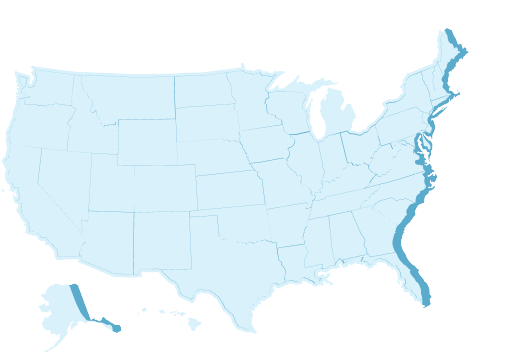
ICS supports US healthcare organizations through a defined remote delivery model from India. Payer mix, state-program requirements, system access, documentation dependencies and escalation responsibilities are reviewed during discovery rather than assumed from a location list.
To ensure top-notch service delivery, we use premier industry platforms similar to











Claims submission works best when source data, validation rules, clearinghouse responses and correction ownership are visible to both teams. ICS can provide an India-based operating team for a defined part of that workflow while your organization retains the approvals and decisions assigned to it.
During discovery, we review claim sources, payer mix, submission cadence, rejection handling, reporting fields and escalation paths. The resulting scope gives both teams a practical basis for onboarding, quality review and ongoing performance discussions.
If you would rather your own team worked denials on a platform than hand the queue to ours, see our denial management software.
Use a dedicated offshore FTE team when you need predictable capacity and workflow ownership, or consider percentage-based billing when you prefer fees aligned with collections.
Explore dedicated FTE medical billing teams | Explore percentage-based medical billing | Discuss your requirements with ICS
How do we start a claims-submission engagement?
ICS first reviews your claim sources, payer mix, system access, clearinghouse workflow, submission cadence, exception ownership and reporting needs. We then document a proposed scope and transition plan for your team to review before production begins.
How is patient and claim data protected?
Access follows the client-approved environment, user roles and security controls. The working scope should define permitted systems, minimum-necessary access, secure communication, escalation contacts and applicable HIPAA and SOC 2 control requirements.
Can ICS work with our existing billing system and clearinghouse?
ICS can work within client-approved billing, EHR, practice-management and clearinghouse systems when compatibility, access roles, workflow steps and security requirements are confirmed during discovery.
Does the service include clearinghouse rejection follow-up?
It can. The agreed scope may include acknowledgment monitoring, front-end rejection review, correction routing and resubmission tracking. Payer adjudication denials and appeals should be assigned separately so ownership remains clear.
Why use an India-based claims-submission team?
An India-based team can provide defined queue capacity and documented handoffs for repetitive claims-submission work. The value depends on clear access, training, quality review, escalation rules and reporting rather than location alone.
Tell us which medical billing or RCM workflow needs support.
Build a dedicated offshore team or align billing fees with collections.

“ Partnering with ICS transformed our revenue cycle. Claim approvals are faster, denials have dropped significantly, and we finally have clear visibility into our billing performance. ”
Founder, Sunrise Family Clinic

“ The ICS team is knowledgeable, responsive, and deeply committed to helping our practice grow. Their customized dashboard gives us real-time insights we never had before. ”
Orthopedic Surgeon, CareAxis Hospital
“ We were drowning in paperwork and delays before ICS stepped in. Their team streamlined everything, from eligibility checks to patient billing, and gave us time to focus on care. ”
Practice Manager, Lotus Women's Health Center
“ ICS is more than a billing service—they’re a strategic partner. Their compliance-first approach gives us confidence, and their results speak for themselves. ”
Pulmonologist, Airway Specialty Clinic
“ With ICS, we saw a 35% increase in collections within the first quarter. Their billing accuracy and follow-up on aging claims are unmatched. ”
Dermatologist, ClearSkin Clinic