
A clearing house in medical billing plays a critical role in ensuring claims are transmitted correctly from providers to insurance payers. Without a properly managed clearinghouse workflow, claims may be rejected before they even reach the payer.
InfoHub Consultancy Services provides India-based clearinghouse and EDI management support for US healthcare organizations. The agreed workflow can cover claim-file validation, payer routing, acknowledgment tracking, clearinghouse rejection correction, resubmission queues and operational reporting.
Before production, ICS and the organization define the clearinghouse, transaction types, payer IDs, enrollment dependencies, acknowledgment files, correction authority, turnaround expectations, reporting cadence and escalation contacts.
A clearinghouse can translate nonstandard claim data into standard electronic transactions and forward them to payers, as described in HHS guidance on business associates. It may also apply supported claim edits. Available checks depend on the clearinghouse, payer connections and agreed workflow, and can include:
 format validationcoding editspayer rule checksHIPAA transaction-format checkselectronic claim routing
In simple terms, a clearinghouse acts as a quality checkpoint between the provider’s billing system and the insurance company. If the claim fails validation:
it is rejected at the clearinghouse levelit does not reach the payercorrections must be made before resubmissionThe role of a clearing house in medical billing includes:

EDI claim processing

Data validation

Error detection

Payer-specific formatting

Transmission tracking

Acknowledgment reporting
Structured acknowledgment and rejection handling can prevent correctable transmission issues from moving further downstream.
In the revenue cycle, the clearinghouse sits between:


Unresolved clearinghouse edits can contribute to:
repeated rejection issuesclaim submission delayslonger unresolved claim queuesadditional correction workDefined validation and correction steps help teams identify submission issues before payer adjudication.
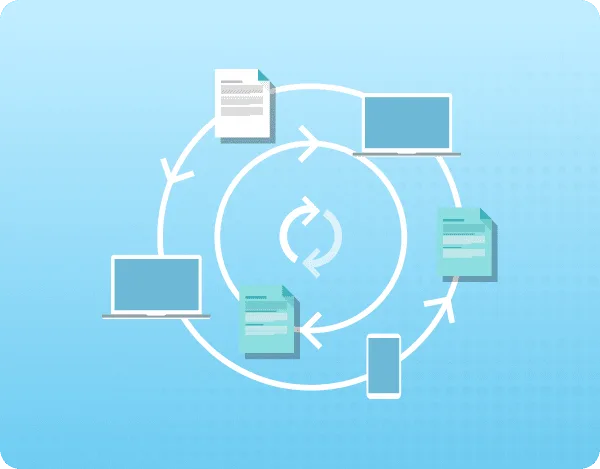
EDI claims processing uses standard electronic transactions to move claim and response data between healthcare organizations, clearinghouses and payers. The supported workflow can include professional and institutional claim files (837P and 837I), acknowledgments (999 and 277CA), remittance files (835) and eligibility transactions (270/271). CMS provides a current overview of Medicare electronic billing and EDI transactions. The exact transactions and correction authority must be defined for each organization:
electronic claim submission (837 files)acknowledgment responses (999, 277CA)ERA remittance files (835)eligibility transactions (270/271)Clearinghouses manage these electronic transactions.

Clearinghouse rejections occur before payer adjudication.
invalid patient informationincorrect NPImissing modifiersmismatched CPT/ICD combinationsformatting errorsinvalid payer IDThese are different from payer denials.
| Clearinghouse Rejection | Payer Denial |
|---|---|
| Occurs before claim reaches payer | Occurs after payer processes claim |
| Usually format/data errors | Usually coverage/coding/authorization issues |
| Requires correction and resubmission; timing varies | May require appeal |
There are different types of clearing houses for medical billing:
Transmit claims directly to payers.Operate for specific insurance networks.Transmit to multiple payers nationwide.Hospitals and large systems often use clearinghouses integrated with UB-04 EDI processing workflows.
Hospitals commonly use UB-04 claim forms for institutional billing. Clearinghouse functions in UB-04 EDI workflows:
validate institutional claimscheck revenue codesconfirm billing unitsverify payer routingImproper clearinghouse setup can delay high-value hospital claims.
We offer structured clearinghouse management services as part of RCM support.
payer ID validationEDI enrollmenttransmission testingerror mappingclearing house rejection identificationclaim correctionquick resubmissionreporting trendsacknowledgment trackingrejection pattern analysispayer routing review
Organizations may outsource defined clearinghouse workflows to add:
consistent rejection identification and ownershipdocumented submission and correction queuesmanage high claim volumesapply client-approved EDI and payer requirements
As an offshore clearinghouse services provider in India, we deliver:
dedicated EDI specialistsdaily rejection monitoringstructured error correction workflowspayer-specific routing expertisescalable claim transmission supportCommercial impact depends on scope, volume, systems, access, staffing and client responsibilities agreed before production.

Example scenario:
A clinic submits 200 claims. The clearinghouse flags 20 claims due to:
incorrect modifier usagemissing patient ZIP codeinvalid payer ID
The team records the rejection, source file, correction, owner, resubmission status and next acknowledgment. Timing depends on data availability, correction authority and clearinghouse or payer response.
India-based offshore EDI specialistsIntegrated with charge entry and claims submissionStructured rejection trackingReporting-driven error reductionScalable for hospitals and multi-specialty groups


ICS can work within approved client, clearinghouse and payer workflows after access, transaction support and responsibilities are validated. The operating scope can include:
 approved claim-file submission queues eligibility transaction support when enabled by the approved systemrules-based validation and human-reviewed correctionsrejection categorization and trend reporting
Available functions and refresh timing depend on the selected clearinghouse, payer connections, client systems, data quality and approved access.
Clearinghouse validation can flag supported format and data issues before payer review. Passing edits does not establish coverage, medical necessity or payment; the payer still applies its adjudication rules. CMS explains the separate editing and payment-review stages for Medicare electronic claims.
ICS supports defined EDI transactions between approved healthcare and payer systems, with acknowledgment, exception and escalation steps documented for the agreed scope.

System fit validated before onboarding
ICS provides defined clearinghouse and EDI workflow support with visible ownership, dependencies, exceptions and reporting.


When the approved data sources support it, reporting can summarize:
Claims Volume and Status Rejection causesFinancial consequencesSubmission and acknowledgment status reportsFields, definitions, refresh timing and recipients are agreed with the organization before reporting begins.

Speak to our Experts on
India-based clearinghouse and EDI support for US healthcare organizations.

Before work begins, ICS and the organization define the required EDI, billing, coding, security and escalation roles. Relevant experience and qualification requirements can be reviewed during scoping; final coding and compliance decisions remain with authorized owners.
The organization identifies the applicable transaction guides, payer requirements, privacy and security controls, retention rules and approval owners. ICS applies those approved requirements within the agreed operational scope.
Rejections and acknowledgments can be routed to named owners with correction and resubmission status recorded.
Operational controls can follow client-approved privacy, security and transaction requirements; ICS does not provide legal certification.
Supported automation may reduce selected manual steps; actual impact depends on systems, rules, exceptions and review requirements.
Scheduled reporting can show the transaction statuses and exceptions available from approved data sources.
Any increase in supported volume or sites is agreed after reviewing staffing, system limits, access, transaction support and reporting requirements.
Before agreeing on specialty-specific EDI support, ICS and the organization review claim types, required data, payer connections and staff responsibilities. Requirements for an ASC, physician practice or another care setting must be confirmed for the proposed workflow.
System compatibility, permitted corrections and reporting are validated during scoping. Claim acceptance and payment depend on documentation, coding, enrollment, coverage, payer rules and response times; ICS does not guarantee faster reimbursement.
Transaction and payer requirements can vary by program, jurisdiction, organization and service. The client identifies the approved sources and decision owners; ICS maps the agreed routing, validation and exception workflow to those requirements.
Before production, ICS validates the selected EHR, practice-management, billing and clearinghouse systems; available transactions; access method; supported fields; payer enrollment; test files; exception queues and client approvals. Unsupported functions or missing dependencies are documented before go-live.
To ensure top-notch service delivery, we use premier industry platforms similar to










If you need clearer ownership of submissions, acknowledgments, rejections and resubmissions, ICS can review the current workflow and define an India-based support scope for your US organization.
Build a dedicated offshore billing team for predictable capacity, or align fees with collections through a percentage-based model. Compare both options before choosing the structure that fits your practice.
Explore dedicated FTE medical billing teams | Explore percentage-based medical billing | Discuss your requirements with ICS
What does a clearing house do in medical billing?
A clearinghouse receives claim files, applies supported validation rules, routes transactions to payers and returns acknowledgments or rejection information to the submitting organization.
What is included in clearinghouse and EDI management services?
Scope may include payer ID and enrollment checks, claim-file validation, submission queues, acknowledgment tracking, rejection correction, resubmission tracking, ERA routing and scheduled reporting.
How does an India-based EDI team support a US healthcare organization?
ICS and the organization define systems, transactions, payer requirements, access roles, correction authority, reporting cadence, turnaround expectations and escalation contacts before production.
Does ICS replace our existing clearinghouse or billing system?
Not necessarily. ICS can work within approved existing systems after platform fit, transaction support, access, test files and responsibilities are validated.
Can ICS guarantee a clean-claim rate or faster reimbursement?
No. Outcomes depend on documentation, coding, payer rules, data quality, system availability, enrollment, client decisions and payer response. ICS provides the defined operational support and reporting agreed in scope.
How are clearinghouse rejections handled?
Available rejections can be categorized, assigned to an authorized owner, corrected according to approved rules and tracked through resubmission and subsequent acknowledgment.
Can the service support UB-04 and professional claim workflows?
Yes, when the selected clearinghouse, payer connections, transaction types, client systems and staff responsibilities support the required institutional or professional claim workflow.
What information is needed for an EDI workflow review?
Useful inputs include clearinghouse and system names, transaction types, payer list, enrollments, sample acknowledgments, rejection categories, current queues, volumes, turnaround targets, reporting needs and escalation owners.
Tell us which medical billing or RCM workflow needs support.
Build a dedicated offshore team or align billing fees with collections.

“ Partnering with ICS transformed our revenue cycle. Claim approvals are faster, denials have dropped significantly, and we finally have clear visibility into our billing performance. ”
Founder, Sunrise Family Clinic

“ The ICS team is knowledgeable, responsive, and deeply committed to helping our practice grow. Their customized dashboard gives us real-time insights we never had before. ”
Orthopedic Surgeon, CareAxis Hospital
“ We were drowning in paperwork and delays before ICS stepped in. Their team streamlined everything, from eligibility checks to patient billing, and gave us time to focus on care. ”
Practice Manager, Lotus Women's Health Center
“ ICS is more than a billing service—they’re a strategic partner. Their compliance-first approach gives us confidence, and their results speak for themselves. ”
Pulmonologist, Airway Specialty Clinic
“ With ICS, we saw a 35% increase in collections within the first quarter. Their billing accuracy and follow-up on aging claims are unmatched. ”
Dermatologist, ClearSkin Clinic