6 mins read
DME billing claim errors often begin before the claim is created. A missing or incomplete order, an eligibility gap, a code that does not match the item supplied, an incorrect date of service, or missing proof of delivery can stop the workflow later. The most useful prevention method is a documented pre-bill checklist with an owner for every exception.
This guide covers practical controls for durable medical equipment, prosthetics, orthotics and supplies (DMEPOS) claims. Organizations that need operational support can review our DME billing services. For coverage and benefit checks before fulfillment, see our insurance eligibility verification services.
InfoHub Consultancy supports medical billing, coding, and revenue-cycle workflows for U.S. healthcare providers. Discuss your needs and proposed scope with our team.
Get a Free Consultation →Common DME billing claim errors and how to reduce them
1. Eligibility and benefit details are not confirmed
Active coverage is only the starting point. Before delivery, the team should verify the member, coverage date, applicable benefit, network requirements, payer-specific limitations and whether prior authorization is required. Record the electronic response or payer reference in the account. Eligibility does not guarantee payment, so the result must be reviewed alongside the item, order, coverage policy and other claim requirements.
2. The Standard Written Order is incomplete
CMS states that Medicare DMEPOS claims require a written order or prescription from the treating practitioner as a condition for payment. A Standard Written Order may need the beneficiary name or Medicare Beneficiary Identifier, order date, item description, quantity when applicable, and the treating practitioner’s name or NPI and signature. The exact requirement can depend on the item and policy, so staff should also review the applicable Local Coverage Determination and policy article.
3. Clinical documentation does not support the item
The order, medical record and billed item should tell the same story. Build a documentation review that checks the diagnosis, functional need, duration or continued-use information when applicable, and any item-specific coverage criteria. If a required element is missing, return the case through a defined query process before billing rather than filling the gap with an assumption.
4. The HCPCS code or modifier does not match the transaction
Correct coding depends on the item supplied, payer policy and transaction details. Review the current HCPCS code, item description, rental or purchase status, laterality when relevant, and required modifiers. Do not apply a modifier as a generic denial-prevention step; use it only when the underlying facts and payer requirements support it. A coding review can be routed through the medical coding services owner when the issue is broader than DME intake.
5. Proof of delivery and the claim date do not align
Retain proof of delivery in the supplier file and reconcile the delivery record with the date of service used on the claim. The record should be legible, attributable to the beneficiary or representative, and sufficient for the applicable delivery method. CMS guidance notes that documentation requirements and retention periods apply, and item-specific policies may add further conditions.
6. Prior authorization is treated as part of eligibility
Eligibility verification and prior authorization are separate controls. A beneficiary can have active coverage while a DMEPOS item still requires authorization. Maintain separate fields for eligibility status, authorization status, reference number, validity dates and unresolved documentation so a completed eligibility check does not close an open authorization task.
7. Refill requirements are not documented
For applicable DMEPOS refills, CMS requires the supplier to contact the patient or representative and document the need for the refill. Avoid automatic shipment based only on a recurring schedule. Capture the patient, contact date, requested item, confirmation and the reason a refill is needed, then follow current delivery-timing rules.
8. Denials are corrected one at a time without finding the pattern
Use remittance and payer feedback to classify rework by reason: eligibility, order, medical necessity, coding, modifier, authorization, delivery, timely filing or another cause. Trend the result by payer, item and work queue. A recurring exception should trigger a workflow correction, not just another individual resubmission.
DME pre-bill checklist
- Confirm member, payer, coverage date and applicable benefit.
- Record authorization or referral requirements separately.
- Verify the order contains the required elements for the item.
- Check supporting medical-record and continued-need documentation when applicable.
- Validate the current HCPCS code, item description and supported modifiers.
- Reconcile proof of delivery and the claim date of service.
- Review payer-specific policy, filing limits and submission requirements.
- Move incomplete cases to an exception queue with an owner and due date.
Metrics that reveal workflow problems
Useful operational measures include first-pass acceptance by payer and item, documentation exceptions before submission, authorization-related holds, days from delivery to claim submission, denial reason distribution, and rework volume. Measure against your own validated baseline. Avoid using an unsupported universal denial or reimbursement percentage as a performance promise.
When an India-based DME billing team can help
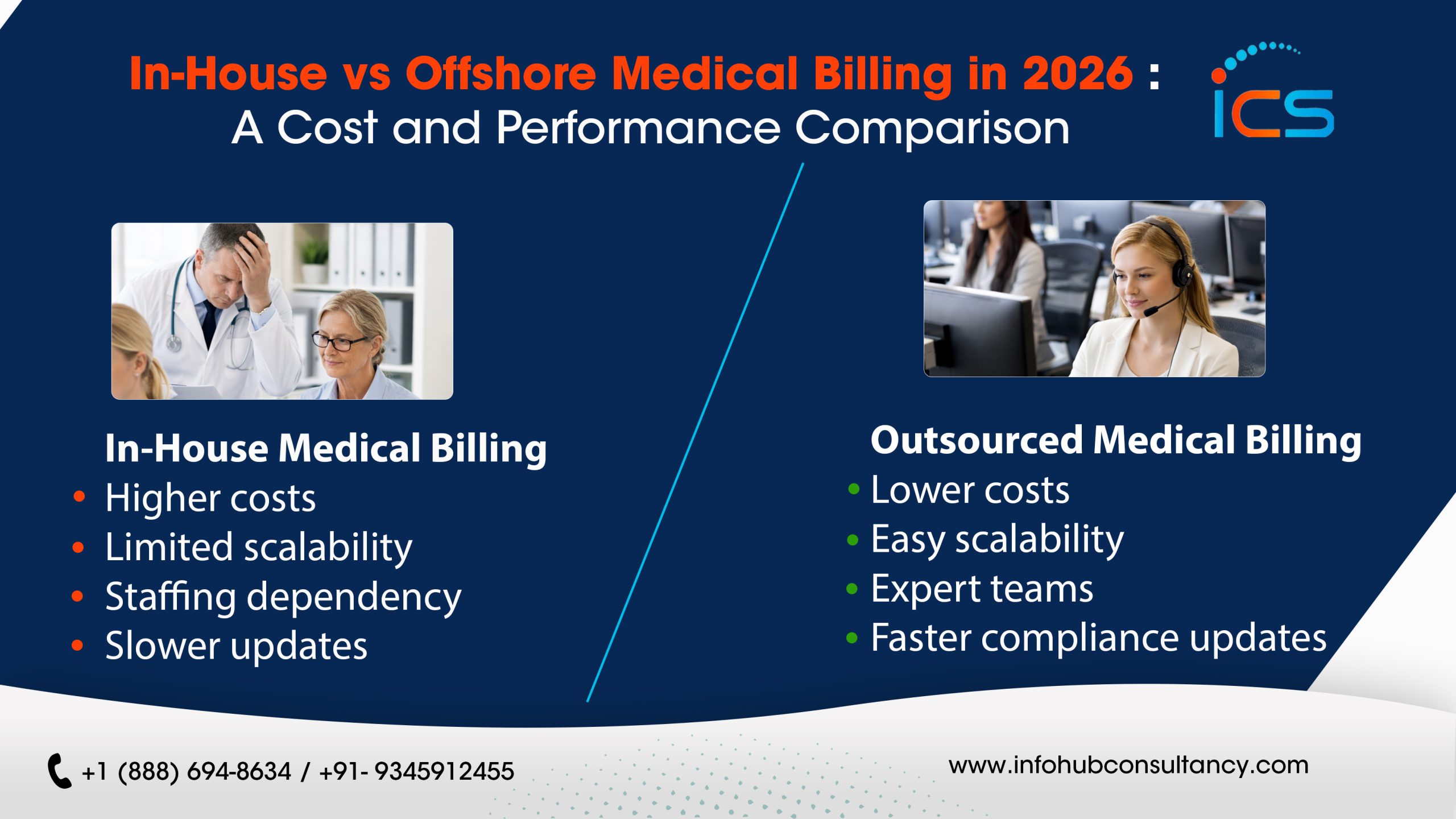
An outsourced team can own eligibility checks, documentation queues, claim preparation, status follow-up and denial work under a defined scope. Before selecting a partner, document system access, payer portals, work queues, escalation rules, reporting fields, quality checks and permitted handling of protected health information. The service should operate inside agreed controls rather than replace payer policy or clinical judgment.
Need a DME billing workflow review? Share your payer mix, DME categories and current exception queues with ICS.
Explore DME Billing Services → Explore Insurance Verification Services →
Frequently asked questions
What documents commonly support a Medicare DMEPOS claim?
Depending on the item and policy, the file may require a Standard Written Order, relevant medical-record information, correct coding and proof of delivery. Item-specific policies can require additional documentation.
Does active insurance coverage guarantee DME payment?
No. Payment can also depend on benefit coverage, authorization, medical necessity, documentation, coding, delivery evidence, timely filing and payer adjudication.
Should every DME claim use the same modifiers?
No. Modifier use must match the facts of the transaction and current payer requirements. Applying a modifier without support can create another error.
Can a supplier automatically ship recurring refills?
CMS says applicable DMEPOS refills require documented contact confirming the patient’s need. Suppliers should follow current CMS and payer-specific refill rules rather than rely only on an automatic schedule.