Revenue Cycle Management
  Insurance Verification
  Appointment Scheduling
  Charge Entry
  Denials Management
  Medical Billing
  Claims Submissions
  Payment Posting
  AR – Follow-ups
  Medical Coding
  Reporting
  Patient’s Statement
  Authorization
  Charge Review & Auditing (Coding & Billing)
  Compliance & Audit Readiness
  Clearing House & EDI Management
  Credentialing
  View All 65
Specialties
View All 65
Specialties Allergy and Immunology
  Ambulance
 Ambulatory Surgical Center
 Anesthesia
 Assisted Living Facility (ALF)
 Behavioral Health
 Cardiology
 Chiropractic
 Chronic Care Management (CCM)
 Community Behavioral Health
 Dental
 Dermatology
 Durable Medical Equipment
 Emergency Room
 Endocrinology & Diabetes
 Family Practice
 Gastroenterology
 General Surgery
 Geriatrics
 Healthcare
 5 mins read
 Introduction:
ICD-10 stands for the International Classification of Diseases 10th Revision, which establish a convention on processes and diagnoses impacting the entire revenue cycle. From ICD-9 to ICD-10, billing accuracy has improved, whereas development of compliance challenges and ongoing training needs was also part of the implementation. Hence, the article takes a look at the role of ICD-10 in revenue cycle management (RCM), the advantages, challenges, and best practices to enhance the financial outcome.
Understanding the ICD-10
ICD-10 was adopted so that enough granularity and specificity could be provided for ever-more complex medical documentation. Currently, there are over 70,000 diagnosis codes, and 87,000 procedure codes yielding a high specificity that is in the interest of health care providers, payers, and patients alike.
ICD-10 codes are alphanumeric codes. Each character tells something different:
- 1st character (A-Z): category of disease
- 2nd/3rd characters: specify the medical condition
- 4th-7th characters: indicate severity, location, laterality, and other clinical aspects.
This means that a disease and treatment are specified with that degree of detail: better health to the patient with efficient billing operations.
The Contribution of ICD-10 to the Revenue Cycle
ICD-10 codes have an extensive impact on almost every aspect of revenue cycle management, from the diagnosis of patients to those reimbursements. Thus, let us try to see what financial operations in healthcare are affected by these codes.
Accurate Billing Capacity
According to medical billing, claim accuracy is one of the biggest challenges. The errors in coding lead primarily to denial of claims submission losing revenue due to delayed payment from payers. The ICD-10 helps mitigate such problems through having highly detailed coded definitions of patient conditions and treatments. When claims are coded accurately, they can thus be processed by the insurance companies at a quicker speed and reimbursed promptly too.
Fewer Claims Denied; Audits Less Frequent
Improper coding and vague claims processes often lead to claim denials and audits, disrupting revenue flow. Medicare, Medicaid, and other payers enforce strict documentation mandates for approval. Using ICD-10 codes ensures compliance, reduces audits, and enhances financial operations. Correct coding provides for maximum reimbursement and prevents denials of claims. Compliance with payer-specific regulations such as LCDs and NCDs helps secure proper reimbursement with accurate billing for medical services.
ICD-10 implementation obstacles
Well, ICD-10 allows billing, but there are several hurdles that this code just sets along the way. Each of them needs to be cleared for maximum revenue cycle management.
1. Complexity & Training
The sheer volume of codes in ICD-10 means there must be continuous training. Untrained personnel may be responsible for coding errors, claim denials, and compliance problems.
2. Software Integration
Legacy EHR systems, otherwise referred to as ancient, may not support ICD-10. Installing the new AI-enabled billing systems maximizes efficiency and minimizes errors.
3. Regulatory Compliance
There are strict laws and regulations set by CMS, HIPAA, and insurers on coding accuracy. Non-compliance results in denial of claims, penalties, and legal liabilities.
Best Practices for Optimizing ICD-10 Coding
Healthcare organizations winning on revenue cycle management put these best practices into place for ICD-10 to yield maximum benefit;
1. Invest in Continuous Education
Organize continuous education trainings to keep medical coders, billers, and administrative staff up to date on ICD-10 revisions and payer-specific rules. Well-informed staff can accurately code medical procedures, with a minimized chance of claim errors and improved reimbursement rates.
2. Take Up Advanced Coding Technology
Technology is all around us. AI-powered coding instruments and computer-assisted coding (CAC) software try to ease up the overwhelming task of coding. By deploying these to analyze clinical documents and then proposing the most appropriate codes, it would save time, reduce human errors, and compliance.
3. Periodic Internal Audits Undertake
Regular audits will sensitise the organization on coding errors well in advance of the claims being submitted. This will ensure that the documentation does meet the payer standards so that any misadventures ensuing discoverable audits and denials of claims are prevented. Thus, through internal improvements, healthcare clients may help in optimizing the revenue cycle than previously assumed.
4. Change Policy Knowledgeable
Insurance companies may amend coverage policy and coding criteria at any time. Thus, if an organizational insider is alerted to any new updates, then all claims would be made accurate at the initial submission and ideally prevent running back there for unintended denials or payment delays.
The Future of Medical Billing: How ICD-10 Shapes Revenue Cycle Management
ICD-10 will definitely be in medical billing in the future. In this rapidly changing world, technological development advances in such a way that medical coding will eventually become automation and accuracy. Some of the features shaping future revenue cycle management from ICD-10 include the following:
1. Artificial Intelligence and Machine Learning
With these systems, coding neurons will become more common, with provision numbers being selected on the basis of DSM and particularly ICD-10 criteria but with little human input. For this purpose, development of coding accuracy, reduction of administrative workload, and increased compliance with the payer would be ensured.
2. Changeover to ICD-11
The World Health Organization recently launched ICD-11 to maintain compatibility with the more digital and adaptable healthcare delivery model today. Although ICD-11 is not yet fully launched within the U.S., it is recommended that health systems begin the transition within their systems and training of staff for eventual critique acceptance.
Conclusion
Staffing, including ICD-10, is one of the critical pillars of the revenue cycle and must be always in good standards so that optimal financial performance is possible. Some of the best practices which can help even improve the efficiency of coding works in dealing with training, software difficulties, and regulatory compliance include continuous education, advanced technology, and internal audits. As a reputed outsourcing medical coding and billing services povider, Info Hub provides expert analytics and consultancy services to healthcare practitioners to smoothen even the most complex revenue cycle processes and maximize reimbursements. Be connected with us today to help with your financial performance!
Related Blogs
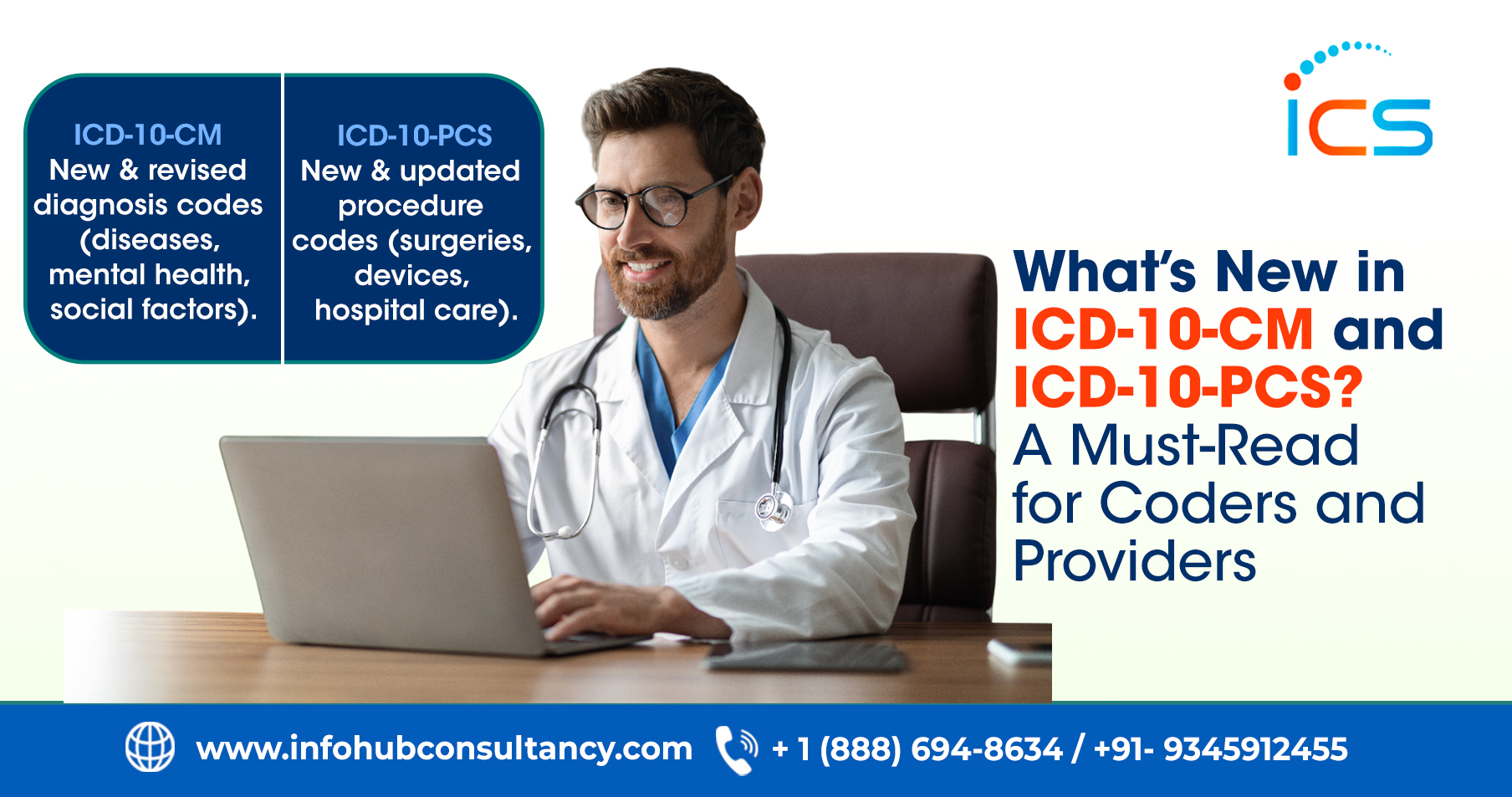
Did you know that ICD-10 codes change every year and have a direct impact on hospitals, coders, and providers? ICD-10-CM Read more

Every day, healthcare providers face increasing financial pressures. In fact, rising costs, stricter reimbursement policies and complex payer rules make Read more

Undoubtedly, cash flow is the lifeline of any medical practice. But still many providers face the challenge of waiting 60 Read more