


Cardiology billing is one of the most complex areas of medical billing due to high-value procedures, frequent CPT updates, layered diagnostic testing, and strict payer documentation rules. From routine office visits to interventional and nuclear cardiology procedures, even minor coding errors can lead to delayed payments or costly denials.
Info Hub Consultancy Services provides end-to-end cardiology billing services for U.S.-based cardiology practices, hospital-owned departments, and multi-location specialty groups. Our offshore medical billing team in India works closely with U.S. cardiology providers to ensure accurate coding, compliant billing, and predictable revenue across Medicare, Medicaid, and commercial payers.
Cardiology groups can explore our specialty billing services and prior authorization support when defining their billing requirements. For India-based delivery to US practices, compare a dedicated FTE billing team with the percentage-based billing model and agree on coverage, scope and reporting.
Our cardiology medical billing services cover the full spectrum of cardiovascular care, including outpatient, inpatient, diagnostic, and interventional services. We support:

Cardiology medical billing and coding for office visits and hospital encounters

Billing for cardiology surgeries and procedures

Cardiology practice billing for independent and hospital-employed physicians

Medical billing for cardiology across single and multi-specialty practices

Cardiology coding should reflect the documented service, current code set, payer policy and date of service. The team reviews office, diagnostic and interventional workflows and routes documentation or coverage exceptions for confirmation.

Cardiology CPT codes for office visits and consultations
CPT code for cardiology consult and referral visits
Cardiology testing CPT codes and diagnostic procedure codes
Interventional cardiology CPT codes
Nuclear cardiology CPT codes
Current CPT and HCPCS guidance for the applicable date of service
Controlled coding references can standardize review, but the current code set, payer guidance and documented encounter remain the source for claim decisions.
Strong cardiology revenue cycle management ensures that high-value services are billed accurately and paid on time.

Eligibility verification and benefit analysis
Charge capture and clean claim submission
Denial management and appeal resolution
Payment posting and reconciliation
Reporting on cardiology revenue cycle performance
We track rejections, denials, aging and unresolved dependencies against the organization’s baseline so workflow changes can be reviewed with evidence.
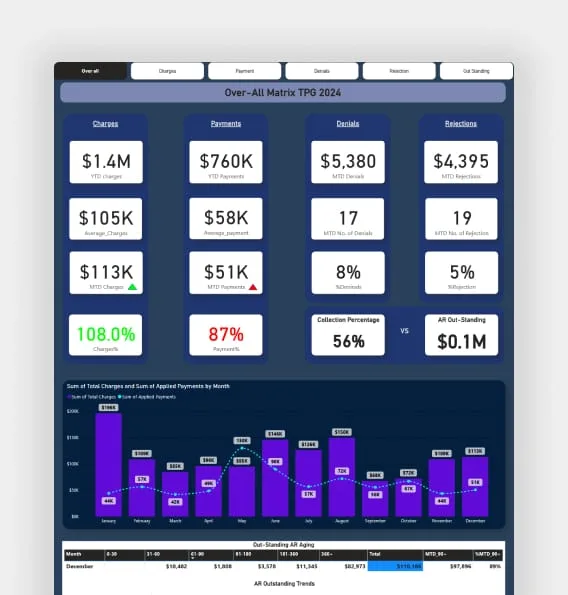
Diagnosis accuracy is critical to medical necessity in cardiology billing. Our team manages ICD 10 cardiology codes and cardiology diagnosis codes to support reimbursement.
Common cardiology ICD-10 codes for hypertension, heart failure, arrhythmias, and coronary artery disease
ICD-10 codes for cardiology procedures and follow-up visits
ICD-10 code for cardiology consultation and evaluation
Historical ICD-9 cardiology codes for audits and legacy claims
Cardiology billing workflows are configured around the client’s existing EHR or practice-management system, approved access and documented handoffs.
Cardiology EHR billing services
Cardiology EMR billing services
EHR billing service for cardiology practices
Automated encounter-to-claim workflows
Interventional cardiology billing requires advanced coding expertise and payer-specific knowledge.
Interventional cardiology billing services
Interventional cardiology CPT codes
Interventional cardiology taxonomy code usage
Outsourcing cardiology billing allows U.S. practices to control costs without compromising compliance.
HIPAA-compliant workflows
Dedicated cardiology billing experts
Defined submission and rejection-response windows
Scalable support for growing practices
ICS supports single- and multi-location US cardiology organizations remotely from its India delivery team. The operating plan reflects payer mix, systems, service locations and state-specific requirements.


Speak to our Experts on
India-based medical billing support for US healthcare organizations.
ICS supports cardiac procedure coding, echocardiography billing and electrophysiology claim workflows. The delivery scope can include defined queues, quality review, denial follow-up and reporting from office visits through complex interventional procedures. Request a workflow review to identify responsibilities and measurable priorities.
These checkpoints summarize published CMS guidance for cardiology claims. The payer’s policy and the rule in effect for the date of service always apply.
Medicare Part B covers cardiac rehabilitation and intensive cardiac rehabilitation only for listed cardiac events or conditions, such as a recent heart attack, bypass surgery, stable angina, valve repair or replacement, stenting, or transplant.
Each cardiac rehabilitation program must include physician-prescribed exercise, cardiac risk factor modification, psychosocial assessment, outcomes assessment, and an individualized treatment plan. Missing components put coverage at risk.
The written individualized treatment plan for cardiac rehabilitation must describe the diagnosis, the services and their frequency, and the goals. A physician must establish, review, and sign it on a recurring 30 day cycle.
Part B pays for cardiac rehabilitation in a physician's office or a hospital outpatient setting. A physician or nonphysician practitioner must be immediately available for consultations and emergencies whenever services are furnished.
An intensive cardiac rehabilitation program must show through peer-reviewed published research that it meets defined outcome measures. Prospective sites must also enroll with Medicare and report the designated specialty code.
Under Medicare's anti-markup rule, the technical or professional component of certain diagnostic tests, including EKGs and cardiac monitoring, is limited when the billing physician orders the test and a physician outside the practice performs it.
An India-based team can add defined capacity for cardiology billing when access, responsibilities, quality controls, working-hour overlap and escalation paths are agreed before production.

Predictable Capacity

Specialty-Aware Team

Access and Security Controls

Defined Escalation Paths

HIPAA-Aligned Workflows

Denial Root-Cause Tracking

Flexible US Working Windows

Who We Are?
ICS provides India-based billing support for US healthcare organizations. The delivery model is defined around specialty workflows, queue ownership, secure access, reporting and agreed coverage windows.

We offer medical billing services that feed to different types of medical practices.
 Ambulance
 Cardiology
 Radiology
 Family Practice
 Ophthalmology
Whether you operate as an individual practitioner or manage a healthcare association with multiple sites, we offer a solution tailored to your requirements.

With over a decade of experience serving diverse specialties and provider groups across the U.S., we ensure you get local-quality support, regardless of location.
 Trusted by 140+ Providers in All 50 States HIPAA-Compliant Offshore Billing Experts Specialized Teams for State-Specific Billing Needs
Select your location below to learn how we support practices like yours.
To ensure top-notch service delivery, we use premier industry platforms similar to










Also, we offer support for custom APIs and integrations with customer systems, streamlining data synchronization and billing operations.

Reach out to us now for a complimentary discussion and explore how we can help you boost your profit & minimize functional costs. Experience the benefits of connecting with estimable medical billing professionals.
What makes cardiology billing complex?
High-value procedures, frequent CPT updates, diagnostic testing, and strict payer rules increase billing complexity.
What are the most common cardiology CPT codes?
The applicable codes depend on the documented service and current guidance. Common workflows include office E/M, diagnostic testing, interventional procedures and nuclear cardiology, reviewed against the current CPT/HCPCS set and payer policy.
How does cardiology RCM improve revenue?
Cardiology RCM should be measured from the organization’s baseline. Rejection rate, denial causes, unbilled encounters, days in A/R and unresolved dependencies help show where the workflow needs attention; no result should be assumed in advance.
Can cardiology billing be outsourced safely?
Yes, when the operating model includes approved access, a business associate agreement where applicable, role-based permissions, documented responsibilities, secure transmission, quality review and escalation controls.
What ICD-10 codes are commonly used in cardiology?
Codes related to hypertension, coronary artery disease, heart failure, and arrhythmias.
Do you handle interventional cardiology billing?
Yes, including complex CPT coding and payer documentation requirements.
Can you integrate with our cardiology EHR?
ICS can work within an approved cardiology EHR or practice-management system after access, permissions, data fields, handoffs and reporting requirements are tested with the client.
How do you reduce cardiology claim denials?
Through pre-billing audits, accurate coding, and proactive denial management.
Do you support multi-location cardiology practices?
Yes, including hospital-owned and independent cardiology groups.
How quickly can cardiology billing services be implemented?
Implementation time depends on scope, system and payer access, queue volume, documentation readiness, security review and client sign-off. The transition plan and production date should be agreed after discovery rather than promised in advance.
Does Medicare cover cardiovascular screening blood tests?
Medicare law expanded coverage to cardiovascular screening services, and some lipid tests may be covered for screening only within specified frequencies. Lipid testing outside that benefit follows the general lipid testing policy.
Who can bill a diagnostic test as the physician?
A physician can bill under normal physician fee schedule rules when the physician personally performs or supervises the test. Supervision is not met when supplier personnel administer the test.
Is chronic heart failure eligible for cardiac rehab?
Yes, stable chronic heart failure meeting the defined clinical criteria is a covered condition for cardiac rehabilitation, and the criteria are set out in the Benefit Policy Manual.
Tell us your specialty, payer mix and billing priorities.
Build a dedicated offshore team or align billing fees with collections.

“ Partnering with ICS transformed our revenue cycle. Claim approvals are faster, denials have dropped significantly, and we finally have clear visibility into our billing performance. ”
Founder, Sunrise Family Clinic

“ The ICS team is knowledgeable, responsive, and deeply committed to helping our practice grow. Their customized dashboard gives us real-time insights we never had before. ”
Orthopedic Surgeon, CareAxis Hospital
“ We were drowning in paperwork and delays before ICS stepped in. Their team streamlined everything, from eligibility checks to patient billing, and gave us time to focus on care. ”
Practice Manager, Lotus Women's Health Center
“ ICS is more than a billing service—they’re a strategic partner. Their compliance-first approach gives us confidence, and their results speak for themselves. ”
Pulmonologist, Airway Specialty Clinic
“ With ICS, we saw a 35% increase in collections within the first quarter. Their billing accuracy and follow-up on aging claims are unmatched. ”
Dermatologist, ClearSkin Clinic