
Wound care services require precision not only in clinical treatment but also in billing. From chronic wounds and surgical follow-ups to advanced therapies like debridement and wound vac management, billing errors can quickly lead to denials, underpayments, or delayed reimbursements. Accurate wound care billing depends on correct CPT coding, ICD-10 diagnosis selection, documentation quality, and compliance with Medicare and payer-specific rules.
Wound care medical billing requires precise documentation of wound measurements, debridement methods, and application of advanced wound care products. ICS provides wound care billing services from India for US wound care centers and clinics, with defined workflows for documentation review, coding support, claims, denials, and accounts receivable follow-up.
Info Hub Consultancy Services provides Wound Care Billing Services focused on accurate medical billing, compliant coding, and structured revenue cycle management. We are an India-based offshore medical billing company supporting wound care clinics, hospital outpatient departments, home health agencies, and specialty practices across the United States.

Wound care medical billing involves far more than submitting claims. Each encounter must clearly establish medical necessity, wound type, depth, size, location, and treatment method. Our team manages complete wound care billing and coding workflows aligned with CMS and commercial payer requirements. We handle billing for services including:

Outpatient wound care billing
Hospital-based and clinic wound care billing
Home health wound care billing
Post-surgical and non-surgical wound management
Our billing specialists work closely with clinical documentation to ensure claims reflect the true complexity of care delivered.
Wound care billing covers debridement procedures (selective and non-selective), application of biological skin substitutes, negative pressure wound therapy, compression therapy, and evaluation and management of chronic wounds. Wound size documentation, wound staging, and debridement method descriptions are critical for accurate billing. Medicare has specific local coverage determinations (LCDs) for advanced wound care products that must be followed precisely.

Accurate CPT coding is the foundation of wound care reimbursement. We manage a wide range of wound care CPT codes, ensuring correct selection based on procedure type, wound characteristics, and care setting. Commonly billed services include:
CPT code 97597 and related debridement codes
CPT codes for wound care visits, consults, and follow-ups
CPT code for wound care dressing and dressing changes
CPT codes for wound care treatment and supplies
Home health CPT codes for wound care
Active wound care management CPT codes
We also support practices using updated wound care CPT codes 2021, 2023, and current code sets, ensuring compliance with evolving guidelines.

Correct diagnosis coding is critical to support medical necessity. Our coders ensure accurate use of wound care ICD-10 codes that reflect wound etiology, status, and treatment phase. We manage:
ICD-10 code for wound care unspecified
ICD-10 code for encounter for wound care
ICD-10 code for post-operative and post-surgical wound care
ICD-10 code for non-surgical wound care
ICD-10 code for wound vac care
ICD-10 codes for wound care follow-up visits
We also support legacy references when needed, including ICD-9 wound care codes for historical audits or appeals.

Our medical coders are proficient in all Wound Care CPT codes, including:
97597 — Debridement, open wound, selective, first 20 sq cm
97598 — Each additional 20 sq cm
97602 — Non-selective debridement, without anesthesia
97605 — Negative pressure wound therapy, 50 sq cm or less
97610 — Low frequency non-thermal ultrasound therapy
Q4100-Q4274 — Skin substitute graft codes
99213 — Office/outpatient visit, established patient
Wound care billing must align with CMS wound care billing guidelines and payer-specific policies. Our compliance framework incorporates:
Medicare wound care billing guidelines
CMS documentation standards for debridement and advanced therapies
Time-based and procedure-based billing rules
Revenue code mapping and wound care revenue codes
We also track changes across multiple guideline updates to protect providers from compliance risk.
For procedure-level guidance, read our wound care graft coding and site preparation guide.


Wound Care billing is fraught with complexities that can lead to claim denials and revenue loss. Common challenges include:

Accurate wound measurement documentation for debridement coding
Complex LCD requirements for skin substitute products
Multiple wound management billing for different anatomical sites
Prior authorization requirements for advanced wound care products
High audit risk for biological skin substitute billing
Effective revenue cycle in wound care ensures that clinical effort translates into predictable revenue. Our wound care RCM workflow covers the entire billing lifecycle.


Our goal is to reduce denials, shorten AR days, and stabilize cash flow for wound care providers.
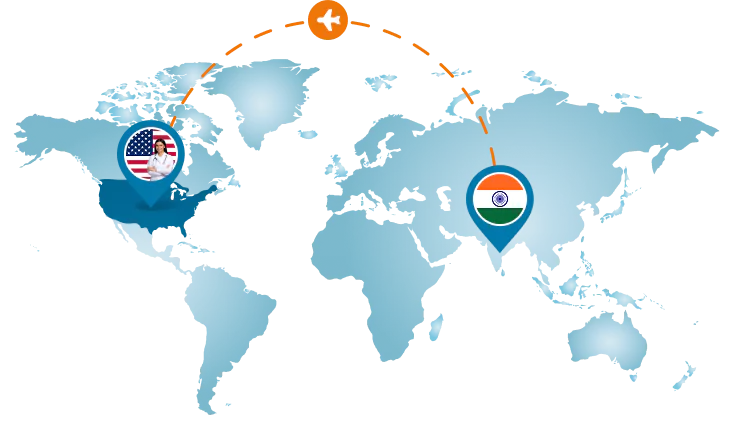
Many U.S. providers choose wound care billing outsourcing to control costs and improve billing accuracy. Info Hub operates as a trusted offshore billing partner from India, supporting U.S. wound care practices with secure and scalable solutions.
Offshore wound care billing and coding
Dedicated billing teams with wound care expertise
HIPAA-aligned access controls and workflows
Continuous performance monitoring
Practices looking to outsource wound care billing to India benefit from cost efficiency without compromising compliance or quality.
Info Hub can function as:
A full wound care billing company
A wound care billing and coding services partner
A wound care billing consultant for process optimization
An offshore extension of your internal billing team
Our certified wound care billers are trained to handle complex documentation, payer audits, and appeals.

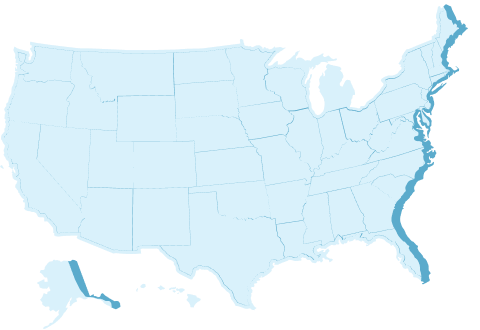
We support wound care clinics and facilities nationwide, including providers across California, Texas, Florida, New York, New Jersey, Pennsylvania, Ohio, Illinois, Arizona, Georgia, and many other states.
Whether your clinic operates within a hospital system, outpatient center, or home health setting, our offshore delivery model ensures consistent billing performance regardless of location.
Specialized expertise in wound care billing and coding
India-based offshore delivery aligned with U.S. payer rules
Strong focus on compliance and documentation quality
Proven revenue cycle management for wound care practices
Transparent reporting and proactive communication
ICS wound care billing specialists are trained in debridement coding, skin substitute billing, and Medicare LCD compliance for wound care. We ensure accurate wound measurement documentation, manage prior authorizations for advanced products, and provide dedicated AR follow-up to maximize collections.
As a trusted offshore medical billing partner for US healthcare providers, ICS combines deep specialty knowledge with HIPAA-compliant processes, transparent reporting, and a dedicated FTE model that scales with your practice. Contact us today for a free consultation.

ICS wound care billing specialists accurately code debridement procedures based on wound measurements, manage skin substitute billing compliance, and ensure LCD requirements are met for advanced wound care products. Our India-based team supports repeatable review and follow-up workflows while your organization retains clinical and coding oversight. Discuss your wound care billing scope with ICS.
These checkpoints summarize published CMS guidance for wound care claims. The payer’s policy and the rule in effect for the date of service always apply.
Under NCD 20.29, Medicare hyperbaric oxygen reimbursement is limited to administration in a chamber and to a list of specific conditions. Indications not on the list are not covered under the program.
For diabetic lower extremity wounds, NCD 20.29 requires diabetes, a wound classified as Wagner grade III or higher, and failure of an adequate course of standard wound therapy.
NCD 20.29 lists conditions for which no program payment may be made for hyperbaric oxygen, including cutaneous, decubitus and stasis ulcers.
During hyperbaric oxygen for diabetic wounds, NCD 20.29 requires wound evaluation at least every 30 days. Continued treatment is not covered if measurable healing is not shown within any 30-day period.
NCD 270.1 covers electrical stimulation and electromagnetic therapy for wounds as adjunctive therapy, only for chronic Stage III or IV pressure ulcers, arterial ulcers, diabetic ulcers and venous stasis ulcers.
An India-based delivery team can add structured capacity for documentation checks, claim follow-up, denials, and accounts receivable while working inside agreed systems, access controls, and reporting rules.

Scalable Delivery Capacity

Specialty-Trained Team

Strong Security Measures

Defined Escalation Paths

HIPAA-Aligned Processes

Structured Denial Follow-Up

Flexible US Working Windows

Who We Are?
ICS provides India-based medical billing capacity for US healthcare organizations. We define the scope, system access, queue ownership, escalation paths, reporting cadence, and client review points before production begins.

Speak to our Experts on
End-to-End Medical Billing Services provider across entire US.

We offer medical billing services that feed to different types of medical practices.
 Ambulance
 Cardiology
 Radiology
 Family Practice
 Ophthalmology
Whether you operate as an individual practitioner or manage a healthcare association with multiple sites, we offer a solution tailored to your requirements.
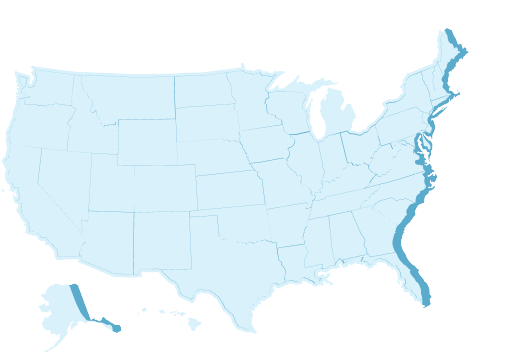
With over a decade of experience serving diverse specialties and provider groups across the U.S., we ensure you get local-quality support, regardless of location.
 Trusted by 140+ Providers in All 50 States HIPAA-Compliant Offshore Billing Experts Specialized Teams for State-Specific Billing Needs
Select your location below to learn how we support practices like yours.
To ensure top-notch service delivery, we use premier industry platforms similar to










Also, we offer support for custom APIs and integrations with customer systems, streamlining data synchronization and billing operations.

Discuss your wound care billing workflow, payer mix, backlog and reporting requirements with ICS. Compare a dedicated offshore FTE team with a percentage-based billing model, then choose the structure that fits your volume and control requirements.
How is debridement billing determined?
Debridement billing is based on surface area treated and method used. ICS ensures wound measurements are accurately captured and translated to correct CPT codes.
How do you handle skin substitute billing?
We verify LCD requirements, obtain prior authorizations, and use the appropriate Q-codes for each approved skin substitute product.
Do you handle wound care billing for both hospital outpatient and office settings?
Yes, we bill for all settings with appropriate site of service adjustments and fee schedule applications.
What are wound care CPT codes?
Wound care CPT codes describe services such as debridement, dressing changes, wound assessments, and ongoing management, selected based on wound type and treatment.
Which ICD-10 codes are used for wound care?
ICD-10 wound care codes identify the wound diagnosis, location, severity, and treatment phase, supporting medical necessity for billing.
How does Medicare reimburse wound care services?
Medicare follows specific wound care billing guidelines that require detailed documentation, correct CPT-ICD pairing, and compliance with coverage policies.
What causes denials in wound care billing?
Common causes include incomplete documentation, incorrect CPT or ICD-10 coding, missing measurements, and failure to meet CMS requirements.
Do you support home health wound care billing?
Yes. We handle home health wound care billing, including CPT codes for wound care provided in home settings.
Can wound care billing be outsourced?
Yes. Many providers outsource wound care billing to offshore teams to reduce costs and improve billing accuracy.
Is offshore wound care billing from India secure?
Yes. When managed with HIPAA-aligned processes, controlled access, and secure systems, offshore billing is safe and effective.
How do you help reduce AR days?
We focus on clean claims, structured follow-up, denial tracking, and timely appeals to shorten AR cycles.
Do you assist with audits and appeals?
Yes. We support audit responses, documentation reviews, and payer appeals.
How long does onboarding take?
Onboarding typically takes 2–4 weeks depending on system access, documentation workflows, and payer enrollment.
What counts as standard wound care before adjunctive therapies are covered?
CMS national coverage policies describe standard wound care as including debridement by any means to remove devitalized tissue, moist dressings that maintain a clean moist granulation bed, treatment of infection, and nutritional optimization. Adjunctive therapies are covered only after standard care fails.
Can electrical stimulation be the first treatment for a wound?
No. NCD 270.1 states it will not be covered as an initial treatment modality, and covered use follows at least 30 days of appropriate standard wound therapy without measurable improvement. Unsupervised use is also not covered.
Who decides coverage for wound treatments not addressed in a national policy?
Where an NCD does not specify a use, coverage is left to the Medicare Administrative Contractor. For example, NCD 270.1 leaves other wound uses of electrical stimulation to local MAC discretion.
Tell us your specialty, payer mix and billing priorities.
Build a dedicated offshore team or align billing fees with collections.

“ Partnering with ICS transformed our revenue cycle. Claim approvals are faster, denials have dropped significantly, and we finally have clear visibility into our billing performance. ”
Founder, Sunrise Family Clinic

“ The ICS team is knowledgeable, responsive, and deeply committed to helping our practice grow. Their customized dashboard gives us real-time insights we never had before. ”
Orthopedic Surgeon, CareAxis Hospital
“ We were drowning in paperwork and delays before ICS stepped in. Their team streamlined everything, from eligibility checks to patient billing, and gave us time to focus on care. ”
Practice Manager, Lotus Women's Health Center
“ ICS is more than a billing service—they’re a strategic partner. Their compliance-first approach gives us confidence, and their results speak for themselves. ”
Pulmonologist, Airway Specialty Clinic
“ With ICS, we saw a 35% increase in collections within the first quarter. Their billing accuracy and follow-up on aging claims are unmatched. ”
Dermatologist, ClearSkin Clinic