

Internal medicine billing requires precision. Internists manage complex, ongoing patient care that involves multiple diagnoses, frequent office visits, chronic condition management, and preventive services. Each encounter must be billed accurately using the correct CPT codes, ICD-10 diagnosis codes, and payer-specific rules.
Info Hub Consultancy Services provides internal medicine medical billing services from India for US healthcare organizations, physician practices, clinics and multi-location groups. The scope can cover a defined billing function or a coordinated revenue-cycle workflow, with system access, queue ownership and escalation rules agreed before production begins.
ICS can support eligibility, documentation review, coding, claim submission, payment posting, denial work and accounts-receivable follow-up. The selected functions, payer access, reporting and client responsibilities are documented during discovery.

Internal medicine billing refers to the process of coding, submitting, and managing claims for services provided by internal medicine physicians. These services often include evaluation and management visits, chronic care, preventive care, diagnostic testing, and coordination with specialists.

Correct use of internal medicine CPT codes
Proper selection of ICD-10 codes for internal medicine
Documentation that supports medical necessity
Compliance with Medicare, Medicaid, and commercial payer rules
Even small coding errors can result in underpayments, denials, or audits.
Internal medicine practices commonly use a wide range of evaluation and management codes.
CPT codes for internal medicine office visits
Preventive and annual wellness visit codes
Chronic care management and follow-up services
Consultation and referral-based billing workflows
Many practices rely on a common CPT codes for internal medicine reference or internal medicine CPT codes list, but payer interpretation still varies. We validate code selection against documentation and payer rules before claim submission.
Diagnosis coding is critical for internal medicine because patients often present with multiple conditions.
ICD-10 codes for internal medicine
Common ICD-10 codes for internal medicine
Most common ICD-10 codes used in internal medicine for chronic and preventive care
Multi-diagnosis claims and sequencing rules
Diagnosis selection should follow the current code set, documented conditions and the applicable payer requirements. Review the current CMS Evaluation and Management guidance and CMS ICD-10 resources when they apply to the encounter.
Our internal medicine billing and coding services cover the complete billing lifecycle, including:

charge capture and coding review

claim submission and payer follow-up

denial management and corrections

appeals for underpaid or denied claims

payment posting and AR reconciliation
We support solo internists, group practices, and multi-specialty clinics that require consistent and scalable internal medicine medical billing service support.
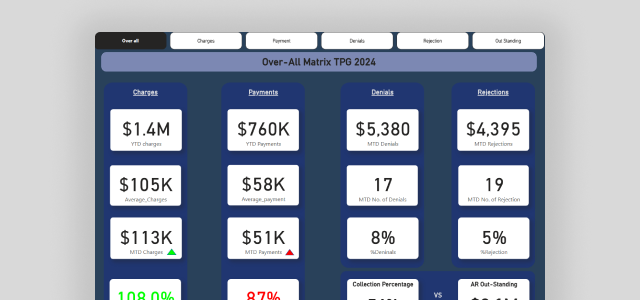
A controlled internal medicine revenue-cycle workflow improves visibility into claims, denials, payments and accounts receivable while reducing unresolved administrative work.
Eligibility and benefits verification
Clean-claim workflows to reduce rejections
Denial trend analysis and prevention
AR aging review and cleanup
Transparent reporting for practice owners
Internal medicine organizations often need fewer unresolved exceptions and better visibility into claim, denial and AR queues. Our approach emphasizes documented controls, accountable follow-up and reporting instead of unsupported coding or payment assumptions.

More practices are choosing to outsource internal medicine billing to reduce costs and improve billing accuracy. As an offshore partner,
Dedicated internal medicine billing teams in India
Secure system access with HIPAA-aligned processes
Standardized workflows and documentation checks
Scalable support during growth or staff shortages
We work with U.S. practices across multiple states and payer mixes, making outsourcing internal medicine billing services a practical long-term solution, not a short-term fix.

Correct enrollment and taxonomy setup support accurate claim routing. We can help organizations review:
Internal medicine taxonomy code
Taxonomy code for internal medicine
Payer enrollment and claim formatting rules
Incorrect taxonomy selection is a common reason for delayed payments, especially when practices expand or add providers.
These checkpoints summarize published CMS guidance for internal medicine claims. The payer’s policy and the rule in effect for the date of service always apply.
For most E/M visit families, the level is selected by medical decision making (MDM) or the time spent by the physician or NPP. History and exam are documented when medically appropriate but no longer determine the level.
When time is used to select the level, the full time must be met. The general midpoint rule used for some timed services does not apply.
G0438 is the first Annual Wellness Visit and G0439 a subsequent one. Each can be billed once in a 12-month period, and not within 12 months of G0402 (IPPE) for the same patient. CMS pays for both when provided via telehealth.
Only one of 99495 or 99496 may be billed in the transitional care period, and only one physician or NPP may report TCM services.
CCM has its own CMS requirements for eligibility, consent and documentation. See our chronic care management billing page for the workflow.
The team checks current CMS and payer instruction for the date of service instead of reusing a prior year’s rule.
Our internal medicine billing services are designed for:
independent internal medicine practices
multi-provider internal medicine groups
clinics offering preventive and chronic care
practices combining internal medicine and nephrology billing services
Whether you need daily billing support or full internal medicine end-to-end RCM, our team adapts to your workflow.


Practices partner with us because we offer:
deep knowledge of internal medicine billing rules
accurate CPT and ICD-10 coding review
reliable follow-up and denial management
offshore execution with U.S. billing discipline
clear reporting and accountability
We work as an extension of your team, not just a third-party vendor.
ICS internal medicine billing specialists can support documented chronic-care, preventive, office and hospital-related billing workflows within the agreed scope. Current code-set, CMS and payer guidance should be reviewed for each encounter. Contact ICS to discuss internal medicine billing support.

Who We Are?
Our India-based team supports defined medical billing workflows for US healthcare organizations. Coverage windows, responsibilities, system access, escalation paths and reporting are agreed for each engagement.

Speak to our Experts on
End-to-End Medical Billing Services provider across entire US.

We offer medical billing services that feed to different types of medical practices.
 Ambulance
 Cardiology
 Radiology
 Family Practice
 Ophthalmology
Whether you operate as an individual practitioner or manage a healthcare association with multiple sites, we offer a solution tailored to your requirements.
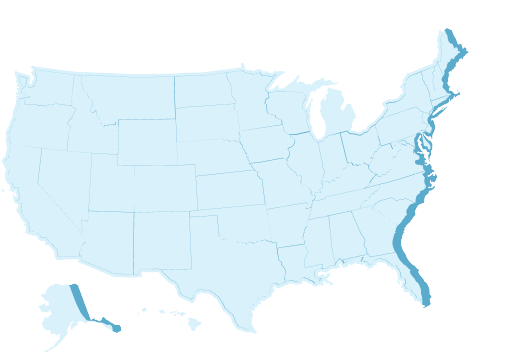
With over a decade of experience serving diverse specialties and provider groups across the U.S., we ensure you get local-quality support, regardless of location.
 Support for US healthcare organizations HIPAA-Compliant Offshore Billing Experts Specialized Teams for State-Specific Billing Needs
Select your location below to learn how we support practices like yours.
To ensure top-notch service delivery, we use premier industry platforms similar to










Also, we offer support for custom APIs and integrations with customer systems, streamlining data synchronization and billing operations.

Discuss your Internal Medicine billing workflow, payer mix, backlog and reporting requirements with ICS. Compare a dedicated offshore FTE team with a percentage-based billing model, then choose the structure that fits your volume and control requirements.
What codes are used in internal medicine billing?
The applicable CPT, HCPCS and ICD-10-CM codes depend on the documented visit, preventive service, care-management activity, test, procedure and diagnosis. The current code set and payer guidance should be checked for each encounter.
How is diagnosis coding handled for internal medicine claims?
Diagnosis coding should reflect the conditions documented for that encounter and follow the current ICD-10-CM conventions and payer requirements. Multiple conditions do not justify unsupported sequencing or specificity.
Can internal medicine billing be outsourced to India?
Yes. ICS provides internal medicine medical billing services from India for US healthcare organizations. The functions, client-approved systems, access controls, queues, escalation rules and reporting are agreed before production begins.
Can ICS support Medicare, Medicaid and commercial payer workflows?
ICS can support payer workflows included in the agreed scope when the required system and portal access is available. Payer-specific policies, authorization requirements and client responsibilities are documented during discovery.
How do you help reduce internal medicine billing denials?
The workflow reviews eligibility, authorization, documentation, coding, clearinghouse rejections and recurring denial causes. Exceptions are routed to the responsible owner rather than resolved through unsupported assumptions.
How long does onboarding take?
Timing depends on the functions in scope, system and payer access, data readiness, training requirements and client approvals. The implementation plan and start date are agreed after discovery.
How is the level of an internal medicine office visit selected?
For most E/M visit families, the level is selected by medical decision making or by the time spent by the physician or NPP. History and exam are documented when medically appropriate but no longer determine the level.
How often can the Medicare Annual Wellness Visit be billed?
G0438 (first Annual Wellness Visit) or G0439 (subsequent) can be billed once in a 12-month period, and not within 12 months of G0402 (IPPE) for the same patient.
Can more than one practitioner bill transitional care management?
No. Only one physician or NPP may report TCM services, and only one of 99495 or 99496 may be billed during the transitional care period.
Tell us your specialty, payer mix and billing priorities.
Build a dedicated offshore team or align billing fees with collections.

“ Partnering with ICS transformed our revenue cycle. Claim approvals are faster, denials have dropped significantly, and we finally have clear visibility into our billing performance. ”
Founder, Sunrise Family Clinic

“ The ICS team is knowledgeable, responsive, and deeply committed to helping our practice grow. Their customized dashboard gives us real-time insights we never had before. ”
Orthopedic Surgeon, CareAxis Hospital
“ We were drowning in paperwork and delays before ICS stepped in. Their team streamlined everything, from eligibility checks to patient billing, and gave us time to focus on care. ”
Practice Manager, Lotus Women's Health Center
“ ICS is more than a billing service—they’re a strategic partner. Their compliance-first approach gives us confidence, and their results speak for themselves. ”
Pulmonologist, Airway Specialty Clinic
“ With ICS, we saw a 35% increase in collections within the first quarter. Their billing accuracy and follow-up on aging claims are unmatched. ”
Dermatologist, ClearSkin Clinic