Revenue Cycle Management
  Insurance Verification
  Appointment Scheduling
  Charge Entry
  Denials Management
  Medical Billing
  Claims Submissions
  Payment Posting
  AR – Follow-ups
  Medical Coding
  Reporting
  Patient’s Statement
  Authorization
  Charge Review & Auditing (Coding & Billing)
  Compliance & Audit Readiness
  Clearing House & EDI Management
  Credentialing
  View All 65
Specialties
View All 65
Specialties Allergy and Immunology
  Ambulance
 Ambulatory Surgical Center
 Anesthesia
 Assisted Living Facility (ALF)
 Behavioral Health
 Cardiology
 Chiropractic
 Chronic Care Management (CCM)
 Community Behavioral Health
 Dental
 Dermatology
 Durable Medical Equipment
 Emergency Room
 Endocrinology & Diabetes
 Family Practice
 Gastroenterology
 General Surgery
 Geriatrics
 Healthcare
 8 mins read
Telehealth changed healthcare forever. But here’s the catch: Medicare telehealth rules are evolving again in 2026, and many providers are unsure what stays, what goes away, and how billing will work moving forward.
If you’re a healthcare provider, billing company, or practice manager, you probably have a few questions running through your mind:
- Will Medicare still reimburse telehealth visits the same way?
- Which CPT codes are valid in 2026?
- Are the pandemic-era flexibilities still in place?
The truth is, Medicare telehealth coverage changes in 2026 will affect reimbursement, compliance, and documentation requirements. And if your billing team isn’t prepared, it could mean claim denials or lost revenue.
So let’s break it down in plain language—billing rules, CPT codes, compliance updates, and what practices need to do now.
Why Medicare Telehealth Rules Are Changing in 2026
During the COVID-19 public health emergency, Medicare dramatically expanded telehealth coverage. Patients could receive care from home, providers could use common video platforms, and reimbursement became much more flexible.
However, many of those temporary waivers weren’t designed to last forever.
Congress extended several telehealth provisions multiple times, but CMS is gradually transitioning telehealth services into a long-term regulatory framework.
Key goals behind the 2026 updates include:
- Ensuring quality and clinical oversight
- Reducing fraud and abuse risks
- Standardizing telehealth reimbursement policies
- Aligning telehealth services with traditional Medicare billing structures
And while telehealth isn’t going away, billing rules are becoming more structured again.
Medicare Telehealth Coverage Changes in 2026
The Medicare Telehealth Coverage Changes in 2026 will affect several areas of healthcare delivery and billing.
-
Originating Site Requirements
During the pandemic, patients could receive telehealth services from their homes regardless of geographic location.
In 2026, Medicare may begin transitioning back to more structured originating site rules, which traditionally included locations such as:
- Physician offices
- Hospitals
- Rural health clinics
- Federally Qualified Health Centers (FQHCs)
- Skilled Nursing Facilities (SNFs)
However, certain services—especially mental health telehealth visits—may still allow home-based care depending on CMS updates.
Providers should monitor CMS announcements carefully because originating site rules directly impact reimbursement eligibility.
-
Telehealth Provider Eligibility
Another area affected by the 2026 updates is which healthcare professionals can bill Medicare for telehealth services.
Currently eligible providers include:
- Physicians (MD/DO)
- Nurse Practitioners (NPs)
- Physician Assistants (PAs)
- Clinical Psychologists
- Clinical Social Workers
- Certified Nurse Midwives
- Registered Dietitians
Some temporary provider expansions introduced during the pandemic may be reevaluated.
That means billing teams must verify whether specific provider types remain eligible for telehealth reimbursement under Medicare.
-
Telehealth Technology Requirements
During the public health emergency, providers could use widely available tools like Zoom, Skype, or FaceTime.
But CMS has gradually reinforced stricter compliance expectations.
In 2026, telehealth platforms should ideally be:
- HIPAA-compliant
- Secure and encrypted
- Integrated with EHR systems
- Capable of proper documentation and audit trails
While enforcement flexibility may continue in certain cases, HIPAA-compliant telehealth systems are strongly recommended for long-term compliance.
CPT Codes for Medicare Telehealth in 2026
Billing telehealth services under Medicare requires accurate CPT coding combined with appropriate modifiers and place-of-service indicators.
Below are some commonly used telehealth CPT codes expected to remain relevant in 2026.
Evaluation and Management (E/M) Telehealth CPT Codes
These codes are widely used for virtual office visits.
| CPT Code | Description |
| 99202–99205 | New patient telehealth visits |
| 99211–99215 | Established patient telehealth visits |
These codes are billed similarly to in-person visits but must include telehealth modifiers when applicable.
Behavioral Health Telehealth CPT Codes
Telehealth has become especially important for mental and behavioral health services.
Common telehealth codes include:
- 90832 – Psychotherapy, 30 minutes
- 90834 – Psychotherapy, 45 minutes
- 90837 – Psychotherapy, 60 minutes
- 90791 – Psychiatric diagnostic evaluation
- 96127 – Brief emotional/behavioral assessment
Behavioral health services are among the most widely reimbursed telehealth services under Medicare.
And many policymakers support maintaining telehealth access for mental health care long-term.
Remote Monitoring Codes
While not traditional telehealth visits, remote monitoring codes are often used alongside telehealth care models.
Examples include:
- 99453 – Remote patient monitoring setup
- 99454 – Device supply with monitoring
- 99457 – Remote physiologic monitoring treatment management
- 99458 – Additional 20 minutes monitoring
These services help providers manage chronic conditions remotely.
Telehealth Billing Modifiers for Medicare
Using the correct billing modifiers is critical for telehealth reimbursement.
The most common telehealth modifiers include:
Modifier 95
Indicates that a service was delivered via real-time interactive audio and video telecommunication.
Example:
CPT Code: 99213
Modifier: 95
Modifier GT
Used by some providers and payers to indicate telehealth services.
Although Modifier 95 is more widely used today, GT may still appear in certain billing environments.
Modifier GQ
Indicates asynchronous telehealth services (store-and-forward technology).
However, Medicare generally restricts asynchronous telehealth except in limited cases.
Place of Service (POS) Codes for Telehealth
Place-of-service codes tell Medicare where the service was performed.
For telehealth, two primary POS codes are used.
POS 02
Telehealth provided outside the patient’s home.
POS 10
Telehealth services provided in the patient’s home.
This POS code was introduced to help Medicare distinguish between different telehealth environments.
Choosing the correct POS code ensures accurate reimbursement and reduces claim rejections.
Documentation Requirements for Telehealth Billing
Even though telehealth visits happen virtually, documentation standards remain just as strict as in-person visits.
Medicare expects providers to document:
- Patient consent for telehealth
- Location of patient and provider
- Telecommunication method used
- Duration of the visit
- Clinical notes and treatment plan
Additionally, documentation should clearly state that the service was performed via telehealth.
Incomplete telehealth documentation is one of the most common causes of claim denials.
Compliance Risks Providers Should Watch in 2026
Telehealth billing has also attracted increased scrutiny from regulators.
And that means compliance risks are real.
Common telehealth compliance issues include:
-
Incorrect CPT Code Selection
Using the wrong E/M level or behavioral health code can trigger audits.
-
Missing Telehealth Modifiers
Forgetting Modifier 95 or the correct POS code may cause immediate claim rejection.
-
Inadequate Documentation
Auditors often request:
- Patient consent
- Clinical justification
- Duration of service
Without proper documentation, providers may face recoupments or penalties.
-
Fraud and Abuse Concerns
CMS and the Office of Inspector General (OIG) continue monitoring telehealth programs closely.
Examples of suspicious billing include:
- High volumes of short visits
- Repeated identical services
- Services without proper documentation
Healthcare organizations must maintain strong telehealth compliance programs to avoid regulatory issues.
How Medical Billing Companies Can Help
Managing telehealth billing rules isn’t easy—especially as regulations continue to evolve.
That’s where offshore medical billing companies can make a real difference.
Experienced billing teams can help with:
- Accurate CPT and ICD-10 coding
- Modifier and POS code verification
- Denial management
- Telehealth compliance monitoring
- Medicare billing audits
Companies like Info Hub Consultancy Services (ICS) specialize in supporting U.S. healthcare providers with end-to-end Revenue Cycle Management (RCM) services.
By outsourcing complex billing processes, practices can:
- Reduce claim denials
- Improve reimbursement rates
- Stay compliant with CMS rules
- Focus more on patient care
And honestly, in today’s complex regulatory environment, that kind of support matters.
Preparing Your Practice for Medicare Telehealth Changes
If you want to avoid billing issues in 2026, preparation is key.
Here are a few practical steps practices should take:
-
Review CMS Telehealth Guidelines
Stay updated with CMS announcements and Medicare fee schedule updates.
-
Train Billing Teams
Make sure staff understand:
- Telehealth CPT codes
- Modifiers
- Documentation requirements
-
Upgrade Telehealth Technology
Use secure, HIPAA-compliant telehealth platforms that integrate with your EHR.
-
Conduct Internal Billing Audits
Regular audits help identify:
- Coding errors
- Documentation gaps
- Compliance risks
-
Partner With an Experienced Billing Provider
Outsourcing RCM operations can reduce administrative burden and improve revenue cycle efficiency.
The Future of Telehealth in Medicare
Despite regulatory changes, one thing is clear:
Telehealth is here to stay.
Patients appreciate the convenience. Providers benefit from expanded access to care. And Medicare recognizes telehealth’s role in improving healthcare delivery—especially in rural and underserved communities.
But as telehealth matures, billing rules and compliance expectations will become more structured.
Practices that stay informed and adapt early will have the biggest advantage.
Conclusion
The Medicare Telehealth Coverage Changes in 2026 introduce important updates to billing rules, CPT codes, and compliance requirements.
While telehealth services will continue to play a major role in healthcare delivery, providers must carefully navigate:
- CPT coding updates
- Telehealth modifiers
- Place-of-service requirements
- Documentation standards
- Compliance risks
Healthcare organizations that proactively update their billing processes will avoid claim denials and maintain steady reimbursement.
And for many practices, partnering with experienced RCM providers like Info Hub Consultancy Services (ICS) can simplify telehealth billing and ensure ongoing compliance with Medicare regulations.
Because at the end of the day, accurate billing isn’t just about revenue—it’s about keeping healthcare operations running smoothly.
Frequently Asked Questions (FAQ)
-
Will Medicare still cover telehealth services in 2026?
Yes. Medicare will continue covering telehealth services in 2026, although certain pandemic-era flexibilities may be modified or phased out.
-
What CPT codes are used for telehealth visits?
Common telehealth CPT codes include 99202–99205, 99211–99215, 90832, 90834, 90837, and 90791, depending on the type of service provided.
-
What modifier is used for telehealth billing?
Modifier 95 is the most commonly used modifier for telehealth services delivered via real-time audio-video communication.
-
What place-of-service code is used for telehealth?
Medicare uses POS 02 for telehealth services outside the patient’s home and POS 10 when telehealth services are delivered in the patient’s home.
-
Why is telehealth documentation important?
Proper documentation ensures compliance with Medicare regulations and helps prevent claim denials, audits, and reimbursement issues.
Related Blogs
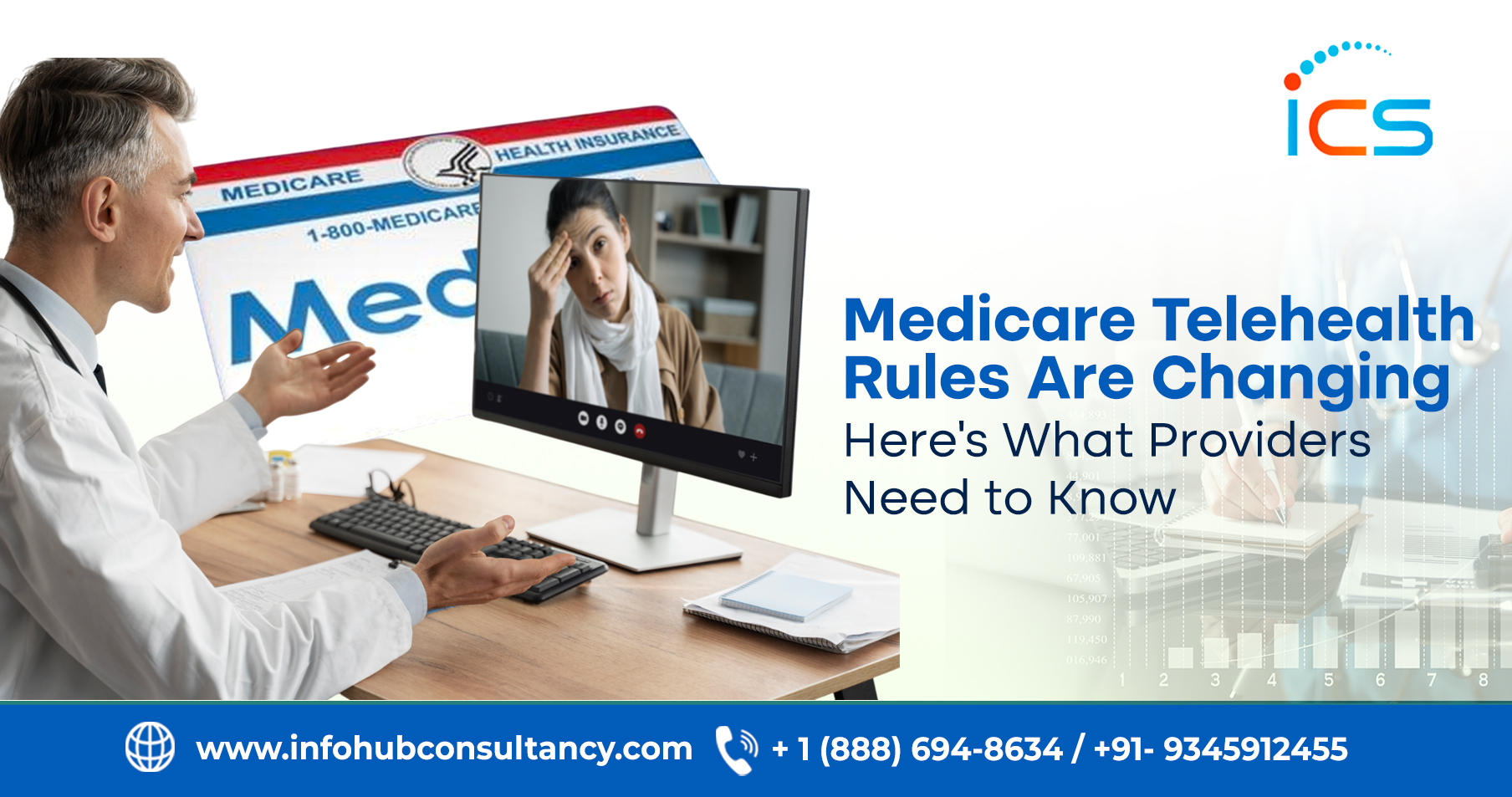
Medicare telehealth rules are undergoing a significant transition, and 2025 is the year providers must remain vigilant. The temporary flexibilities Read more

Are you confident that your psychiatry practice is being reimbursed correctly for every service you provide? Many mental health professionals Read more
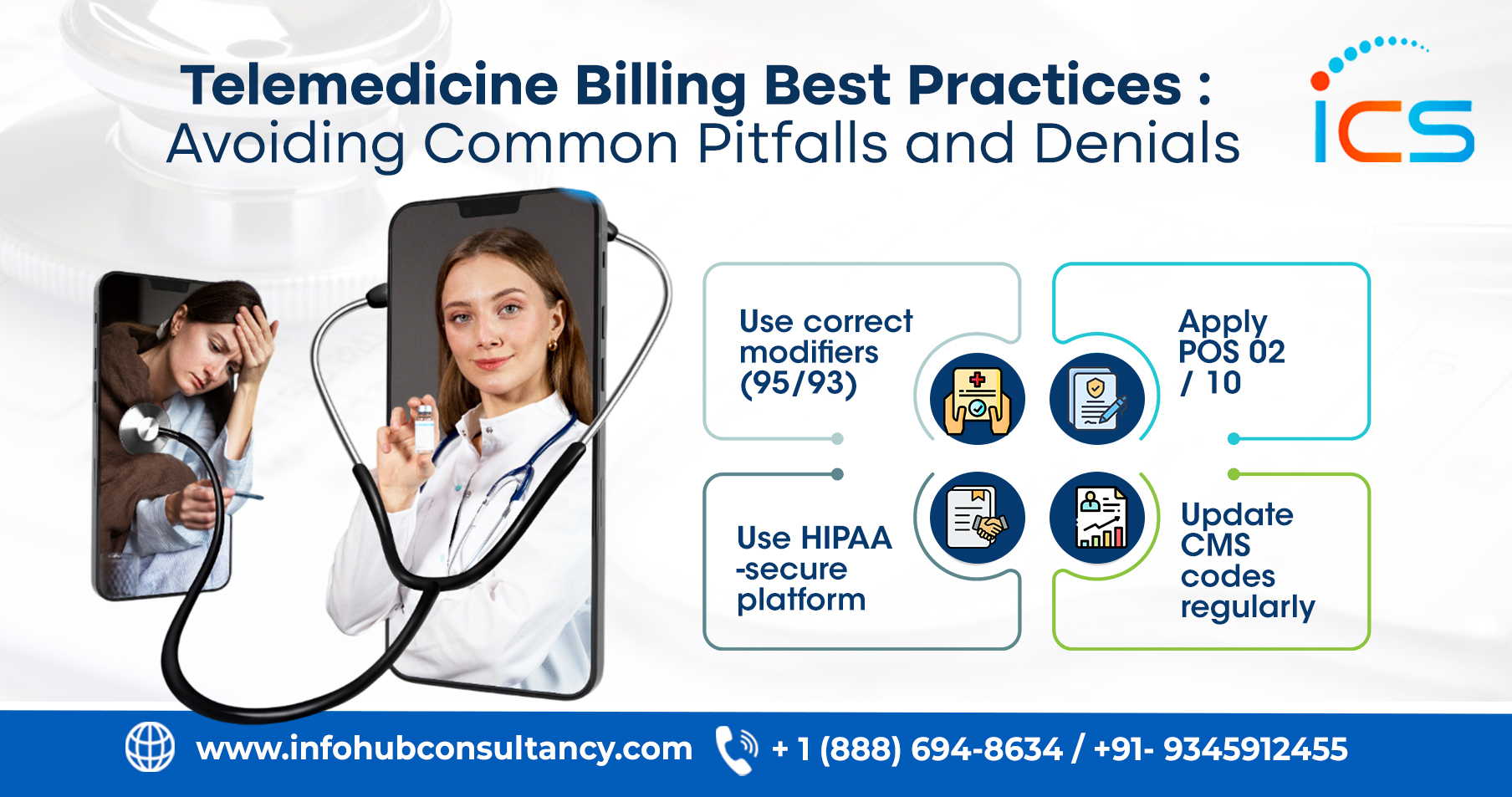
Have you ever wondered why many telemedicine claims are delayed or denied even when healthcare providers do everything correctly? In Read more