7 mins read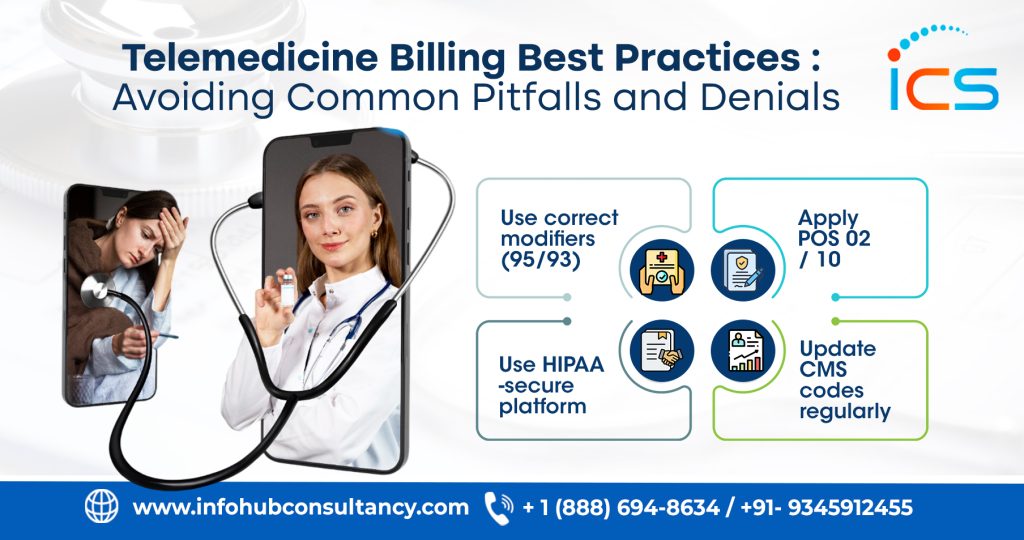
Have you ever wondered why many telemedicine claims are delayed or denied even when healthcare providers do everything correctly?
In today’s fast-changing digital healthcare world, billing for telemedicine services has become both an opportunity and a challenge. As more patients prefer virtual consultations, healthcare practices must adapt to new rules, codes, and payer policies that often change quickly. Unfortunately, even small mistakes in billing can cause claim rejections or payment delays.
Understanding how to avoid these errors is essential for keeping your revenue steady and ensuring that providers are adequately paid for their time and care. With clear processes, accurate coding, and up-to-date knowledge, practices can prevent denials and reduce stress for their billing teams.
InfoHub Consultancy handles complete medical billing, coding, and RCM for US healthcare providers — HIPAA compliant, offshore efficiency, proven results.
Get a Free Consultation →This blog will explore the best practices for telemedicine billing and explain how each one helps avoid common pitfalls and denials.
Verify Patient Eligibility Before Every Visit
It is crucial to ensure that a patient’s insurance covers telehealth services. In fact practices can prevent denials due to non-coverage or out-of-network issues by verifying eligibility before each visit. This proactive approach helps in identifying co-pays, deductibles and specific payer requirements to ensure that both the provider and patient are aligned on coverage details. Additionally, real-time eligibility checks reduce administrative errors and streamline the billing process which leads to smoother claim submissions and reduced chances of rejection.
Maintain Detailed and Accurate Documentation
Comprehensive documentation is crucial for substantiating the medical necessity of telehealth services. In fact the inclusion of specific details such as the type of technology used, session duration and patient consent ensures that the service meets payer requirements. This thorough record-keeping supports the chosen CPT codes and also safeguards against audits and potential denials. Hence, the healthcare practices can demonstrate compliance and reduce the chance of claim rejections by aligning documentation with payer-specific guidelines.
Utilize Appropriate CPT Codes and Modifiers
Correctly applying CPT codes and modifiers is essential for accurate billing. For instance using Modifier 95 for synchronous telehealth services and POS codes like 02 or 10 helps in distinguishing telehealth visits from in-person consultations. In fact adhering to these coding standards ensures that services are reimbursed at the appropriate rates. Moreover staying updated with the latest coding changes such as the introduction of new telehealth-specific codes to help in maintaining compliance and avoiding billing errors.
Implement Efficient Billing and Claims Processes
Streamlining billing procedures can significantly reduce the risk of claim denials. Submitting claims promptly and utilizing automated billing systems for real-time eligibility checks and claim scrubbing ensures that common errors are identified and corrected before submission. This proactive approach minimizes administrative burdens and accelerates the reimbursement cycle. Additionally, maintaining accurate patient demographic and insurance information further enhances claim accuracy and reduces the chances of rejections.
Stay Informed and Educate Team Regularly
The dynamic nature of telehealth regulations necessitates continuous education for the billing team. In fact regular training sessions on the latest coding updates, payer requirements and billing guidelines equip staff with the knowledge to handle telehealth claims effectively. Conducting internal audits to identify recurring errors and denial trends allows practices to address underlying issues promptly. Therefore, practices can enhance billing accuracy and reduce the incidence of claim denials by fostering a culture of continuous learning.
Obtain and Document Explicit Patient Consent
Before each telehealth session, the providers should secure and record patient consent according to payer and state requirements. This avoid denials related to missing consent documentation. Also, the provider demonstrates compliance with telehealth regulations, avoids legal challenges, and reassures payers that the service was authorized by clearly noting consent. Additionally, it helps establish patient understanding and agreement to reduce disputes about service delivery.
Verify Provider Licensing and Credentialing for Each Patient Location
Telehealth services across state lines can lead to denials if providers are not licensed in the state where the patient is located. Thereby, verifying provider credentials in advance guarantees that claims comply with state-specific regulations. This approach prevents payment rejections and supports audit readiness. Therefore practices can confidently submit claims without risking noncompliance or revenue loss by maintaining a record of current licenses and credentials.
Use Telehealth-Specific Modifiers Correctly
Certain telehealth visits require specific modifiers such as Modifier 93 for audio-only services or GQ for asynchronous encounters. Applying these modifiers correctly prevents claim denials due to coding errors. This practice ensures payers recognize the type of telehealth service rendered and reimburse it appropriately. It also helps differentiate virtual visits from in-person services to reduce confusion and the risk of underpayment.
Monitor and Track Telehealth Claim Denials Systematically
Implementing a process to track and analyze telehealth claim denials helps identify recurring issues. The healthcare practices can adjust coding, documentation or submission procedures accordingly by understanding denial patterns. This proactive monitoring prevents repeated denials and enables timely appeals. Over time tracking denials improves revenue cycle efficiency, reduces administrative costs and ensures more claims are successfully reimbursed.
Maintain Payer-Specific Telehealth Policy References
Each insurer may have unique telehealth requirements, including covered services, reimbursement rates, or documentation standards. In fact creating and updating a payer-specific reference list ensures billing aligns with these policies. This prevents claim denials arising from noncompliance and reduces confusion among staff. Regularly reviewing updates from Medicare, Medicaid, and commercial payers keeps the practice current and compliant with evolving telehealth regulations.
Document Telehealth Location Details Clearly
Always record the physical location of the patient and provider during the telehealth session. Many denials occur when the Place of Service (POS) code does not match the actual locations. In fact, practices ensure correct POS code assignment, prevent claim rejections and maintain transparency with payers by documenting this information accurately. This practice also supports auditing requirements and reinforces compliance with telehealth billing standards.
Use Secure and Compliant Telehealth Platforms
Claims may be denied if services are delivered on non-HIPAA-compliant platforms, especially for behavioral health billing workflows or sensitive information. Using secure telehealth systems ensures patient data privacy and satisfies payer requirements. It also protects against regulatory penalties and supports documentation for claim audits. Therefore, secure platforms facilitate smoother communication, proper consent recording, and verifiable session logs, all of which support successful reimbursement.
Outsource Telemedicine Billing to Infohub Consultancy Services
Outsourcing telemedicine billing and coding service providers in India brings efficiency, accuracy and compliance together under expert supervision. Their dedicated team specializes in handling the complex payer-specific rules, modifiers, and evolving telehealth coding updates. This will ultimately help to prevent denials caused by incorrect submissions or incomplete documentation. Additionally, ICS uses intelligent automation and real-time claim tracking to identify potential errors before claims are submitted to ensure faster approvals.
Furthermore, their tailored telehealth billing solutions help healthcare providers maintain compliance with Medicare, Medicaid, and private payers. In fact, providers gain access to industry expertise and reliable financial control to allow them to focus entirely on delivering quality patient care while maintaining a steady revenue flow.
FAQs
Why is patient consent necessary in telehealth billing?
It ensures legal compliance and prevents claim denials from missing documentation requirements.
Are telehealth billing audits necessary?
Regular audits help identify errors early and prevent recurring denials.
Can billing software prevent duplicate telemedicine claims?
Advanced billing systems flag duplicate entries before claims are submitted.
Why is real-time eligibility verification applicable in telemedicine?
It confirms coverage instantly to reduce rejected claims and payment delays.
For systematic prevention, follow-up and appeals support, explore ICS denial management services.
Related Blogs


InfoHub Consultancy handles complete medical billing, coding, and RCM for US healthcare providers — HIPAA compliant, offshore efficiency, proven results.
Get a Free Consultation →