6 mins read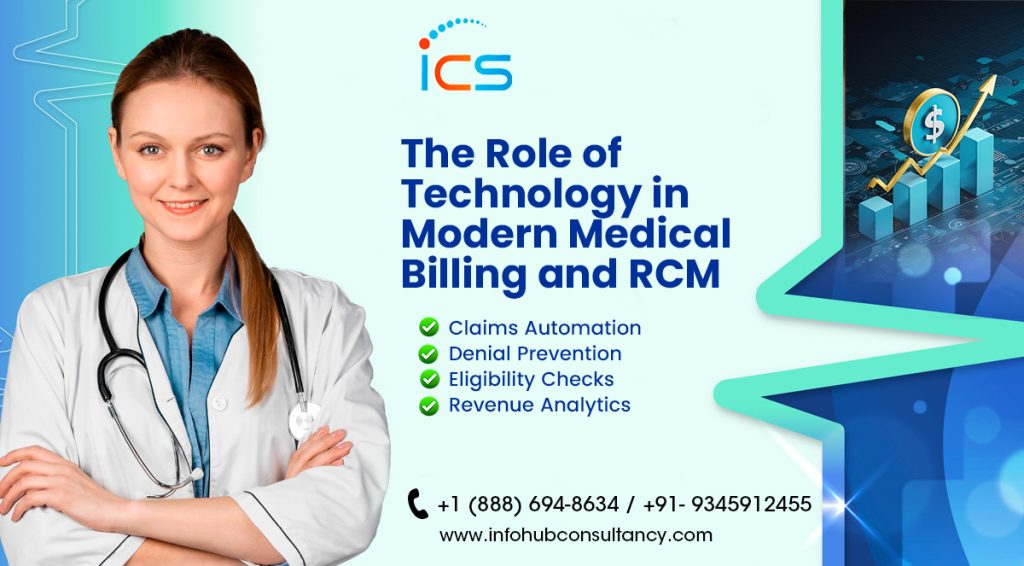
Medical billing and Revenue Cycle Management (RCM) have undergone significant shifts over the years. Early healthcare financial operations relied on paper records, manual data entry, and time-intensive administrative processes, leading to errors and delays. The introduction of computing technologies marked the beginning of digital transformation, but recent advancements in automation, artificial intelligence, and cloud-based systems have rapidly accelerated this evolution.
Today, technology enhances billing accuracy, streamlines workflows, and reduces administrative burdens. Modern RCM solutions speed up reimbursements, support compliance, and provide better financial visibility, helping organizations focus on patient care.
This blog explores how technology is reshaping modern medical billing and RCM.
InfoHub Consultancy handles complete medical billing, coding, and RCM for US healthcare providers — HIPAA compliant, offshore efficiency, proven results.
Get a Free Consultation →Core Technologies Transforming Modern Medical Billing and RCM
Technology has become the foundation of modern medical billing and RCM. Instead of relying on manual, time-consuming processes, healthcare organizations now use intelligent digital tools to improve accuracy, accelerate reimbursements, and maintain compliance. These technologies work together to streamline workflows, reduce administrative pressure, and ensure financial stability while allowing providers to focus more on patient care.
Artificial Intelligence (AI)
AI plays a critical role in improving accuracy across medical billing and RCM. In fact, AI systems identify relevant diagnoses and procedures to support correct code assignmentby automatically reviewing clinical documentation. As a result, billing errors caused by manual interpretation are reduced. Additionally, AI supports compliance by ensuring documentation aligns with payer and regulatory requirements, leading to more consistent and reliable billing outcomes.
Machine Learning (ML)
Machine learning strengthens RCM by learning from historical billing and claims data. ML models recognize patterns related to claim denials, payment delays, and revenue gaps. Consequently, billing teams can anticipate issues before submission. This continuous learning process helps organizations improve financial forecasting, reduce repeated mistakes, and refine revenue strategies with data-driven insights.
Natural Language Processing (NLP)
NLP enables billing systems to understand and interpret unstructured clinical notes written by providers. Instead of manually extracting information, NLP converts physician narratives into structured data suitable for billing. Therefore, coding accuracy improves while documentation gaps decrease. This technology ensures that important clinical details are not overlooked, supporting accurate billing and reducing payer clarification requests.
Automation and Robotic Process Automation (RPA)
Automation simplifies repetitive administrative tasks throughout the revenue cycle. Using RPA, processes such as eligibility verification, claims submission, and payment posting are completed quickly and accurately. As a result, billing teams spend less time on manual work and more time resolving complex issues. This leads to faster turnaround times, fewer errors, and improved operational efficiency.
Cloud-Based RCM Platforms
Cloud-based platforms provide centralized and secure access to billing data in real time. As systems are hosted online, staff can access financial information from multiple locations without delays. Additionally, cloud solutions scale easily as organizations grow. Regular updates and built-in security features further support compliance, data protection, and uninterrupted revenue cycle operations.
Electronic Health Records (EHR) Integration
EHR integration connects clinical documentation directly with billing systems. As patient data flows seamlessly between departments, the risk of duplicate entry or missing information decreases. Consequently, claims are more accurate and submitted faster. This integration also supports compliance by ensuring that billed services match documented care, reducing audits and reimbursement delays.
Interoperability Frameworks
Interoperability allows different healthcare and billing systems to exchange data smoothly. When systems communicate effectively, patient information remains consistent across platforms. Therefore, billing teams experience fewer errors related to mismatched or incomplete data. Interoperable systems also improve claim acceptance rates and reduce delays caused by manual data reconciliation.
Automated Claim Scrubbing Tools
Claim scrubbing tools review claims before submission to detect errors, missing fields, or payer-specific issues. In fact, these tools prevent avoidable denials by identifying problems early. As a result, claims move through the reimbursement process more efficiently. Automated scrubbing helps healthcare organizations maintain clean claims, reduce rework, and improve cash flow stability.
Predictive Analytics
Predictive analytics helps organizations proactively manage revenue risks. In fact, these tools highlight potential issues before they escalate by analyzing trends in claims, payments, and denials. Consequently, billing teams can prioritize high-risk claims and adjust workflows accordingly. Predictive insights support better planning, faster reimbursements, and improved long-term financial performance.
Business Intelligence (BI) Dashboards
BI dashboards provide a clear view of key RCM performance metrics in one place. Using visual reports, administrators can monitor denial rates, accounts receivable, and collection efficiency. Therefore, decision-making becomes faster and more informed. These dashboards help leadership identify bottlenecks and implement targeted improvements across billing operations.
Patient Engagement Technologies
Patient engagement tools improve transparency and payment convenience. Patients can view bills, receive reminders, and make secure payments through online portals. As a result, confusion and disputes decrease. These technologies also encourage timely payments, strengthen trust, and enhance the overall billing experience without adding administrative strain.
Real-Time Eligibility and Benefits Verification
Real-time verification tools confirm insurance coverage before services are provided. In fact, billing teams avoid claim rejections caused by inactive or incorrect coverage by identifying patient responsibility early. Consequently, unexpected billing issues are minimized. This technology supports smoother billing workflows and helps patients understand their financial obligations in advance.
Telehealth Billing Technology
Telehealth billing tools ensure accurate coding and compliance for virtual care services. As telemedicine expands, these systems automatically apply appropriate modifiers and payer-specific rules. Therefore, claims for remote services are processed correctly. This technology supports timely reimbursement while maintaining compliance with evolving telehealth regulations.
Cybersecurity and Data Protection Systems
Cybersecurity systems protect sensitive patient and financial data within billing platforms. Using encryption, access controls, and continuous monitoring, these tools prevent unauthorized access and data breaches. As a result, organizations maintain compliance with privacy regulations, preserve patient trust, and ensure uninterrupted revenue cycle operations.
Blockchain Technology (Emerging)
Blockchain is an emerging technology that enhances transparency in billing transactions. In fact, blockchain improves traceability and reduces fraud risks by creating tamper-resistant records. Although still developing, its potential lies in secure data sharing and transaction validation. Therefore, blockchain may further strengthen trust between providers, payers, and patients.
What’s Next?
Outsourcing medical billing and coding service providers in India contributes significantly to process continuity and revenue consistency in modern RCM environments. In fact, they ensure uninterrupted billing workflows by operating as extended back-office teams, especially during peak volumes or staffing shortages. Their structured quality checks, payer-specific expertise, and round-the-clock claim monitoring help maintain steady cash flow and reduce backlog accumulation.
Furthermore, offshore providers such as InfoHub Consultancy Services enable healthcare organizations to adapt quickly to regulatory updates and coding changes without frequent internal system disruptions. With dedicated teams focused solely on billing and compliance, providers benefit from faster rule implementation, reduced training overhead, and improved audit preparedness. This operational flexibility allows healthcare organizations to scale services efficiently while maintaining accuracy, compliance, and long-term financial resilience.
FAQs
How does technology support audit readiness?
Automated documentation and reporting ensure traceable and well-organized billing records.
Does technology help smaller practices compete financially?
Cloud-based tools provide enterprise-level capabilities without heavy infrastructure costs.
How does technology support multi-location healthcare practices?
Centralized digital systems allow unified billing management across multiple facilities.
Is technology useful for managing self-pay collections?
Digital payment tools improve collection rates and reduce outstanding balances.
For more on this topic, see our RCM healthcare.
Related Blogs

InfoHub Consultancy handles complete medical billing, coding, and RCM for US healthcare providers — HIPAA compliant, offshore efficiency, proven results.
Get a Free Consultation →