Revenue Cycle Management
  Insurance Verification
  Appointment Scheduling
  Charge Entry
  Denials Management
  Medical Billing
  Claims Submissions
  Payment Posting
  AR – Follow-ups
  Medical Coding
  Reporting
  Patient’s Statement
  Authorization
  Charge Review & Auditing (Coding & Billing)
  Compliance & Audit Readiness
  Clearing House & EDI Management
  Credentialing
  View All 65
Specialties
View All 65
Specialties Allergy and Immunology
  Ambulance
 Ambulatory Surgical Center
 Anesthesia
 Assisted Living Facility (ALF)
 Behavioral Health
 Cardiology
 Chiropractic
 Chronic Care Management (CCM)
 Community Behavioral Health
 Dental
 Dermatology
 Durable Medical Equipment
 Emergency Room
 Endocrinology & Diabetes
 Family Practice
 Gastroenterology
 General Surgery
 Geriatrics
 Healthcare
 7 mins read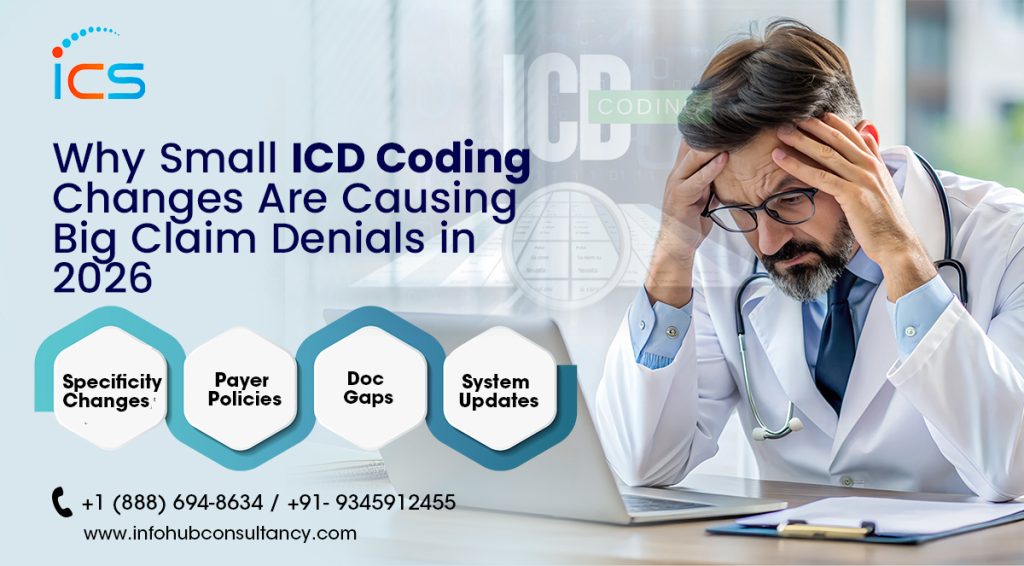
Did you know that the FY 2026 ICD-10-CM update introduced 487 new diagnosis codes, 38 revisions, and 28 deletions, effective October 1, 2025, as finalized by the CMS?
The industry data also consistently shows that coding-related discrepancies remain one of the leading contributors to preventable claim denials and revenue rework. So, what happens when hundreds of new codes demand greater specificity, whereas automated payer systems enforce stricter edits than ever before?
The answer lies in the hidden operational impact of small ICD-10-CM changes that now carry significant financial consequences.
This blog examines how expanded code structures, documentation precision requirements, AI-driven claim reviews, and workflow gaps are collectively driving denial rates in 2026 and what healthcare organizations can do to stay ahead.
Hidden Impact of 2026 ICD-10-CM Changes on Claims
-
Expanded Code Set
The addition of hundreds of new diagnosis codes reflects a deliberate shift toward capturing highly specific clinical distinctions. Therefore, coders must now report precise anatomical locations, defined severity levels, and clearly documented condition subtypes. In fact, generic coding fails automated payer edits when provider documentation lacks these essential elements. This ultimately increases denial rates despite appropriate and medically necessary care delivery.
-
Elimination of Broad Codes
Several frequently used unspecified or general diagnosis codes were either deleted or replaced with more detailed alternatives in the 2026 update. As a result, continuing to report legacy codes after October 1, 2025, leads to immediate claim rejection. Even one outdated code within a claim prevents adjudication, creating avoidable payment delays, resubmissions, and operational inefficiencies.
-
Stricter Documentation–Code Alignment Standards
In 2026, documentation must directly justify the specificity embedded within each assigned diagnosis code. For example, if a code requires laterality, remission status, or disease activity level, those exact descriptors must appear clearly in the medical record. When documentation fails to reflect these details, payers deny claims for insufficient support, regardless of accurate clinical treatment.
-
Increased Scrutiny of Unspecified Diagnoses
Although unspecified codes remain permissible when clinical information is genuinely unavailable, payers increasingly challenge their routine use. Consequently, claims containing unspecified diagnoses are more frequently flagged for medical review or denied for lack of specificity. This heightened scrutiny aligns with payer initiatives to strengthen risk adjustment accuracy and validate medical necessity documentation standards.
-
Greater Structural Complexity Within Code Categories
Many revised diagnosis categories now integrate multiple clinical variables, including episode of care, complication type, and disease phase, into a single code structure. Therefore, accurate code selection requires careful review of every character. Even a minor omission, misplaced extension, or incorrect sequencing can misclassify the diagnosis and activate automated denial algorithms.
-
AI-Enabled Claim Editing Systems
Payers are increasingly implementing AI-driven claim editing systems that cross-reference diagnosis codes with documentation patterns, procedure codes, and historical utilization data. As a result, discrepancies are detected instantly during electronic processing. Unlike traditional manual review workflows, these automated systems allow minimal flexibility, causing even small coding inconsistencies to trigger immediate denial outcomes.
-
Failure to Update EMR Systems
If electronic medical record templates are not updated to reflect the 2026 code set, clinicians may unknowingly select deleted or incomplete codes from outdated pick lists. Consequently, billing teams transmit invalid claims that are rejected before formal review. Missing documentation prompts within EMR workflows further increase the risk of preventable coding errors.
How to Reduce ICD-10-CM Denials in 2026?
Preventing denials in 2026 requires proactive system updates, stronger documentation practices, and coordinated collaboration between clinicians and coding teams. In fact, healthcare organizations can protect reimbursement timelines and reduce administrative burden by identifying gaps before claim submission. The following strategies provide a structured and practical roadmap for adapting to the evolving coding industry:
-
Implement Updated Codes Before the Deadline
All billing systems, encoders, clearinghouses, and internal reference tools must be updated with the FY 2026 ICD-10-CM code files before October 1. This ensures deleted codes are removed and newly introduced codes are fully activated. Early implementation significantly reduces the risk of submitting invalid diagnoses during the transition period.
-
Maintain Ongoing Code Table Reviews
As regulatory guidance may include quarterly addenda or clarifications, healthcare organizations should conduct periodic reviews of official coding updates. Routine monitoring keeps internal code libraries aligned with national standards. Therefore, consistent maintenance prevents mid-year discrepancies that could otherwise disrupt clean claim submission and delay reimbursement cycles.
-
Strengthen Provider Documentation Practices
Clinicians should receive focused education on documenting required elements such as severity, laterality, disease stage, remission status, and activity level. When these descriptors are consistently captured within encounter notes, coders can assign accurate and defensible diagnosis codes. Therefore, comprehensive documentation strengthens compliance while simultaneously reducing payer queries and appeals.
-
Embed Structured Prompts in EMR Systems
Integrating structured data fields within electronic medical records prompts providers to document mandatory clinical details. For example, dropdown selections for wound staging or heart failure classification guide more precise entries. Consequently, structured documentation workflows minimize ambiguity, enhance coding accuracy, and decrease the likelihood of denial due to missing specificity.
-
Conduct Targeted Pre-Submission Audits
Performing targeted internal audits focused specifically on newly introduced or revised codes helps identify documentation and coding discrepancies before claims are transmitted. Early detection enables timely corrections without payer involvement. Therefore, audit findings also inform training priorities and strengthen overall coding quality improvement initiatives.
-
Configure Automated Code Validation Alerts
Billing software should be configured to generate real-time alerts when deleted, invalid, or mismatched diagnosis codes are entered. These automated safeguards allow staff to correct errors immediately rather than after payer rejection. Proactive internal validation significantly lowers denial rates and improves first-pass claim acceptance performance metrics.
-
Encourage Clinician–Coder Collaboration
Establishing structured communication channels between providers and coding professionals ensures timely clarification when documentation lacks required specificity. Instead of making assumptions, coders can issue compliant queries to resolve uncertainties. This collaborative process enhances coding precision, strengthens compliance integrity, and reduces unnecessary delays caused by documentation gaps.
-
Provide Continuous Education Sessions
Ongoing education programs addressing major 2026 updates, including new ulcer classifications, remission-related diagnoses, and expanded specificity requirements, help teams remain current. Regular training reinforces best practices and discourages reliance on outdated coding habits. Ultimately, consistent education strengthens operational readiness and safeguards hospitals and clinics revenue stability.
Outsourcing Medical Coding Services in India
Outsourcing coding and billing functions to specialized partners in India has become a strategic solution for managing the increased complexity of FY 2026 ICD-10-CM updates. With heightened specificity requirements and automated payer scrutiny, internal teams often struggle to balance daily workloads with regulatory transitions. Thereby, partnering with InfoHub Consultancy Services for offshore medical billing and coding services in India provides access to certified coding professionals trained specifically in updated diagnosis guidelines, denial trend analysis, and payer edit monitoring.
Moreover, outsourcing medical billing and coding service providers in India operate within structured quality assurance frameworks. Such frameworks include dual-layer coding reviews, real-time code validation, and continuous training on CMS updates. This proactive model reduces error rates before claim submission rather than reacting after denial occurs. Additionally, time zone advantages enable faster claim processing cycles and quicker denial corrections. As a result, healthcare organizations benefit from improved first-pass claim acceptance rates, reduced administrative burden, and stronger overall revenue cycle performance in an increasingly complex coding environment.
FAQs
Do ICD-10-CM changes affect outpatient and inpatient claims equally?
Diagnosis coding accuracy impacts both professional and facility claims across care settings.
How often should practices review ICD-10-CM compliance internally?
Quarterly internal reviews are recommended to stay aligned with evolving coding standards.
How do coding changes affect multi-specialty practices?
Specialty-specific updates require targeted training to prevent cross-departmental claim errors.
Related Blogs
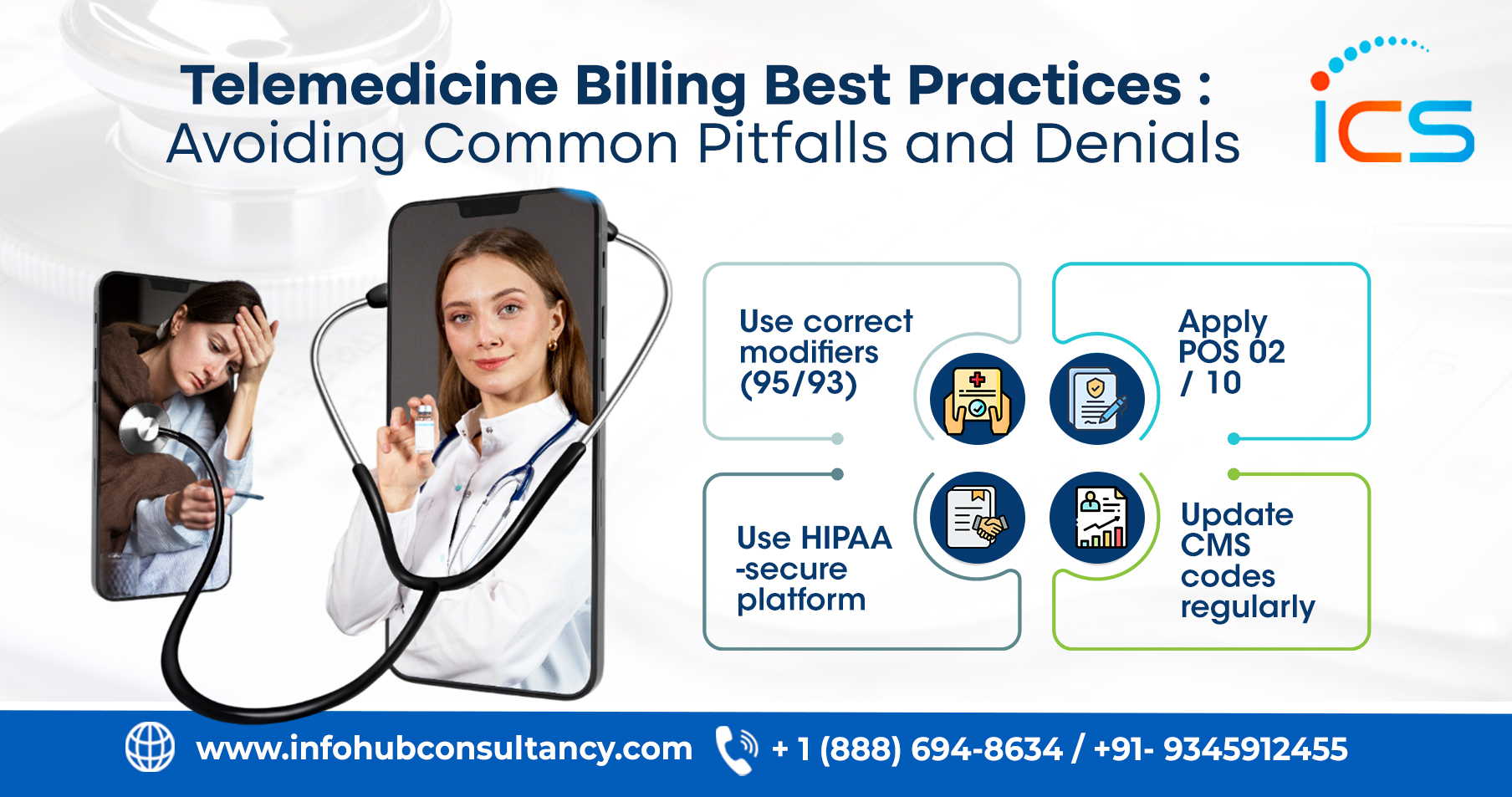
Have you ever wondered why many telemedicine claims are delayed or denied even when healthcare providers do everything correctly? In Read more

Have you ever wondered how much revenue your medical practice loses each year due to claim denials? Recent studies reveal that nearly one in Read more

Healthcare providers often face challenges with delayed payments, aging receivables and constant cash flow pressure. These issues not only slow down revenue Read more