7 mins read
Do you often wonder why your claims for multiple procedures get denied? Or why do facility fees not reflect the actual value of services provided?
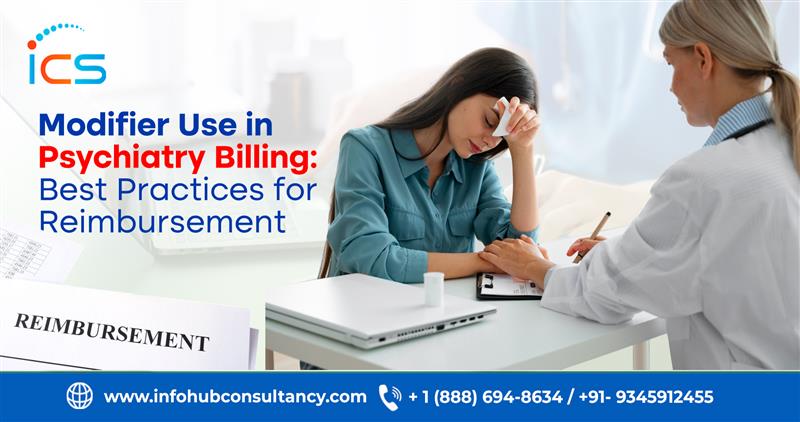
Many mental health practices struggle with the same challenges. The complexity usually comes from payer-specific rules, confusion about when and how to use modifiers and gaps in documentation that fail to support billed services fully. These issues can quickly lead to reduced reimbursements, delayed payments, or even claim rejections.
The good news is that there are proven strategies to simplify the process of coding multiple procedures correctly and optimize facility fees. It allows providers to spend less time fighting claim denials and more time focusing on patient care. This blog will discuss effective strategies to assist mental health providers.
InfoHub Consultancy handles complete medical billing, coding, and RCM for US healthcare providers — HIPAA compliant, offshore efficiency, proven results.
Get a Free Consultation →Effective Strategies to Code Multiple Procedures
Correctly coding multiple procedures is essential for fair reimbursement and for preventing costly claim denials. In fact, mental health providers can simplify the process and improve payment accuracy by following the proper steps.
- List the Primary Procedure First
Mental health providers should always place the most expensive or complex procedure at the top of the claim form. This ensures that the most important service is prioritized and reimbursed fully, while also reducing the chances of unnecessary payment reductions for essential treatments.
- Use Modifier 51 for Additional Procedures
When multiple services are performed in the same session, it is essential to attach Modifier 51 to all the additional procedures. This clearly signals to payers that more than one service was delivered, which helps prevent confusion and ensures accurate claim processing.
- Avoid Modifier 51 When Not Required
Mental healthcare providers need to remember that Modifier 51 should not be applied to add-on codes or in situations where payers automatically handle multiple procedure adjustments. Avoiding such unnecessary use helps keep claims accurate, ensures compliance with payer requirements, and reduces the likelihood of claim denials.
- Use Modifier 59 Correctly
Modifier 59 should only be used when procedures are distinct and performed separately from one another. Applying it correctly helps justify additional reimbursement, shows that services were not overlapping, and prevents the misuse of this modifier that could raise audit concerns.
- Understand Payment Reductions
When multiple procedures are billed together, secondary services typically receive a reduced payment under payer rules. Understanding how these reductions are applied permits providers to manage reimbursement strategies effectively and avoid confusion when payments appear lower than expected.
- Follow Payer Rules
Every payer has different policies regarding modifiers, coding requirements, and reimbursement adjustments. Mental health practices should carefully review these rules before submitting claims to ensure compliance, reduce the risk of denials and improve the chances of timely payment approval.
- Keep Documentation Clear
Providers should include detailed notes that describe each procedure performed, the medical necessity behind it, and the treatment outcomes. Clear and precise records support claim accuracy, reduce disputes, and help protect the practice in the event of payer audits.
Strategies to Optimize Facility Fees in Mental Health Billing
Optimizing facility fees in mental health billing requires a balance of accurate coding, strong documentation, and effective revenue cycle management.
- Capture All Billable Services
Mental health facilities must record and code every service provided, including therapy sessions, assessments, crisis interventions, and medication management. Capturing every billable service ensures no revenue is missed and allows facilities to receive the full reimbursement they are entitled to.
- Document Medical Necessity
It is vital that clinical notes explain clearly why each service was provided, how it supports the patient’s treatment plan, and what outcomes are expected. Documenting medical necessity strengthens the validity of the claim and helps secure payer approval for facility fees.
- Verify Insurance in Advance
Before delivering care, providers should verify patient coverage, session limits, copays, deductibles, and preauthorization requirements. Performing this step upfront prevents claim denials, reduces administrative issues, and gives patients a clear understanding of their financial responsibilities.
- Use Billing and EHR Software
Implementing billing and electronic health record (EHR) systems that work together can significantly streamline the revenue cycle. When patient notes connect directly with billing codes, it reduces manual errors, speeds up claims, and ensures greater accuracy in reimbursement.
- Strengthen Denial Management
Mental health facilities should develop a robust denial management process that tracks all denied claims, identifies recurring issues and implements corrective actions. A proactive strategy not only recovers lost revenue but also improves claim acceptance rates over time.
- Communicate Costs with Patients
Patients should be informed of deductibles, copays and other out-of-pocket costs before treatment begins. Open and transparent communication builds trust, reduces financial misunderstandings and increases the likelihood of patients making timely payments.
- Stay Updated with Rules and Codes
Providers should stay current with payer policy changes, regulatory updates, and new coding requirements. Regular monitoring ensures that claims remain compliant, reduces costly errors and supports consistent approval for facility fee reimbursements.
Dos for Mental Health Providers
- Verify Patient and Insurance Details
Always confirm eligibility and insurance coverage before coding. This prevents claim denials and ensures that the patient’s active plan supports every billed procedure.
- Use Correct CPT and HCPCS Codes
Select precise codes for each mental health service provided. As a result accurate coding helps maximize reimbursements and ensures that facility fees reflect the proper level of care.
- Apply Modifiers Appropriately
Add relevant modifiers when billing multiple procedures in one session. This helps differentiate services clearly and avoids payer confusion that may lead to claim rejections.
- Maintain Thorough Documentation
Document every session with detailed notes that support all coded procedures. In fact, clear records protect against audits and reinforce coding accuracy for mental health billing.
- Follow Payer-Specific Guidelines
Stay updated with each payer’s rules on multiple procedure billing. Understanding variations ensures smoother approvals and prevents unnecessary payment delays.
- Provide Ongoing Staff Training
Train coding and billing staff on the latest CPT updates and payer changes. Knowledgeable teams deliver consistent, compliant and accurate billing.
- Conduct Regular Internal Audits
Check coding practices frequently to identify errors. In fact, proactive audits enhance compliance, reduce denials, and optimize revenue from both procedures and facility fees.
Don’ts for Mental Health Providers
- Don’t Overlook Modifiers
Missing or incorrect modifiers often lead to claim rejections. Never assume that insurance payers will interpret multiple procedures without proper clarification.
- Don’t Bill Incompatible Procedures Together
Avoid billing unrelated or conflicting procedures in one session. This can trigger denials and raise compliance concerns.
- Don’t Neglect Documentation Gaps
Insufficient notes weaken claim credibility. Avoid coding without strong supporting documentation for every procedure performed.
- Don’t Assume All Services Can Be Unbundled
Some services must be bundled as per payer rules. Ignoring bundling policies may lead to overbilling and rejected claims.
- Don’t Ignore Time-Based Coding Rules
Never round up therapy session durations. Billing must reflect actual documented time to prevent underpayment or compliance risks.
- Don’t Forget Denial Tracking
Failing to monitor denial trends leads to recurring mistakes. Always analyze rejection patterns and fix them quickly.
- Don’t Rely on Guesswork for Complex Cases
Mental health billing is intricate, so never code without clarity. Seek professional billing support when handling multiple procedures or optimizing facility fees.
Conclusion
Many providers struggle with fluctuating patient volumes and complex coding requirements for multiple procedures. With the help of outsourcing mental health billing and coding service providers in India, they gain flexible staffing that adjusts to their needs without additional overhead. In fact, dedicated teams in India often work across different time zones, helping practices accelerate claim submission and shorten payment cycles.
Moreover, outsourcing partners implement strict quality audits and data security protocols to ensure both accuracy and compliance. Therefore, mental health practices can stabilize cash flow, optimize facility fees and sustain growth by leveraging these advantages.
FAQs
Q: Can offshore mental health billing and coding services in India improve coding accuracy?
Ans: Outsourcing offers expert support, faster claim submission, and compliance.
Q: How often should coding practices be reviewed?
Ans: Internal audits should be done regularly to ensure compliance.
Q: How does staying updated with payer policies help providers?
Ans: It ensures claims remain compliant and reduces unnecessary denials.
Related Blogs

InfoHub Consultancy handles complete medical billing, coding, and RCM for US healthcare providers — HIPAA compliant, offshore efficiency, proven results.
Get a Free Consultation →