7 mins read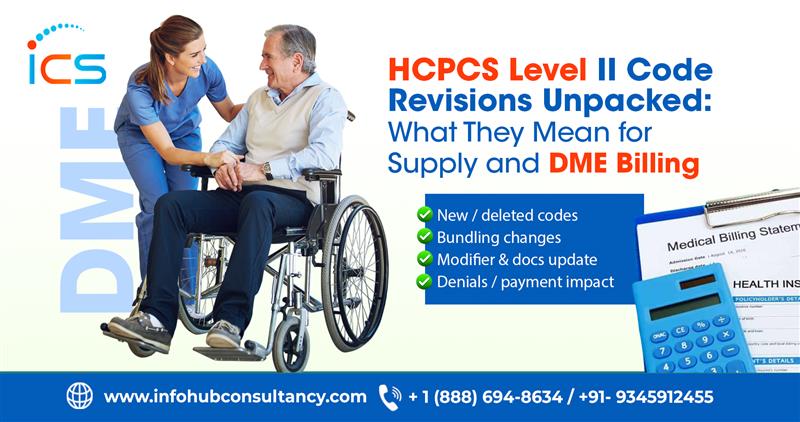
Did you know that even a single outdated HCPCS Level II code can result in claim denials and delayed reimbursements for suppliers and DME providers?
With over 10,000 active codes for supplies, prosthetics and durable medical equipment, staying current is more critical than ever. In fact, each quarterly update from CMS can introduce new codes, revise descriptors, or retire outdated codes, and missing these changes can impact both revenue and compliance.
But how can providers and suppliers ensure they are billing accurately while keeping up with these frequent updates? This blog will unpack the most recent HCPCS Level II revisions from 2024 through 2025 and explore their direct impact on supply and DME billing.
InfoHub Consultancy handles complete medical billing, coding, and RCM for US healthcare providers — HIPAA compliant, offshore efficiency, proven results.
Get a Free Consultation →Recent HCPCS Level II Updates & Revisions (2024–2025)
The HCPCS Level II codes undergo frequent updates to reflect changes in medical technology, supply chain needs, and regulatory priorities. Staying current with these revisions is critical for providers and suppliers involved in supply and durable medical equipment (DME) billing. The following updates capture the most recent changes from 2024 through the third quarter of 2025, with acknowledgment that Q4 2025 updates are pending release from CMS.
A. Supply Code Updates
1. New Codes for Disposable Supplies
In 2024 and 2025, CMS introduced new HCPCS Level II codes to accommodate the evolving categories of disposable supplies including advanced wound dressings, infusion-related disposables, and single-use medical kits. In fact, the notable additions include:
- A2036 – A2039: New wound management supplies to offer more precise categories for advanced dressings.
- A4288: Replacement valve for breast pumps for allowing separate billing for this frequently requested component.
These codes improve billing precision to ensure that suppliers are reimbursed more accurately based on the type and complexity of supplies provided.
2. Revisions to Existing Supply Codes
Several existing supply codes were revised for greater specificity. For example:
- A2024: Descriptor change for “Resolve matrix or xenopatch, per square centimeter.”
- A4271: Clarified for integrated lancing and blood sample cartridges for glucose monitors.
- Updates to catheters, syringes, and ostomy-related supplies refined code language to reduce miscoding and claim denials.
These updates aim to streamline claims processing and minimize audit risks for suppliers.
B. DMEPOS Code Updates
1. Durable Medical Equipment (DME) Additions
CMS has introduced new codes for innovative DME items that enhance patient care at home. These include–
- E0150: Combination wheeled walker with a seat to distinguish it from standard walkers.
- E0658 – E0659: New pneumatic appliances that reflect emerging therapeutic equipment.
This ensures coverage for emerging technologies that support patient mobility and home-based care.
2. Revisions to Oxygen & Respiratory Equipment Codes
Oxygen concentrators and ventilator-related HCPCS codes saw refinements in 2024 – 2025. The changes emphasize patient usage categories and equipment types which allow for more tailored billing and reduce the chances of overbilling or underpayment.
3. Prosthetics and Orthotics (within DMEPOS)
Although less frequent, certain orthotic and prosthetic codes tied to DMEPOS were updated to improve classification. For example:
- L6028: Coverage and descriptor change for prosthetic components.
These updates assist suppliers in billing accurately for braces, supports and artificial limb components supplied through DME programs.
C. DMEPOS Fee Schedule Adjustments
CMS aligned its DMEPOS fee schedule with the latest market and inflation trends in both 2024 and 2025 such as:
- A4453 and A4459: Both supply codes saw payment adjustments in 2025.
In fact, these updates ensure suppliers are reimbursed fairly and consistently across regions. Importantly adjustments in 2025 continue to strike a balance between provider sustainability and Medicare cost containment.
D. Compliance-Driven Code Retirements
Several outdated codes were retired or consolidated in 2024 and 2025. For instance–
- E0716 and several supply codes were discontinued as part of a consolidation effort.
These retirements were designed to eliminate redundancy and encourage the use of the most current and detailed codes available.
E. Quarterly Updates and Pending Revisions
It is important to note that HCPCS Level II codes are updated quarterly. Though this summary reflects annual and quarterly updates through Q3 2025, additional revisions are expected in Q4 2025. Suppliers should routinely monitor CMS releases to stay ahead of coding changes that directly impact reimbursement.
Impact on Supply & DME Billing
The recent HCPCS Level II code revisions have a direct influence on how suppliers and DME providers manage billing and reimbursement as:
A. Claim Denials & Payment Delays
When outdated codes or mismatched revisions are used, claims are far more likely to be rejected. As a result, suppliers often face unnecessary delays in payment, which can slow cash flow and extend the revenue cycle. This makes day-to-day financial management more difficult.
B. Coverage & Payment Shifts
As new or revised code descriptors often redefine how payers reimburse certain items, suppliers may experience shifts in both coverage rules and payment amounts. This transition can alter the way supplies and equipment are billed. This leads to differences in reimbursement that must be closely monitored.
C. Inventory & Catalog Management
As suppliers typically link their product SKUs directly to HCPCS Level II codes, any revisions require immediate updates to the catalog. If these changes are not made promptly, errors may occur in inventory tracking, order fulfillment and ultimately in claim submission which can create avoidable administrative burdens.
D. Compliance & Audit Readiness
Each update also comes with refined usage descriptions, which means that supporting documentation must align with the updated coding intent. Without proper documentation, suppliers and providers face not only a higher risk of denials but also increased exposure during payer audits, which can result in costly financial consequences.
E. Retroactive Effective Dates
In some cases, HCPCS Level II updates are applied retroactively, which means claims submitted during the transition period may already be outdated. Therefore, suppliers and providers must carefully review claims and reprocess them as necessary to prevent revenue loss and ensure compliance with CMS requirements.
How can DME Providers & Suppliers Handle Revisions?
Managing HCPCS Level II code revisions effectively requires a proactive and structured approach. As updates occur quarterly, suppliers and providers need to regularly monitor CMS releases, AAPC guidance, and DME MAC bulletins. This ensures that they can implement changes promptly and reduce errors caused by outdated code.
At the same time, billing platforms, EMRs, and claims systems must be updated to reflect the latest codes as delays in system updates can lead to miscoding, claim rejections, and extra administrative work. Workforce readiness is equally important as billing and coding teams require ongoing training to understand and apply new codes accurately.
Further, accurate coding helps minimize denials and maintain compliance with payer requirements. Although CMS provides standard updates, private payers may adopt changes at different times. Therefore verifying coverage and reimbursement rules with each payer is necessary to avoid payment delays or underpayments.
In fact, many DME suppliers and providers find it challenging to manage these frequent updates internally. As a result, partnering with outsourcing DME billing and coding service providers in India has become a practical solution. These experts monitor code revisions, update systems, and ensure compliance, which helps providers submit accurate claims, protect revenue, and reduce administrative burden.
FAQs
1. Do all DME items have HCPCS Level II codes?
Ans. Most do, but some specialized or newly developed equipment may receive temporary codes first.
2. Are code deletions retroactive?
Ans. Occasionally, deleted codes can affect claims submitted during the transition period.
3. Are temporary Q codes important for DME suppliers?
Ans. They track new products or services before permanent HCPCS codes are assigned.
4. Do code descriptor changes affect reimbursement rates?
Ans. Changes in long or short descriptors can influence payer coverage and payment amounts.
Related Blogs

InfoHub Consultancy handles complete medical billing, coding, and RCM for US healthcare providers — HIPAA compliant, offshore efficiency, proven results.
Get a Free Consultation →