


Home health billing is one of the most regulated and detail-driven areas of medical billing. Between Medicare home health billing guidelines, PDGM rules, CPT and ICD-10 code selection, consolidated billing, and documentation audits, even experienced agencies struggle to stay compliant while keeping cash flow steady.
Medicare fee-for-service home health uses the Patient-Driven Groupings Model (PDGM), with claims and OASIS assessment information informing payment grouping. Medicaid, Medicare Advantage and commercial plans have their own billing requirements. ICS offers home health billing support from India for US agencies. Discuss the tasks, payer requirements and review responsibilities that apply to your agency.
Define the proposed workload, systems access, working hours, fees and reporting with ICS. Assess the total cost and results against an agreed baseline; outsourcing does not guarantee reimbursement, compliance or lower overhead.

Home health billing refers to the process of submitting claims for skilled nursing, therapy, aide, and related services provided in a patient’s home.
Medicare home health coverage is subject to eligibility, skilled-care and other coverage requirements. Under PDGM, the payment unit is generally a 30-day period; eligibility recertification and plan-of-care review remain on a 60-day cycle, with earlier updates when required. Claims information and selected OASIS items jointly inform case-mix grouping. OASIS alone does not determine the final payment. See the CMS home health PPS explanation.
 Medicare home health billingMedicaid home health billingSelect commercial insurance plans
Home health billing requires strict adherence to CMS rules, including eligibility, certification, plan of care oversight, face-to-face encounter documentation, and correct CPT and ICD-10 code usage.
For Medicare home health, distinguish agency service codes from practitioner certification codes. The examples below are short HCPCS Level II summaries, not a complete code list or a coverage decision.
G0299 — RN direct skilled nursing, 15-minute unitsG0300 — LPN direct skilled nursing, 15-minute unitsG0151 — Physical therapist services, 15-minute unitsG0152 — Occupational therapist services, 15-minute unitsG0153 — Speech-language pathologist services, 15-minute unitsG0155 — Clinical social worker services, 15-minute unitsG0156 — Home health aide services under a plan of care, 15-minute unitsG0180 — Physician or allowed-practitioner certification, per certification periodG0179 — Physician or allowed-practitioner recertification, per recertification periodUse the CMS agency service-code instructions for reporting details. HHA visit reporting uses time increments; a listed code does not establish eligibility or separate payment.
G0180 and G0179 concern practitioner Part B certification work, not agency nursing or therapy visits. The CMS certification billing guidance explains the distinction and coverage requirements.


Select CPT or HCPCS codes according to the service, billing provider, payer and date of service. Agency home health claims and practitioner claims follow different reporting rules.
The documented service and disciplineThe billing agency or practitioner and applicable claim typeThe current CPT or HCPCS code set for the date of serviceRequired units, time records and revenue codesCoverage, authorization and payer-specific reporting requirementsClinical or documentation questions requiring review before billingUse the code set and payer instructions effective for the date of service. An older code example should not be treated as a current billing instruction.
ICD-10-CM describes documented diagnoses and helps determine PDGM clinical grouping. A diagnosis code alone does not establish Medicare home health eligibility, skilled need or coverage.
 The documented reason for home health care and supported diagnosesThe ICD-10-CM code set and sequencing rules effective for the date of serviceSupported secondary diagnoses and applicable PDGM grouping rulesClinician clarification when the record is incomplete or conflictingDiagnosis code selection kept separate from procedure and service coding
Review the applicable ICD-10-CM official guidelines with the complete record. Do not choose a diagnosis merely to obtain a preferred payment group.
We also manage historical records that reference ICD-9 codes for home health when required for audits or appeals.
Medicare home health billing is governed by strict CMS guidelines and the Patient-Driven Groupings Model (PDGM).
Medicare eligibility and benefit verificationPDGM clinical grouping validationHIPPS and assessment-data consistency checksVisit utilization monitoringReview against applicable Medicare home health billing instructionsSupport for G codes and Q codes for home healthAgree how billing questions will be reviewed and escalated. Payment remains subject to coverage, documentation and applicable payer rules.

In addition to Medicare, we manage:

Medicaid home health billing

State-specific Medicaid billing rules

Commercial payer billing for home health services

Authorization tracking and payer-specific CPT requirements
Confirm the payer-specific workflow, authorization checks and exception handling included in the proposal.

For Medicare home health, the primary HHA bills services subject to consolidated billing. Exclusions apply, including durable medical equipment (DME). Check the CMS home health consolidated-billing instructions and the service-specific requirements before deciding who should bill.
Home health consolidated billing list reviewCMS consolidated billing exclusionsTherapy and supply billing validationCoordination with outside providersDocument which services are included, which are excluded and how outside-provider billing questions will be resolved. A review process does not guarantee coverage or prevent an audit.
Home Health billing is fraught with complexities that can lead to claim denials and revenue loss. Common challenges include:
PDGM clinical grouping and comorbidity adjustment accuracyOASIS documentation accuracy affecting payment ratesNotice of Admission (NOA) submission and acceptance timing (Medicare fee-for-service)Low Utilization Payment Adjustment (LUPA) threshold managementHome health eligibility verification for homebound status
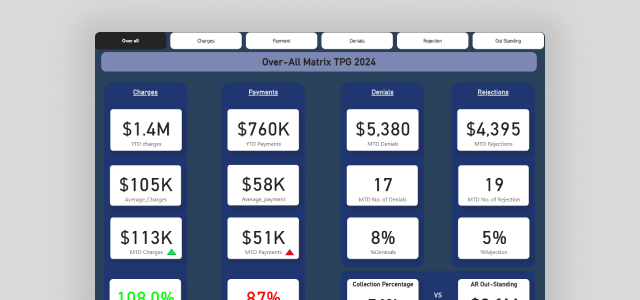
Discuss which of the following revenue cycle tasks are included in your proposed scope:
Intake and eligibility verificationCoding review and charge captureClaims submission and payer follow-upDenial management and appealsPayment posting and reconciliationAR aging and performance reportingTrack work queues, corrections, denials and payment timing using agreed definitions. Compare consistent periods and account for payer mix, volume and practice changes.

US home health agencies can review our insurance eligibility verification services as part of the specialty billing services available from ICS. Discuss a dedicated offshore FTE team or compare the percentage-based billing model to agree on workload, responsibilities and reporting for your agency.
Agencies evaluating offshore billing can discuss the following requirements with ICS:
Assigned billing and coding roles in IndiaAccess, confidentiality and safeguard requirementsTask-specific experience and review responsibilitiesWorkload, staffing capacity and coverage for agency locationsAgree which tasks the billing team will perform, what agency staff will review and how exceptions will be resolved.
Home health agencies often face:
Denial and documentation work queuesIncorrect CPT or ICD-10 code selectionPDGM grouping errorsDelayed certifications and recertificationsPreparation of records for Medicare billing reviews, within the agreed scopeICS proactively identifies and resolves these issues before they affect revenue.

Use your agency’s requirements to discuss a proposed scope with ICS:
Roles and task-specific experience relevant to your agencyPayer and documentation review responsibilitiesBaseline and follow-up measures for denials and payment timingProposed fees, included work and exclusionsReporting cadence, definitions and escalation contactsWe function as an extension of your internal billing team, not just a vendor.
For Medicare fee-for-service home health, the admission workflow uses a Notice of Admission (NOA), followed by claims for the applicable 30-day periods. NOAs replaced RAPs for periods beginning on or after January 1, 2022. Review the CMS NOA instructions for this change.
Discuss the roles, access permissions, safeguards and reporting needed for your agency. Review applicable agreements before sharing patient information. The HHS business associate guidance explains responsibilities relevant to billing services involving protected health information.

Discuss the NOA-to-claim workflow, OASIS documentation handoffs and payer requirements with ICS. Confirm tasks and review responsibilities in the agreed scope; payment depends on coverage, documentation and applicable payer rules.
These checkpoints summarize published CMS guidance for home health claims. The payer’s policy and the rule in effect for the date of service always apply.
Medicare home health PPS generally uses 30-day payment periods, subject to eligibility and coverage requirements. Periods below the applicable LUPA visit threshold are paid per visit rather than at the full period rate.
For each admission the agency submits a Notice of Admission. It is timely when the Medicare contractor accepts it within five calendar days after the admission date.
Only one Notice of Admission is needed for a series of periods from admission to discharge. After a discharge is reported, a new one is required before more claims are submitted.
For Medicare home health PPS, OASIS submission and claim-assessment matching are payment conditions. CMS describes an exception when a disaster-related OASIS submission waiver is in effect; the applicable claim instructions still apply.
The face-to-face encounter supporting home health certification must occur no more than 90 days before the start of care or within 30 days after it.
Medicare consolidated billing generally makes the primary HHA responsible for services included in the home health benefit. Exclusions apply, including DME, which may be billed separately subject to its own requirements.

Who We Are?
ICS is based in India and offers medical billing support for US healthcare organizations. Discuss your specialty, workload, working hours and reporting needs when defining the scope.

Speak to our Experts on
End-to-End Medical Billing Services provider across entire US.

We offer medical billing services that feed to different types of medical practices.
 Ambulance
 Cardiology
 Radiology
 Family Practice
 Ophthalmology
Discuss your organization, workload and location requirements so that the proposed scope reflects the work you need.
Tell ICS your state, payer mix and agency workload when discussing a proposal. Agree the working arrangements and review responsibilities for your agency.
 Agency-specific workload and scope Documented access and safeguard requirements State and payer requirements reviewed during scoping
Use the selector below to explore relevant specialty services. Describe state and payer requirements in your enquiry.
Identify the practice management or EHR platform your agency uses. Confirm the approved access, licensing, training and workflow responsibilities before work begins.
Scope any proposed data exchange or integration separately, including feasibility, responsibilities, testing, access controls and cost. Confirm the agreed workflow before production use.

Request a consultation to discuss your home health billing workload, documentation handoffs and payer requirements. Agree the proposed scope, costs, reporting and next steps before making a staffing or outsourcing decision.
What is home health billing?
Home health billing is the process of submitting claims for skilled nursing, therapy, aide, and related services provided in a patient’s home under Medicare, Medicaid, or commercial plans.
What CPT codes are used for home health services?
Home health billing uses CPT codes for nursing visits, therapy services, aide services, evaluations, and certification and plan of care oversight.
What is PDGM and how does it affect billing?
PDGM replaced the 60-day PPS episode with 30-day periods and changed payment calculation to be based on clinical groupings and comorbidities. ICS optimizes billing under PDGM.
How does OASIS accuracy affect payment?
OASIS determines the HHRG used for payment calculation. Accurate OASIS completion by clinicians directly impacts reimbursement rates.
Do you handle billing for all payers in home health?
Yes, including Medicare, Medicaid, managed care, and commercial insurance for home health services.
How does Medicare home health billing work?
Medicare reimburses home health agencies based on PDGM groupings, diagnosis codes, visit utilization, and compliance with CMS guidelines.
What causes home health billing denials?
Common causes include incomplete documentation, incorrect ICD-10 codes, invalid CPT codes, PDGM errors, and certification issues.
Can home health billing be outsourced to India?
Yes. Many U.S. agencies outsource home health billing to India for cost efficiency and specialized expertise while maintaining compliance.
Do you handle audits and appeals?
Yes. We support home health billing audits, compliance reviews, and denial appeals.
What happens if a Notice of Admission is filed late?
Medicare reduces the payment for the period of care based on the days from admission to acceptance of the notice. The reduction is provider liability and cannot be billed to the beneficiary.
What is a LUPA?
A Low Utilization Payment Adjustment applies when an agency provides fewer visits than the threshold for the period's case-mix group. The agency is then paid a standardized per visit payment.
Do certifications still run 60 days under 30-day payment?
Yes. Although payment is made per 30-day period, home health permits continuous 60-day recertifications, and each 60-day certification can include two 30-day payment periods.
Tell us your specialty, payer mix and billing priorities.
Build a dedicated offshore team or align billing fees with collections.

“ Partnering with ICS transformed our revenue cycle. Claim approvals are faster, denials have dropped significantly, and we finally have clear visibility into our billing performance. ”
Founder, Sunrise Family Clinic

“ The ICS team is knowledgeable, responsive, and deeply committed to helping our practice grow. Their customized dashboard gives us real-time insights we never had before. ”
Orthopedic Surgeon, CareAxis Hospital
“ We were drowning in paperwork and delays before ICS stepped in. Their team streamlined everything, from eligibility checks to patient billing, and gave us time to focus on care. ”
Practice Manager, Lotus Women's Health Center
“ ICS is more than a billing service—they’re a strategic partner. Their compliance-first approach gives us confidence, and their results speak for themselves. ”
Pulmonologist, Airway Specialty Clinic
“ With ICS, we saw a 35% increase in collections within the first quarter. Their billing accuracy and follow-up on aging claims are unmatched. ”
Dermatologist, ClearSkin Clinic