
Pharmacy revenue cycle management plays a critical role in ensuring pharmacies get paid accurately and on time for the medications and services they provide. Unlike standard physician billing, pharmacy billing involves a mix of medical billing rules, HCPCS and CPT codes, ICD-10 diagnosis support, payer-specific drug policies, and complex reimbursement structures.
Info Hub Consultancy Services delivers end-to-end pharmacy revenue cycle management and pharmacy billing support for U.S. healthcare organizations. As an offshore billing partner based in India, we help pharmacies improve cash flow, reduce denials, and maintain compliance across commercial payers, Medicare, and Medicaid.

Pharmacy billing is the process of submitting claims for medications, infusions, specialty drugs, and pharmacy-related services using medical billing rules rather than traditional retail pharmacy claim systems alone.

Charge capture for pharmacy-dispensed services
Coding using CPT codes, HCPCS codes, and ICD-10 codes
Claim submission to medical payers
Payment posting, denial management, and audits
This is especially important for hospital pharmacies, outpatient pharmacies, and specialty pharmacy operations.
Pharmacy billing relies on accurate coding to justify reimbursement. Our team supports:
Pharmacy CPT codes used for billable services
HCPCS codes for drugs, injections, and supplies
ICD-10 codes for pharmacy billing to establish medical necessity
Correct handling of pharmacy revenue codes
We ensure pharmacy codes in medical billing align with payer policies and documentation requirements.
We follow CMS pharmacy billing guidelines to ensure compliance with:
Medicare billing rules
Outpatient pharmacy billing requirements
Hospital pharmacy revenue cycle standards
This reduces audit risk and prevents avoidable claim rejections.
Our pharmacy billing services are designed for hospitals, outpatient pharmacies, and specialty pharmacy providers. Services include:

Pharmacy billing and coding

Claim submission and payer follow-up

Denial resolution and appeals

Payment posting and reconciliation

Pharmacy revenue cycle internal audit support
We work as a pharmacy billing agency or long-term billing partner based on your operational needs

Hospital pharmacy billing requires coordination between clinical, pharmacy, and billing teams. We support:
Hospital pharmacy revenue cycle workflows
Pharmacy revenue cycle management in hospital settings
Accurate linkage between medication administration and billing

Specialty drugs involve higher reimbursement risk and stricter payer rules. Our specialty pharmacy billing services focus on:
Prior authorization coordination
Drug-specific billing rules
Ongoing payer follow-up

Many healthcare organizations choose outsourcing pharmacy billing to reduce cost and improve accuracy. Our offshore pharmacy billing services from India provide:
Trained pharmacy billing specialists
HIPAA-aligned data security
U.S. payer expertise
Scalable support without increasing local staffing
We support pharmacy medical billing outsourcing for both standalone pharmacies and hospital systems.
Strong pharmacy RCM requires ongoing monitoring and process control. Our approach includes:
Pharmacy revenue cycle flowchart mapping
Revenue leakage analysis
Denial trend tracking
Continuous performance improvement
This structured model improves reimbursement timelines and strengthens long-term financial stability.

Healthcare organizations partner with us because we offer:
Deep experience in pharmacy medical billing
Strong knowledge of pharmacy CPT, HCPCS, and ICD-10 codes
Offshore execution with U.S. compliance discipline
Transparent reporting and proactive communication
ICS pharmacy billing specialists accurately code drug administration services, manage specialty pharmacy billing, and ensure compliance with Medicare Part D and Part B billing requirements. Our dedicated team helps pharmacy practices and clinics maximize reimbursement for drug-related services. Let ICS optimize your pharmacy billing revenue cycle today.
These checkpoints summarize published CMS guidance for pharmacy claims. The payer’s policy and the rule in effect for the date of service always apply.
Medicare Part B covers only a limited set of drugs, so most outpatient prescription drugs fall under Part D instead. Always confirm which part applies before billing.
Part B covers injectable and infusible drugs that are not usually self-administered and are furnished and administered as part of a physician service.
If Part A or Part B would pay for a drug as prescribed and dispensed or administered, Part D cannot cover that drug for that person.
Part D-covered drugs are defined as drugs available only by prescription, used and sold in the United States and used for a medically accepted indication, plus biological products, insulin and vaccines.
Part B covers immunosuppressive drugs for people who had a Medicare covered transplant, while immunosuppressives in other situations are handled under Part D.
Part B covers drugs that require administration through a nebulizer or infusion pump in the home, under the durable medical equipment benefit.

Who We Are?
We’re a team of Indian grounded experts streamlining medical billing
services to US-based healthcare professionals for more than 10 years. We strategise specialty-specific conditions and agree working windows with each client, offering customized services.

Speak to our Experts on
End-to-End Medical Billing Services provider across entire US.

We offer medical billing services that feed to different types of medical practices.
 Ambulance
 Cardiology
 Radiology
 Family Practice
 Ophthalmology
Whether you operate as an individual practitioner or manage a healthcare association with multiple sites, we offer a solution tailored to your requirements.
With over a decade of experience serving diverse specialties and provider groups across the U.S., we ensure you get local-quality support, regardless of location.
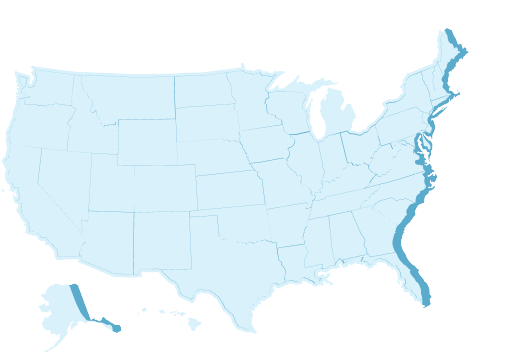
 Trusted by 140+ Providers in All 50 States HIPAA-Compliant Offshore Billing Experts Specialized Teams for State-Specific Billing Needs
Select your location below to learn how we support practices like yours.
To ensure top-notch service delivery, we use premier industry platforms similar to










Also, we offer support for custom APIs and integrations with customer systems, streamlining data synchronization and billing operations.

Discuss your Pharmacy billing workflow, payer mix, backlog and reporting requirements with ICS. Compare a dedicated offshore FTE team with a percentage-based billing model, then choose the structure that fits your volume and control requirements.
What is pharmacy revenue cycle management?
Pharmacy RCM manages the full billing lifecycle for medications and pharmacy services, from coding to reimbursement.
How is pharmacy billing different from retail pharmacy claims?
Pharmacy medical billing uses CPT, HCPCS, and ICD-10 codes and follows medical payer rules instead of point-of-sale pharmacy claims.
Do you support hospital and outpatient pharmacy billing?
Yes. We handle hospital pharmacy billing, outpatient pharmacy revenue cycle management, and specialty pharmacy billing.
Can pharmacy billing be outsourced to India?
Yes. Many U.S. organizations outsource pharmacy billing to India for cost efficiency and skilled resources.
What causes denials in pharmacy billing?
Common causes include missing medical necessity, incorrect coding, payer policy mismatches, and documentation gaps.
Why might Part B deny a self-injected drug?
Part B is built around injectable drugs that are not usually self-administered and are given as part of a physician service. If an injection is usually self-administered, it may not be covered by Part B and may fall to Part D.
What does the Part B Immunosuppressive Drug benefit cover?
It covers continuous immunosuppressive drugs that are medically necessary for preventing or treating rejection of a transplanted organ or tissue, and no other items or services.
Are nebulizer drugs covered for patients in a long-term care facility?
Not under the Part B DME benefit, which by law applies only to services delivered in the home. A Part D plan may cover those prescriptions instead.
Tell us your specialty, payer mix and billing priorities.
Build a dedicated offshore team or align billing fees with collections.

“ Partnering with ICS transformed our revenue cycle. Claim approvals are faster, denials have dropped significantly, and we finally have clear visibility into our billing performance. ”
Founder, Sunrise Family Clinic

“ The ICS team is knowledgeable, responsive, and deeply committed to helping our practice grow. Their customized dashboard gives us real-time insights we never had before. ”
Orthopedic Surgeon, CareAxis Hospital
“ We were drowning in paperwork and delays before ICS stepped in. Their team streamlined everything, from eligibility checks to patient billing, and gave us time to focus on care. ”
Practice Manager, Lotus Women's Health Center
“ ICS is more than a billing service—they’re a strategic partner. Their compliance-first approach gives us confidence, and their results speak for themselves. ”
Pulmonologist, Airway Specialty Clinic
“ With ICS, we saw a 35% increase in collections within the first quarter. Their billing accuracy and follow-up on aging claims are unmatched. ”
Dermatologist, ClearSkin Clinic