


Podiatry billing requires precise coding, strict Medicare compliance, and detailed documentation to support medical necessity. From routine foot care to complex procedures and chronic condition management, podiatry claims are frequently reviewed by payers. Even minor errors in CPT codes, modifiers, or diagnosis selection can lead to denials or delayed reimbursement.
Podiatry medical billing requires knowledge of foot care limitations under Medicare, diabetic foot care coding, and surgical procedure billing for foot and ankle conditions. ICS provides specialized podiatry billing services that help US podiatrists maximize collections while navigating complex payer rules.
Info Hub Consultancy Services provides specialized podiatry billing services for U.S. podiatry practices. As an offshore medical billing company based in India, we support podiatrists with accurate coding, compliant billing workflows, and reliable podiatry revenue cycle management.

Podiatry billing focuses on services related to foot, ankle, and lower extremity care. These services are highly regulated, especially under Medicare, and require clear documentation of medical necessity.

Podiatry medical billing for outpatient clinics
Billing for podiatry office visits and procedures
Compliance with CMS podiatry billing guidelines
Our approach helps reduce audits while improving reimbursement consistency.
Podiatry billing covers routine foot care (with strict Medicare limitations), toenail debridement, wart and lesion removal, orthotics fitting, foot and ankle surgeries including bunionectomies and hammertoe corrections, and wound care for diabetic foot ulcers. Medicare has specific class findings requirements for routine foot care that must be documented precisely to avoid claim denials.
Our medical coders are proficient in all Podiatry CPT codes, including:
11720 — Debridement, nail, 1-5
11721 — Debridement, nail, 6 or more
28296 — Hallux valgus correction, with sesamoidectomy
11740 — Evacuation of subungual hematoma
28285 — Correction, hammertoe
99212 — Office visit, established, low complexity
97597 — Wound debridement, selective

Accurate CPT coding is critical in podiatry due to frequent use of modifiers and procedure-specific rules.
Podiatry CPT codes for evaluations and treatments
CPT code for podiatry office visit
CPT code for podiatry consult and referral
Most common podiatry CPT codes used in daily practice
CPT codes for podiatry procedures and routine care
Specialized codes such as 64640 CPT code podiatry
Our team stays updated on podiatry CPT codes 2024 and 2025 to ensure correct reimbursement.

Diagnosis coding must clearly justify podiatry services, especially for Medicare claims.
ICD-10 code for podiatry visit and evaluation
ICD-10 code for podiatry consult and referral
Common podiatry ICD-10 codes for chronic and acute conditions
ICD-10 code for routine podiatry exam (when applicable)
ICD-9 code for podiatry (legacy and audit support)
Each claim is reviewed to ensure diagnosis selection aligns with payer rules and billed CPT services.
Medicare podiatry billing is one of the most regulated areas of specialty billing. Our team supports:
Medicare podiatry billing guidelines
Medicare podiatry codes and modifier usage
Documentation requirements for routine vs medically necessary care
CMS podiatry billing guidelines interpretation
We help reduce denials tied to eligibility, frequency limits, and documentation gaps.
Our podiatry billing and coding services cover the full revenue cycle:
Charge entry and coding validation
Claim submission and payer follow-up
Denial management and corrections
Appeals and payment posting
AR aging cleanup
We also provide ongoing podiatry billing support to maintain billing accuracy as payer rules evolve.
Podiatry billing is fraught with complexities that can lead to claim denials and revenue loss. Common challenges include:
Medicare class findings documentation for routine foot care
High denial rates for non-covered foot care services
Accurate surgical coding for bunion and hammertoe corrections
Diabetic foot care billing and documentation requirements
Coordination with vascular and wound care for diabetic patients

Effective podiatry revenue cycle management ensures steady cash flow while reducing compliance risk. Our RCM services include:

Eligibility verification

Clean claim submission

Denial trend analysis

Reporting and revenue optimization
Practices looking for the best revenue cycle management for podiatry benefit from our specialty-focused workflows.

Many clinics choose to outsource podiatry billing to reduce costs and administrative burden. Our offshore delivery model offers:
Dedicated podiatry billing teams in India
HIPAA-aligned access and secure systems
Continuous CPT and ICD-10 updates
Scalable support without local staffing expansion
We provide outsourcing podiatry medical billing services for practices across the U.S.

A podiatry billing company
A podiatry billing agency
A long-term podiatry billing services company
Our team integrates with your EHR and adapts to your practice workflow without disrupting patient care.

Telemedicine code for podiatry
Codes for telehealth consultations podiatry
Proper modifier usage and documentation standards
This ensures compliance with payer-specific telehealth rules.
Podiatry practices work with us because we provide:
Strong expertise in podiatry CPT and ICD-10 coding
Medicare-focused billing accuracy
Offshore execution with U.S. compliance discipline
Transparent reporting and proactive follow-up
Our goal is to let podiatrists focus on patient care while we manage billing complexity.

ICS podiatry billing specialists ensure class findings documentation meets Medicare requirements, reducing denied routine foot care claims. We accurately code surgical procedures, manage diabetic foot care billing, and provide dedicated follow-up for denied claims.
As a trusted offshore medical billing partner for US healthcare providers, ICS combines deep specialty knowledge with HIPAA-compliant processes, transparent reporting, and a dedicated FTE model that scales with your practice. Contact us today for a free consultation.

ICS podiatry billing specialists accurately document Medicare class findings, manage diabetic foot care coding, and ensure compliance with foot care coverage policies. Our dedicated team helps podiatrists maximize collections while reducing denials for routine and surgical foot care services. Partner with ICS for expert podiatry billing support today
These checkpoints summarize published CMS guidance for podiatry claims. The payer’s policy and the rule in effect for the date of service always apply.
Medicare generally excludes routine foot care. Cutting or removing corns and calluses and trimming or debriding nails are the examples CMS gives of services considered routine and not covered.
Routine-type foot care may be covered when a systemic metabolic, neurologic or peripheral vascular condition results in severe circulatory embarrassment or areas of diminished sensation in the legs or feet.
For many listed systemic conditions, marked with an asterisk in the manual, routine procedures are covered only if the patient is under the active care of an MD or DO who documents the condition.
CMS allows a presumption of coverage when the physician identifies one Class A finding, two Class B findings, or one Class B and two Class C findings, all documented in the record.
Treating mycotic nails is covered only when the attending physician documents clinical evidence of toenail mycosis plus the required limitation, pain or secondary infection. Claim information must be backed by the medical record.
Diabetic shoes require certification by an MD or DO managing the diabetes under a comprehensive plan of care. The record must show diabetes plus a qualifying foot condition such as neuropathy with callus or prior ulcer.

Who We Are?
We’re a team of Indian grounded experts streamlining medical billing
services to US-based healthcare professionals for more than 10 years. We strategise specialty-specific conditions and agree working windows with each client, offering customized services.

Speak to our Experts on
End-to-End Medical Billing Services provider across entire US.

We offer medical billing services that feed to different types of medical practices.
 Ambulance
 Cardiology
 Radiology
 Family Practice
 Ophthalmology
Whether you operate as an individual practitioner or manage a healthcare association with multiple sites, we offer a solution tailored to your requirements.
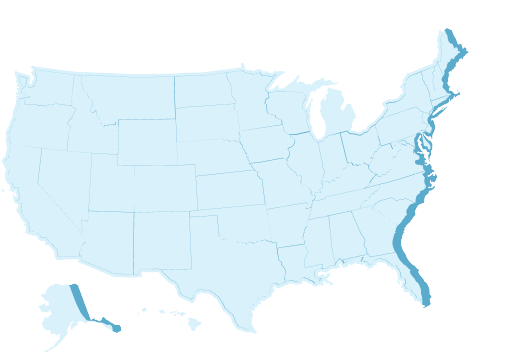
With over a decade of experience serving diverse specialties and provider groups across the U.S., we ensure you get local-quality support, regardless of location.
 Trusted by 140+ Providers in All 50 States HIPAA-Compliant Offshore Billing Experts Specialized Teams for State-Specific Billing Needs
Select your location below to learn how we support practices like yours.
To ensure top-notch service delivery, we use premier industry platforms similar to










Also, we offer support for custom APIs and integrations with customer systems, streamlining data synchronization and billing operations.

Discuss your Podiatry billing workflow, payer mix, backlog and reporting requirements with ICS. Compare a dedicated offshore FTE team with a percentage-based billing model, then choose the structure that fits your volume and control requirements.
What is podiatry billing?
Podiatry billing involves coding and submitting claims for foot and ankle services using CPT, ICD-10, and Medicare-specific rules.
Which CPT codes are commonly used in podiatry?
Common podiatry CPT codes include evaluation, treatment, and procedure-based codes specific to foot and ankle care.
What are Medicare class findings for routine foot care?
Class findings are systemic conditions that make routine foot care medically necessary. ICS ensures these are documented and included in claims.
How do you handle billing for custom orthotics?
Custom orthotics have specific billing requirements including HCPCS codes, detailed documentation, and in some cases prior authorization.
Do you handle billing for diabetic foot care programs?
Yes, including therapeutic shoe programs, wound care, and preventive foot care with appropriate G-codes and documentation.
Is Medicare podiatry billing different from commercial billing?
Yes. Medicare has stricter documentation and medical necessity rules for podiatry services.
Do you support podiatry billing outsourcing?
Yes. We provide outsourced podiatry billing services from India for U.S. practices.
How do you reduce denials in podiatry billing?
We focus on accurate coding, correct modifier use, eligibility checks, and proactive follow-up.
Do you help with podiatry CPT and ICD-10 updates?
Yes. We continuously track updates to podiatry CPT codes and diagnosis requirements.
Can you support multi-provider podiatry practices?
Yes. Our model scales easily for group practices and multi-location clinics.
What do the Q7, Q8 and Q9 modifiers mean on podiatry claims?
They report the class findings that support routine foot care based on a systemic condition: Q7 is one Class A finding, Q8 is two Class B findings, and Q9 is one Class B and two Class C findings. Modifier use and diagnosis lists are set in MAC billing articles.
How often can Medicare cover a foot evaluation for diabetic sensory neuropathy with LOPS?
NCD 70.2.1 covers an evaluation of the feet as a physician service no more often than every six months when there is a documented diagnosis of diabetic sensory neuropathy and loss of protective sensation, provided no foot care specialist was seen for another reason in the interim.
Does the foot care exclusion depend on the type of provider or the difficulty of the procedure?
No. CMS says the exclusion is determined by the nature of the service, so an excluded service is denied whether a podiatrist, osteopath or medical doctor performs it, and regardless of how complex it is.
Tell us your specialty, payer mix and billing priorities.
Build a dedicated offshore team or align billing fees with collections.

“ Partnering with ICS transformed our revenue cycle. Claim approvals are faster, denials have dropped significantly, and we finally have clear visibility into our billing performance. ”
Founder, Sunrise Family Clinic

“ The ICS team is knowledgeable, responsive, and deeply committed to helping our practice grow. Their customized dashboard gives us real-time insights we never had before. ”
Orthopedic Surgeon, CareAxis Hospital
“ We were drowning in paperwork and delays before ICS stepped in. Their team streamlined everything, from eligibility checks to patient billing, and gave us time to focus on care. ”
Practice Manager, Lotus Women's Health Center
“ ICS is more than a billing service—they’re a strategic partner. Their compliance-first approach gives us confidence, and their results speak for themselves. ”
Pulmonologist, Airway Specialty Clinic
“ With ICS, we saw a 35% increase in collections within the first quarter. Their billing accuracy and follow-up on aging claims are unmatched. ”
Dermatologist, ClearSkin Clinic