

Remote patient monitoring has become a core part of chronic care, post-acute follow-up, and preventive healthcare in the U.S. However, RPM medical billing is very different from standard evaluation and management billing. It requires strict adherence to CMS remote patient monitoring billing guidelines, correct RPM CPT codes, and accurate documentation of device use, data transmission, and clinical time.
Info Hub Consultancy Services provides RPM medical billing services for U.S. providers through a secure offshore delivery model from India. We help practices, clinics, and RPM vendors bill compliantly, reduce denials, and scale remote patient monitoring programs without increasing internal billing overhead.
RPM in medical billing refers to billing for non-face-to-face monitoring of patient health data using FDA-approved devices. This includes physiological data such as blood pressure, glucose levels, pulse oximetry, and weight.

Use of approved remote patient monitoring CPT codes
Proof of device setup and patient consent
Minimum data transmission days
Documented clinical review time
Unlike telehealth visits, remote patient monitoring billing is ongoing and time-based, which makes compliance especially important.
We manage RPM CPT codes across multiple years, including updates and payer interpretations.
CPT code for remote patient monitoring device setup and education
CPT codes for data transmission and monitoring
Time-based RPM CPT codes for clinical staff review and physician oversight
Remote patient monitoring CPT codes 2020, 2021, 2023
Remote patient monitoring CPT codes 2024
RPM CPT codes 2025
CPT codes for RPM under Medicare and commercial plans
We also validate RPM billing codes, RPM codes in medical billing, and RPM codes Medicare to ensure correct payer submission.

CMS RPM billing guidelines define how and when RPM services can be billed. We strictly follow:
CMS remote patient monitoring billing guidelines
CMS RPM billing guidelines 2022, 2023, 2024
CMS RPM billing guidelines 2025 updates
Minimum days of device data collection
Distinction between RPM and CCM billing
Documentation for medical necessity
Appropriate billing under Medicare RPM rules
We also help providers interpret CMS RPM codes, CPT code for RPM, and payer-specific RPM billing requirements.
Remote patient monitoring billing is often confused with telehealth billing, but they are not the same.
RPM does not require a real-time visit
Billing is based on device usage and clinical time
RPM billing guidelines differ from telehealth CPT rules
RPM can be billed alongside CCM when compliant
We help providers navigate remote patient monitoring telehealth billing differences to avoid duplicate billing or CMS audits.

Accurate documentation is the foundation of compliant RPM billing.
Patient consent documentation
Device assignment and activation records
Data transmission logs
Clinical review notes
Time tracking for RPM services
RPM billing guidelines 2021–2025
CMS RPM billing requirements
Medicare RPM billing rules
Patient enrollment volume
Data compliance rates
Clinical review efficiency
Clean claim submission
Charge capture for RPM services
RPM billing guide setup
Denial management and reprocessing
AR follow-up and payment reconciliation
This structured approach improves RPM profitability without increasing provider workload.

Although RPM is primarily CPT-driven, correct diagnosis linkage is still required.
ICD-10 code for remote patient monitoring (diagnosis justification)
Chronic condition mapping for RPM billing
Proper pairing of ICD-10 codes with RPM CPT codes
This reduces denials tied to medical necessity validation.

Many U.S. providers outsource RPM billing to reduce cost and complexity. As an India-based offshore RPM billing partner, we provide:
Dedicated RPM billing specialists
Secure system access with HIPAA-aligned workflows
Knowledge of CMS RPM billing guidelines
Support for multi-state RPM programs
Our offshore RPM billing model helps practices scale without hiring local billing staff.
Our RPM billing services cover:

RPM medical billing

RPM billing codes validation

RPM CPT code updates (2024–2025)

CMS RPM billing compliance

RPM and CCM billing coordination

Denial prevention and audit support
We work with primary care, chronic care programs, and RPM vendors across the U.S.
Providers partner with us because we offer:
Deep knowledge of RPM CPT codes and CMS rules
Accurate billing across multiple RPM code years
Offshore execution with U.S. compliance discipline
Clear reporting and predictable revenue flow
ICS RPM billing specialists accurately code device setup, patient education, and monthly monitoring services under the CMS remote physiologic monitoring payment policy. Our dedicated team helps practices build compliant and profitable RPM programs that generate recurring monthly revenue. Partner with ICS to launch or optimize your RPM billing today.
These checkpoints summarize published CMS guidance for remote patient monitoring claims. The payer’s policy and the rule in effect for the date of service always apply.
CMS states that remote physiologic monitoring requires an established patient relationship, a requirement it does not apply to remote therapeutic monitoring.
Only physicians and non-physician practitioners who are eligible to provide evaluation and management services can bill remote monitoring services under Medicare.
For remote physiologic monitoring, the number of days of data collected in a 30-day period depends on the code descriptor, and treatment management codes are exempt from that data-day requirement.
Medicare allows only one practitioner to bill remote monitoring for a given patient in a 30-day period, so coordination between practices matters.
Physiologic data must be collected electronically and uploaded automatically to a secure location for the billing practitioner to analyze. The device must also meet the FDA definition of a medical device.
CMS requires patient consent at the time remote patient monitoring services are provided, so consent should be documented in the record.

Who We Are?
We’re a team of Indian grounded experts streamlining medical billing
services to US-based healthcare professionals for more than 10 years. We strategise specialty-specific conditions and agree working windows with each client, offering customized services.

Speak to our Experts on
End-to-End Medical Billing Services provider across entire US.

We offer medical billing services that feed to different types of medical practices.
 Ambulance
 Cardiology
 Radiology
 Family Practice
 Ophthalmology
Whether you operate as an individual practitioner or manage a healthcare association with multiple sites, we offer a solution tailored to your requirements.
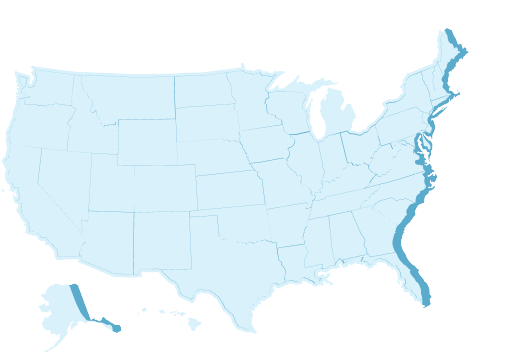
With over a decade of experience serving diverse specialties and provider groups across the U.S., we ensure you get local-quality support, regardless of location.
 Trusted by 140+ Providers in All 50 States HIPAA-Compliant Offshore Billing Experts Specialized Teams for State-Specific Billing Needs
Select your location below to learn how we support practices like yours.
To ensure top-notch service delivery, we use premier industry platforms similar to










Also, we offer support for custom APIs and integrations with customer systems, streamlining data synchronization and billing operations.

Discuss your Remote Patient Monitoring (RPM) billing workflow, payer mix, backlog and reporting requirements with ICS. Compare a dedicated offshore FTE team with a percentage-based billing model, then choose the structure that fits your volume and control requirements.
What is RPM medical billing?
RPM medical billing is the process of billing insurers for remote monitoring of patient health data using approved devices and documented clinical review.
Which CPT codes are used for RPM?
RPM uses specific CPT codes for device setup, data transmission, and clinical monitoring time, updated annually by CMS.
Can RPM be billed under Medicare?
Yes. Medicare allows RPM billing when CMS RPM billing guidelines are followed.
How is RPM different from telehealth billing?
RPM is ongoing, data-driven monitoring, while telehealth involves real-time patient visits.
Can RPM and CCM be billed together?
Yes, when CMS requirements for both services are met and documentation is clear.
What causes denials in RPM billing?
Common issues include missing consent, insufficient data days, and incorrect time documentation.
Do you support RPM billing for 2024 and 2025 codes?
Yes. We actively manage RPM CPT codes for 2024 and 2025.
Is outsourcing RPM billing to India safe?
Yes, when done with secure access controls and HIPAA-aligned processes.
Who can bill RPM services?
Physicians and qualified healthcare providers under CMS guidelines.
How long does RPM billing onboarding take?
Typically 2–4 weeks depending on systems, workflows, and payer setup.
Can auxiliary staff furnish remote monitoring services?
Yes. CMS states that auxiliary personnel can provide remote monitoring services under the general supervision of the billing practitioner.
How is remote therapeutic monitoring different from remote physiologic monitoring?
CMS says remote physiologic monitoring tracks physiological metrics such as blood pressure, while remote therapeutic monitoring captures non-physiological data related to a therapeutic treatment, which can be self-reported.
What kind of condition must remote physiologic monitoring address?
The practitioner must be monitoring an acute or chronic condition, and CMS also requires that the monitoring be medically reasonable and necessary.
Tell us your specialty, payer mix and billing priorities.
Build a dedicated offshore team or align billing fees with collections.

“ Partnering with ICS transformed our revenue cycle. Claim approvals are faster, denials have dropped significantly, and we finally have clear visibility into our billing performance. ”
Founder, Sunrise Family Clinic

“ The ICS team is knowledgeable, responsive, and deeply committed to helping our practice grow. Their customized dashboard gives us real-time insights we never had before. ”
Orthopedic Surgeon, CareAxis Hospital
“ We were drowning in paperwork and delays before ICS stepped in. Their team streamlined everything, from eligibility checks to patient billing, and gave us time to focus on care. ”
Practice Manager, Lotus Women's Health Center
“ ICS is more than a billing service—they’re a strategic partner. Their compliance-first approach gives us confidence, and their results speak for themselves. ”
Pulmonologist, Airway Specialty Clinic
“ With ICS, we saw a 35% increase in collections within the first quarter. Their billing accuracy and follow-up on aging claims are unmatched. ”
Dermatologist, ClearSkin Clinic