
Substance abuse treatment programs operate under some of the most complex billing rules in healthcare. From DSM-5 diagnosis accuracy to payer-specific authorization rules, even small errors can disrupt cash flow. Many programs struggle with denied claims, delayed reimbursements, and compliance risks tied to incorrect coding.
Substance abuse disorder billing involves navigating complex SAMHSA regulations, 42 CFR Part 2 confidentiality rules, and payer-specific behavioral health requirements. ICS provides specialized substance abuse billing services that help US treatment facilities maximize reimbursement while maintaining full regulatory compliance.
As a best substance abuse disorder SUD billing company, Info Hub Consultancy Services supports U.S. addiction treatment centers with accurate billing, compliant coding, and dependable revenue cycle management. Our experienced offshore billing team helps programs stay financially stable while meeting clinical and regulatory expectations.
Our substance abuse disorder SUD billing services are designed for providers delivering outpatient, inpatient, and community-based addiction treatment. We manage billing workflows for a wide range of substance use disorder programs, including detox, counseling, medication-assisted treatment, and ongoing recovery care.

Substance abuse disorder SUD billing for private and community programs
Billing coordination for multi-location treatment centers
Scalable billing support for growing organizations

Substance abuse billing covers detoxification services, residential treatment, intensive outpatient programs (IOP), partial hospitalization programs (PHP), medication-assisted treatment (MAT), individual and group counseling, and case management services. Medicaid plays a significant role in substance abuse treatment reimbursement, with state-specific rules adding complexity. The CURES Act and mental health parity laws also impact billing.
Accurate diagnosis coding is essential for successful SUD billing. Our billing specialists ensure correct use of DSM-5 and ICD code sets to support medical necessity and payer compliance.
We apply appropriate DSM-5 substance abuse disorder codes and DSM-V substance abuse disorder classifications to align clinical documentation with payer requirements.

ICD-10 codes for substance abuse disorder
ICD-10 codes for substance abuse mood disorder
ICD-10 code for SUD
Legacy ICD-9 codes for substance abuse disorder when required for historical claims
This structured coding approach reduces rejections and audit risk.
Our medical coders are proficient in all Substance Abuse CPT codes, including:
H0004 — Behavioral health counseling and therapy, per 15 minutes
H0010 — Alcohol and/or drug services — sub-acute detoxification
H0015 — Alcohol and/or drug services — intensive outpatient program
99408 — Alcohol/substance screening and brief intervention, 15-30 minutes
90832 — Psychotherapy, 30 minutes
T1006 — Alcohol and/or substance abuse services
H2036 — Alcohol and/or drug prevention program
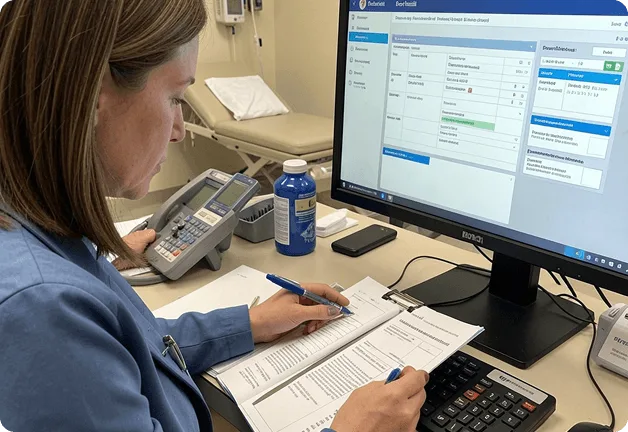
Substance Abuse billing is fraught with complexities that can lead to claim denials and revenue loss. Common challenges include:
42 CFR Part 2 confidentiality restrictions affecting claim submissions
Complex Medicaid billing rules varying by state
Prior authorization requirements for residential and inpatient levels of care
Billing for multiple concurrent levels of care
Accurate HCPCS code selection for behavioral health services

Correct CPT code selection plays a major role in reimbursement success. We manage CPT codes for substance abuse disorder services, including doctor office visits, counseling sessions, and structured treatment programs.
Our billing process ensures CPT codes align with diagnosis codes, authorization limits, and payer billing rules.

Strong revenue cycle management keeps treatment programs operational and sustainable. Our SUD billing and RCM workflows include:
Eligibility verification and benefit checks
Authorization tracking and utilization monitoring
Claim submission and follow-up
Denial management and appeals
By addressing issues early, we help programs reduce revenue leakage and stabilize cash flow.

Many treatment centers choose outsourcing to control costs and improve billing consistency. Our offshore billing team supports U.S. providers with secure, HIPAA-aligned workflows.
Substance abuse disorder SUD billing services in Delaware, Florida, Connecticut, and Ohio
Scalable billing services for multi-state organizations
Dedicated billing teams focused on addiction treatment
Outsourcing allows programs to focus on patient care without expanding internal billing staff.

We support substance abuse disorder billing programs nationwide, including:
New York
North Carolina
South Carolina
Texas
Virginia
California
Georgia
Rhode Island
New Jersey
Our experience with state-specific payer rules helps programs operate confidently across regions.
Treatment centers work with us because we offer:
Deep experience in substance abuse disorder billing
Accurate DSM-5, ICD-10, and CPT coding
Reliable denial prevention and AR management
Scalable billing support for growing programs
We combine technical billing expertise with a clear understanding of addiction treatment workflows.
ICS substance abuse billing specialists understand the unique regulatory environment of addiction treatment billing. We handle Medicaid and commercial insurance billing, manage prior authorizations for residential programs, and ensure 42 CFR Part 2 compliance in all claim submissions.
As a trusted offshore medical billing partner for US healthcare providers, ICS combines deep specialty knowledge with HIPAA-compliant processes, transparent reporting, and a dedicated FTE model that scales with your practice. Contact us today for a free consultation.

ICS substance abuse billing specialists navigate 42 CFR Part 2 restrictions, Medicaid billing rules, and prior authorization requirements for addiction treatment programs. Our dedicated team helps treatment facilities maximize reimbursement for all levels of substance abuse care — from detox to outpatient counseling. Partner with ICS for expert substance abuse billing services.
These checkpoints summarize published CMS guidance for substance abuse disorder claims. The payer’s policy and the rule in effect for the date of service always apply.
CMS created a Section 1115(a) opportunity for states to test flexibilities that improve the continuum of care for people with substance use disorders, including opioid use disorder. Billing rules therefore vary by state demonstration.
CMS states that SUD demonstrations incorporate metrics showing whether outcomes for Medicaid beneficiaries are improving. Providers in demonstration states should expect state reporting and monitoring requirements alongside claims.
Under the Social Security Act, an institution for mental diseases is a hospital, nursing facility or other institution with more than 16 beds that is primarily engaged in treating mental diseases. Bed count and primary purpose drive the label.
CMS explains that residential SUD treatment is ordinarily not federally reimbursable because of the statutory exclusion for institutions for mental diseases. Approved 1115 demonstrations are the route around that limit.
CMS states the SUD demonstration opportunity does not pay room and board in residential facilities unless they qualify as inpatient facilities under section 1905(a). Billing teams should separate treatment services from room and board.
CMS guidance says state Medicaid programs must cover all drugs and biologicals FDA has approved or licensed for medication-assisted treatment of opioid use disorder. Methadone is among the covered drugs, subject to setting rules.

Who We Are?
We’re a team of Indian grounded experts streamlining medical billing
services to US-based healthcare professionals for more than 10 years. We strategise specialty-specific conditions and agree working windows with each client, offering customized services.

Speak to our Experts on
End-to-End Medical Billing Services provider across entire US.

We offer medical billing services that feed to different types of medical practices.
 Ambulance
 Cardiology
 Radiology
 Family Practice
 Ophthalmology
Whether you operate as an individual practitioner or manage a healthcare association with multiple sites, we offer a solution tailored to your requirements.
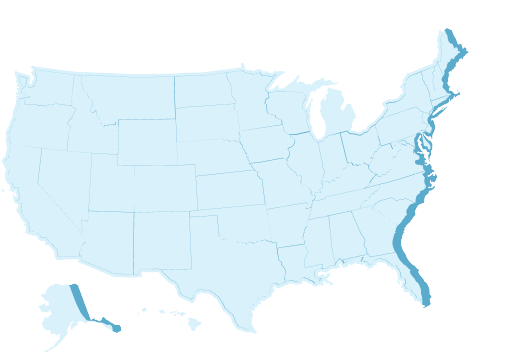
With over a decade of experience serving diverse specialties and provider groups across the U.S., we ensure you get local-quality support, regardless of location.
 Trusted by 140+ Providers in All 50 States HIPAA-Compliant Offshore Billing Experts Specialized Teams for State-Specific Billing Needs
Select your location below to learn how we support practices like yours.
To ensure top-notch service delivery, we use premier industry platforms similar to









Also, we offer support for custom APIs and integrations with customer systems, streamlining data synchronization and billing operations.

Discuss your substance use disorder billing workflow, payer mix, backlog and reporting requirements with ICS. Compare a dedicated offshore FTE team with a percentage-based billing model, then choose the structure that fits your volume and control requirements.
What is substance abuse disorder billing?
Substance abuse disorder billing is the process of coding, submitting, and managing claims for addiction treatment services using DSM-5, ICD, and CPT codes.
How does 42 CFR Part 2 affect billing?
42 CFR Part 2 restricts disclosure of substance abuse treatment records. ICS ensures all billing practices comply with these confidentiality requirements.
Can ICS handle billing for both residential and outpatient programs?
Yes, we bill for all levels of care from detox and residential treatment to IOP and standard outpatient counseling.
Do you handle billing for MAT (medication-assisted treatment)?
Yes, including billing for buprenorphine, methadone, and naltrexone treatment with appropriate J-codes and pharmacy billing coordination.
Why is DSM-5 coding important for SUD billing?
DSM-5 codes help support accurate diagnosis documentation, which is essential for medical necessity and payer approval.
What causes denials in SUD billing?
Common causes include incorrect diagnosis coding, missing authorizations, incomplete documentation, and CPT-ICD mismatches.
Do you handle ICD-10 and legacy ICD-9 codes?
Yes. We manage current ICD-10 codes and legacy ICD-9 codes when required for older claims.
Can SUD billing be outsourced?
Yes. Many U.S. treatment centers outsource SUD billing to improve accuracy and reduce operating costs.
Do you support multi-state treatment programs?
Yes. We manage billing for programs operating across multiple states with different payer rules.
How do you help reduce claim denials?
We focus on clean claim submission, proper coding alignment, and proactive denial management.
Do you work with community and private treatment centers?
Yes. We support both community-based programs and private addiction treatment providers.
Is your billing process compliant?
Yes. Our workflows follow payer guidelines, documentation standards, and HIPAA requirements.
How long does onboarding take?
Onboarding typically takes 2–4 weeks, depending on system access, payer setup, and documentation readiness.
When can federal funds pay for services in an IMD under an SUD demonstration?
CMS states that federal payment for IMD services is prospective only and depends on CMS approval of the state's implementation plan. Services rendered before approval are not covered.
Can states reduce their own SUD spending because of federal IMD funding?
CMS encourages states to maintain current funding for a continuum of services. The initiative is not meant to reduce or divert state spending on mental health and addiction treatment.
Do state Medicaid programs cover behavioral health services for SUD?
Medicaid.gov notes that many states include SUD behavioral health services in their state plans, managed care waivers and Section 1115 demonstrations. The exact benefit and billing rules depend on the state.
Tell us your specialty, payer mix and billing priorities.
Build a dedicated offshore team or align billing fees with collections.

“ Partnering with ICS transformed our revenue cycle. Claim approvals are faster, denials have dropped significantly, and we finally have clear visibility into our billing performance. ”
Founder, Sunrise Family Clinic

“ The ICS team is knowledgeable, responsive, and deeply committed to helping our practice grow. Their customized dashboard gives us real-time insights we never had before. ”
Orthopedic Surgeon, CareAxis Hospital
“ We were drowning in paperwork and delays before ICS stepped in. Their team streamlined everything, from eligibility checks to patient billing, and gave us time to focus on care. ”
Practice Manager, Lotus Women's Health Center
“ ICS is more than a billing service—they’re a strategic partner. Their compliance-first approach gives us confidence, and their results speak for themselves. ”
Pulmonologist, Airway Specialty Clinic
“ With ICS, we saw a 35% increase in collections within the first quarter. Their billing accuracy and follow-up on aging claims are unmatched. ”
Dermatologist, ClearSkin Clinic