


Teleradiology has transformed how radiology services are delivered across the U.S., allowing imaging studies to be interpreted remotely and around the clock. While clinical delivery has become faster, teleradiology billing has become more complex. Differences in provider location, payer rules, credentialing, and documentation often lead to delayed payments or denials when billing is not handled correctly.
At Info Hub Consultancy Services, we provide specialized teleradiology billing services for U.S. hospitals, imaging centers, emergency departments, and independent radiology groups. As an India-based offshore medical billing company, we support U.S. clients with compliant billing workflows, accurate coding, and reliable revenue cycle management designed specifically for teleradiology.
Teleradiology medical billing follows the same foundational rules as traditional radiology billing, but with added layers of compliance. Claims must reflect not only the imaging service performed, but also where and how the interpretation was delivered. Our team manages the full scope of teleradiology medical billing services, including:

Correct reporting of radiology CPT codes
Alignment with payer-specific teleradiology billing guidelines
Accurate use of modifiers and place-of-service rules
Documentation checks to support remote interpretation
Because teleradiology services often span multiple facilities and states, billing accuracy is critical to avoid payment delays and audit risk.

Clean billing starts with precise coding. Our certified coders handle teleradiology billing and coding with close attention to payer requirements and CMS policies.
Correct assignment of radiology CPT codes
Proper diagnosis linkage using ICD-10 codes
Use of required modifiers for remote interpretation
Consistency between clinical reports and billing data
This approach helps prevent common issues such as location mismatches, modifier errors, and insufficient documentation that often result in claim denials.


Billing for teleradiology must align with CMS teleradiology billing guidelines as well as commercial payer rules. These guidelines govern:
Provider credentialing and enrollment
Supervision and interpretation requirements
Remote service documentation standards
Medicare and Medicaid billing rules for radiology
Our offshore billing team stays current with regulatory updates to ensure every claim meets compliance expectations before submission.
Effective billing goes beyond claim submission. Our teleradiology revenue cycle management process is designed to stabilize cash flow and reduce outstanding receivables. We manage:
Eligibility and payer verification
Charge capture and claim creation
Timely claim submission and follow-up
Denial management and appeals
Payment posting and reconciliation
By tracking denial trends and turnaround times, we help radiology practices improve financial performance without increasing internal workload.
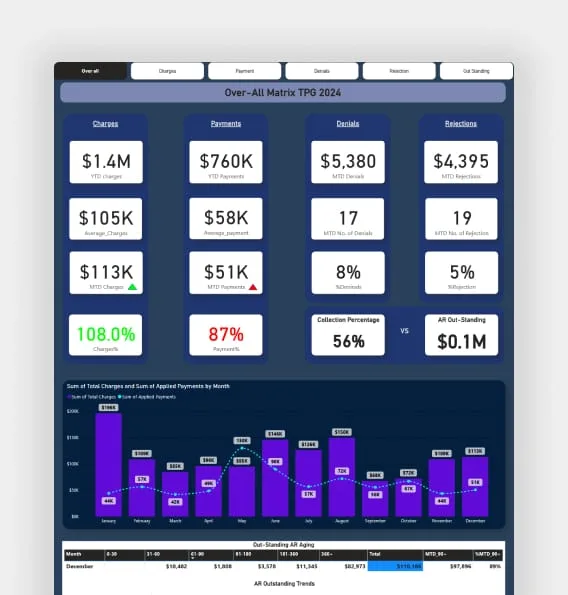

Many U.S. radiology groups now outsource teleradiology medical billing to India for efficiency and cost control. Our offshore delivery model provides:
Dedicated billing teams trained in U.S. radiology billing
Secure access to billing systems and payer portals
HIPAA-aligned processes and internal quality checks
Faster turnaround without expanding in-house staff
Outsourcing allows practices to focus on clinical care while maintaining control and visibility over their revenue cycle.
We support a wide range of providers, including:
Hospital-based radiology departments
Independent teleradiology groups
Imaging centers with remote reading services
Emergency and after-hours radiology coverage teams
Whether you manage a single practice or a multi-facility network, our workflows scale to match your operational needs.


Radiology billing requires precision, consistency, and deep knowledge of payer rules. Clients choose us because we offer:
Specialized expertise in teleradiology billing
A dedicated offshore billing team in India
Strong compliance with U.S. payer and CMS guidelines
Transparent reporting and denial tracking
Proven experience supporting U.S. healthcare providers
Whether you manage a single practice or a multi-facility network, our workflows scale to match your operational needs.
These checkpoints summarize published CMS guidance for teleradiology claims. The payer’s policy and the rule in effect for the date of service always apply.
For services paid under the Medicare Physician Fee Schedule, CMS states that the locality where the physician or supplier furnished the service determines payment.
CMS requires the address and ZIP code of the physician practice location on the claim form so the contractor can determine the appropriate payment locality.
Contractors apply the anti-markup payment limitation to both the technical and professional components of radiology diagnostic testing, other than screening mammography. This matters when interpretations are contracted out.
Under the anti-markup rules, the physician or supplier who performed the acquired component must be enrolled in Medicare, and no formal reassignment is necessary, though reassigned services are still subject to the limitation.
When contractors receive multiple claims for the same interpretation, they generally pay the first bill received. Physician specialty is not the primary factor in choosing which interpretation to pay.
Medicare law generally prohibits paying benefits due the person who furnished a service to any other person, subject to limited exceptions. CMS cites this against ordering physicians reassigning interpretation payments to a test supplier.

Who We Are?
We’re a team of Indian grounded experts streamlining medical billing
services to US-based healthcare professionals for more than 10 years. We strategise specialty-specific conditions and agree working windows with each client, offering customized services.

Speak to our Experts on
End-to-End Medical Billing Services provider across entire US.

We offer medical billing services that feed to different types of medical practices.
 Ambulance
 Cardiology
 Radiology
 Family Practice
 Ophthalmology
Whether you operate as an individual practitioner or manage a healthcare association with multiple sites, we offer a solution tailored to your requirements.
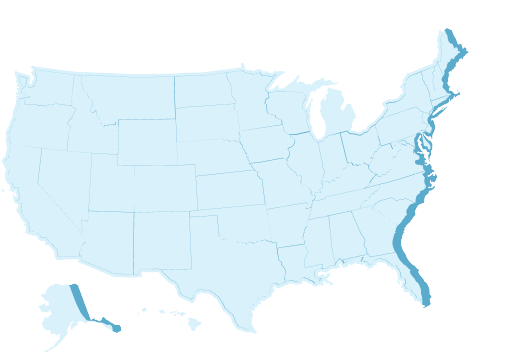
With over a decade of experience serving diverse specialties and provider groups across the U.S., we ensure you get local-quality support, regardless of location.
 Trusted by 140+ Providers in All 50 States HIPAA-Compliant Offshore Billing Experts Specialized Teams for State-Specific Billing Needs
Select your location below to learn how we support practices like yours.
To ensure top-notch service delivery, we use premier industry platforms similar to










Also, we offer support for custom APIs and integrations with customer systems, streamlining data synchronization and billing operations.

Discuss your teleradiology billing workflow, payer mix, backlog and reporting requirements with ICS. Compare a dedicated offshore FTE team with a percentage-based billing model, then choose the structure that fits your volume and control requirements.
What is teleradiology billing?
Teleradiology billing is the process of submitting claims for radiology interpretations performed remotely. It requires correct coding, clean documentation, and compliance with payer rules related to provider location and reporting standards.
How is teleradiology billing different from standard radiology billing?
The imaging service may be the same, but remote interpretation adds extra billing requirements. Modifiers, place-of-service rules, and credentialing alignment often determine whether a claim is paid or denied.
Which CPT codes are commonly used in teleradiology billing?
Teleradiology typically uses the same diagnostic imaging CPT codes as traditional radiology. The difference is usually in how claims are billed, including payer-required modifiers and supporting documentation.
Do Medicare and CMS allow billing for teleradiology services?
Yes. Medicare and CMS allow billing when claims follow required documentation, credentialing, and reporting standards, and the service meets CMS guidelines.
What documentation is required for teleradiology billing?
At minimum, documentation should include the final radiology report, interpreting provider details, date of service, and any required supporting notes that confirm the interpretation meets payer and CMS rules.
What are the most common denial reasons in teleradiology billing?
Denials often happen due to missing or incorrect modifiers, credentialing mismatches, place-of-service issues, and incomplete interpretation documentation.
Can teleradiology billing be outsourced to India?
Yes. Many U.S. providers outsource teleradiology billing to India to reduce overhead while maintaining accuracy, consistency, and turnaround time through structured quality checks.
Do you handle billing for both hospital-based and independent teleradiology providers?
Yes. We work with hospital radiology departments, emergency imaging coverage teams, imaging centers, and independent teleradiology groups.
How do you manage denials for teleradiology claims?
We review denial trends, fix root causes like coding or documentation gaps, submit appeals when needed, and adjust workflows to prevent the same denials from repeating.
How long does onboarding take for teleradiology billing services?
Onboarding typically takes 2–4 weeks depending on system access, payer portal setup, credentialing status, and reporting needs.
What is teleradiology under Medicare?
CMS describes teleradiology services as radiology services that do not require a face-to-face encounter with the patient and are furnished through a telecommunications system. Interpretation of an x-ray is listed as an example.
How many emergency room x-ray interpretations does Medicare pay?
Contractors generally pay for only one interpretation of an EKG or x-ray for an emergency room patient. A second one is paid only under unusual circumstances with documentation.
Tell us your specialty, payer mix and billing priorities.
Build a dedicated offshore team or align billing fees with collections.

“ Partnering with ICS transformed our revenue cycle. Claim approvals are faster, denials have dropped significantly, and we finally have clear visibility into our billing performance. ”
Founder, Sunrise Family Clinic

“ The ICS team is knowledgeable, responsive, and deeply committed to helping our practice grow. Their customized dashboard gives us real-time insights we never had before. ”
Orthopedic Surgeon, CareAxis Hospital
“ We were drowning in paperwork and delays before ICS stepped in. Their team streamlined everything, from eligibility checks to patient billing, and gave us time to focus on care. ”
Practice Manager, Lotus Women's Health Center
“ ICS is more than a billing service—they’re a strategic partner. Their compliance-first approach gives us confidence, and their results speak for themselves. ”
Pulmonologist, Airway Specialty Clinic
“ With ICS, we saw a 35% increase in collections within the first quarter. Their billing accuracy and follow-up on aging claims are unmatched. ”
Dermatologist, ClearSkin Clinic