

Microbiology billing and revenue cycle management require precision. From culture testing and sensitivity reports to molecular diagnostics, microbiology services involve detailed documentation, complex CPT coding, and strict payer rules. Even small errors can lead to denials, delays, or underpayments.
Microbiology laboratory billing involves precise test code selection, specimen handling documentation, and compliance with Medicare clinical laboratory fee schedules. ICS provides specialized microbiology billing services that help US clinical laboratories maximize reimbursement for culture, sensitivity, and molecular diagnostic testing.
Our RCM microbiology services help laboratories, hospitals, and diagnostic providers manage billing accurately while maintaining compliance. We focus on clean claims, proper code selection, and consistent follow-up so microbiology services are reimbursed correctly and on time.

RCM microbiology refers to managing the complete revenue cycle for microbiology laboratory services. This includes charge capture, coding, claim submission, denial management, and payment reconciliation for microbiology testing.
Microbiology billing covers bacterial and fungal cultures, sensitivity testing, parasitology, virology, molecular diagnostic testing (PCR-based), antigen detection testing, and point-of-care testing. The rapid evolution of molecular diagnostics has created many new CPT codes with complex bundling rules and LCD requirements. Medicare’s clinical laboratory fee schedule and coverage policies significantly impact reimbursement.
 Multiple test components under a single encounterBundled and unbundled CPT code rulesMedical necessity documentationPayer-specific laboratory billing guidelines
A structured RCM approach helps labs reduce write-offs and improve cash flow.
Microbiology CPT codes cover a wide range of laboratory services, including cultures, organism identification, and antimicrobial susceptibility testing. Accurate billing depends on proper code selection and documentation support.
CPT codes for microbiology cultures and testsCorrect reporting of qualitative and quantitative studiesModifier usage when applicableAvoiding duplicate or bundled code errorsEach claim is reviewed to ensure CPT coding aligns with test reports and provider documentation.

Our medical coders are proficient in all Microbiology CPT codes, including:
87070 — Culture, bacterial; any source except urine, blood or stool87086 — Culture, quantitative, urine87491 — NAAT, Chlamydia trachomatis, each specimen87651 — NAAT, Group A streptococcus87880 — Strep A assay, direct optical observation87806 — HIV-1 antigen and antibodies87633 — Respiratory virus panel, multiple targetsMicrobiology billing is fraught with complexities that can lead to claim denials and revenue loss. Common challenges include:
Rapid changes in molecular diagnostic CPT codes87070 — Culture, bacterial; any source except urine, blood or stoolLCD compliance for infectious disease testingBundling restrictions for panels vs individual testsProper documentation for NAAT and culture testingMedicare coverage determinations for novel tests
Our RCM microbiology services support laboratories and healthcare organizations through every billing stage.
Verification of test orders and resultsCPT and ICD-10 alignmentReview for payer-specific billing rulesClean claim preparationTimely submission to Medicare, Medicaid, and commercial payersFollow-up on unpaid or rejected claimsRoot-cause analysis for microbiology claim denialsCorrections and resubmissionsAR aging review and recoveryMicrobiology billing often faces challenges such as:
Root-cause analysis for microbiology claim denialsIncorrect CPT code combinationsMedical necessity denialsDelays due to lab-specific payer policiesOur RCM team focuses on preventing these issues before claims are submitted.

Microbiology billing is closely monitored due to the volume and cost of testing. We help providers stay compliant with:
 Medicare laboratory billing guidelinesCommercial payer microbiology policiesDocumentation and audit readiness requirements
This compliance-first approach reduces audit risk and improves reimbursement consistency.
Many laboratories and healthcare providers outsource microbiology RCM to improve accuracy and reduce administrative overhead. Our offshore RCM model supports U.S. providers with India-based teams trained in U.S. billing standards.
Dedicated microbiology billing specialistsHIPAA-aligned workflowsSecure system accessScalable support for high test volumes
 Strong understanding of microbiology billing workflowsAccurate CPT and ICD-10 coding supportProactive denial prevention and follow-upClear reporting and consistent communication
We work as an extension of your lab or billing team, not just a third-party vendor.
ICS microbiology billing specialists stay current with CPT code changes for molecular diagnostics and ensure LCD compliance for all laboratory tests. We accurately code test panels, apply bundling rules correctly, and provide comprehensive billing for clinical microbiology laboratories.
As a trusted offshore medical billing partner for US healthcare providers, ICS combines deep specialty knowledge with HIPAA-compliant processes, transparent reporting, and a dedicated FTE model that scales with your practice. Contact us today for a free consultation.

ICS microbiology billing specialists stay current with rapidly evolving molecular diagnostic CPT codes and LCD requirements for clinical laboratory testing. Our dedicated team ensures accurate test panel coding, bundling rule compliance, and maximum reimbursement for microbiology laboratories. Let ICS optimize your clinical lab billing performance.
These checkpoints summarize published CMS guidance for microbiology claims. The payer’s policy and the rule in effect for the date of service always apply.
Medicare pays for clinical diagnostic laboratory tests under the Clinical Laboratory Fee Schedule, a national schedule rather than a physician office charge. Microbiology cultures and related tests are billed against this schedule.
CMS describes clinical laboratory testing as examination of human specimens, and its categories of lab tests include microbiological testing alongside chemical, serological and hematological categories.
CMS states that the treating provider must be the one to order diagnostic lab tests, and it considers tests ordered by anyone else not reasonable and necessary. Confirm an order exists before billing cultures.
For laboratory claims, the date of service is generally reported as the date the specimen was collected, not the date the test was run or resulted.
When Medicare is not likely to cover a test, the provider gives the Advance Beneficiary Notice so the patient knows about possible financial liability before the service. Independent laboratories are among the required notifiers.
CMS explains that standing orders can be routine orders for a population of patients or recurring orders for one patient. The order or protocol and medical necessity must still be documented in the medical record.

Who We Are?
We’re a team of Indian grounded experts streamlining medical billing
services to US-based healthcare professionals for more than 10 years. We strategise specialty-specific conditions and agree working windows with each client, offering customized services.

Speak to our Experts on
End-to-End Medical Billing Services provider across entire US.

We offer medical billing services that feed to different types of medical practices.
 Ambulance
 Cardiology
 Radiology
 Family Practice
 Ophthalmology
Whether you operate as an individual practitioner or manage a healthcare association with multiple sites, we offer a solution tailored to your requirements.
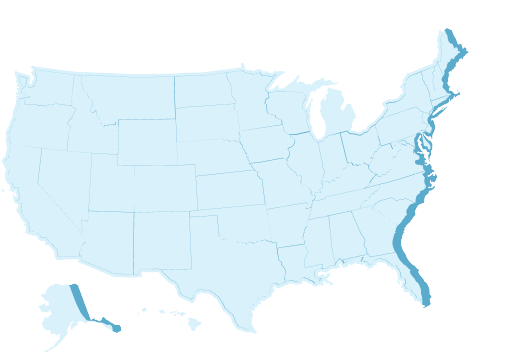
With over a decade of experience serving diverse specialties and provider groups across the U.S., we ensure you get local-quality support, regardless of location.
 Trusted by 140+ Providers in All 50 States HIPAA-Compliant Offshore Billing Experts Specialized Teams for State-Specific Billing Needs
Select your location below to learn how we support practices like yours.
To ensure top-notch service delivery, we use premier industry platforms similar to










Also, we offer support for custom APIs and integrations with customer systems, streamlining data synchronization and billing operations.

Discuss your Microbiology billing workflow, payer mix, backlog and reporting requirements with ICS. Compare a dedicated offshore FTE team with a percentage-based billing model, then choose the structure that fits your volume and control requirements.
Related specialties: pathology medical billing services.
What is RCM microbiology?
RCM microbiology manages the full billing and reimbursement process for microbiology laboratory services, from coding to payment posting.
Why is microbiology billing complex?
Microbiology billing involves multiple test components, bundled CPT rules, and strict payer guidelines, making accuracy critical.
How do you handle billing for respiratory virus panels?
Multi-analyte respiratory panels have specific CPT codes based on the number of targets. ICS selects the correct panel code based on actual tests performed.
What is an LCD and how does it affect lab billing?
Local Coverage Determinations specify which diagnoses support coverage for laboratory tests. ICS verifies appropriate ICD-10 codes for every lab test billed.
Do you handle billing for molecular diagnostic tests?
Yes, including Tier 1 and Tier 2 molecular codes, multianalyte assays, and emerging genomic testing codes.
Do you support microbiology CPT code billing?
Yes. We handle microbiology CPT coding, validation, and claim submission based on current payer rules.
Can microbiology RCM be outsourced?
Yes. Many labs outsource microbiology RCM to improve efficiency, reduce errors, and control costs.
Do you work with hospital and independent labs?
Yes. We support hospital-based labs, independent laboratories, and diagnostic service providers.
Does the date of service change for long collections or stored specimens?
Yes. A collection spanning more than 24 hours uses the date collection began, and a test on a stored specimen uses the date the specimen was obtained from the archives.
Can a laboratory choose the diagnosis code itself?
No. A laboratory may not report a diagnosis code on a claim without diagnostic information supplied by the ordering physician. It may use the physician's narrative statement or ask the physician for the information.
How does an ABN work when reflex testing may add tests?
If costs for possible additional tests cannot reasonably be estimated when the ABN is delivered, the notifier may enter the initial estimate and note that further testing is possible.
Tell us your specialty, payer mix and billing priorities.
Build a dedicated offshore team or align billing fees with collections.

“ Partnering with ICS transformed our revenue cycle. Claim approvals are faster, denials have dropped significantly, and we finally have clear visibility into our billing performance. ”
Founder, Sunrise Family Clinic

“ The ICS team is knowledgeable, responsive, and deeply committed to helping our practice grow. Their customized dashboard gives us real-time insights we never had before. ”
Orthopedic Surgeon, CareAxis Hospital
“ We were drowning in paperwork and delays before ICS stepped in. Their team streamlined everything, from eligibility checks to patient billing, and gave us time to focus on care. ”
Practice Manager, Lotus Women's Health Center
“ ICS is more than a billing service—they’re a strategic partner. Their compliance-first approach gives us confidence, and their results speak for themselves. ”
Pulmonologist, Airway Specialty Clinic
“ With ICS, we saw a 35% increase in collections within the first quarter. Their billing accuracy and follow-up on aging claims are unmatched. ”
Dermatologist, ClearSkin Clinic