


Pathology revenue cycles depend on more than a code and diagnosis. The billing record must connect the order, specimen, test or professional interpretation, performing and billing entities, service date, location, coverage and payer-specific claim requirements.
ICS provides pathology medical billing services for US pathology groups, laboratories and healthcare organizations through an India-based delivery team. We support defined billing functions or connected workflows with documented responsibilities, access controls, exception queues and reporting.

Pathology claims may involve a technical component, professional interpretation or a global service. Hospital, independent-laboratory and physician-office arrangements can create different responsibilities. Missing orders, incomplete specimen details, provider mismatches, unclear service dates and payer edits can delay a claim before or after submission.
A controlled workflow validates the source record before coding, separates clearinghouse rejections from payer denials and preserves the reason behind every unresolved balance.
The billing team should be able to trace the billed service to the applicable order, patient, specimen, performing location, provider and report. Coding decisions should use the current code set and payer guidance for the date of service; unsupported assumptions should move to a documented exception queue.


Pathology billing connects an order and specimen to the documented test or interpretation, the correct billing entity, current coding, a valid claim and traceable payment or denial follow-up. Read the full pathology billing workflow and the guide to common pathology billing challenges.
Start with consistent demographics, coverage, the applicable order, specimen details, service dates and the resulting report. A mismatch moves to a documented exception queue before claim creation.
Hospitals, independent laboratories, pathology groups and physician offices may be involved. Determine which entity performed and bills each component.
The record should support the service reported and link it to the patient, specimen, provider and date. Undocumented services are not inferred.
Ordering, referring, rendering and billing-provider fields, performing location, CLIA information, units, modifiers and component billing are reviewed when applicable.
Current CMS fee-schedule and coverage information is checked for the date of service instead of a prior year’s list.
Inaccurate patient information and missing pre-authorization can cause denials and rejections, so front-end verification is tightened and exceptions are worked from a named queue.
Review whether the record supports technical, professional or global billing, and whether the payer requires specific provider, location or enrollment information. CMS administers the Clinical Laboratory Improvement Amendments (CLIA) program for human laboratory testing in the United States, so practices and laboratories should verify the current certification and claim requirements that apply to the performed test.
CMS maintains the Clinical Laboratory Fee Schedule and publishes quarterly files. Inclusion of a code or payment amount does not by itself establish coverage, so the applicable coverage and payer rules must still be checked.
CMS also administers the Clinical Laboratory Improvement Amendments program for laboratory testing performed on humans in the United States. A billing workflow should keep laboratory certification and claim data aligned with the performing service and payer requirements.
A dedicated offshore FTE billing team can provide named capacity for stable claim volumes, defined queues and direct operational ownership. A percentage-based medical billing model may fit a broader billing scope where fees are aligned with collections.
Before selecting a model, compare locations, provider and lab entities, test mix, monthly volume, payer mix, systems, denial inventory, turnaround expectations and internal oversight.
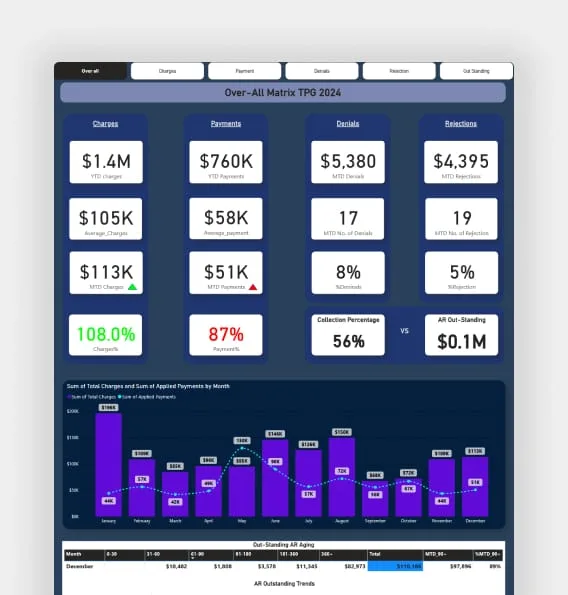
Tell us which entities, payers, systems and queues you want reviewed. ICS can map source inputs, claim handoffs, exception ownership and reporting before an engagement model is chosen.
Schedule a pathology billing consultation or explore all specialty medical billing services.
What is pathology billing in medical billing?
Pathology billing involves submitting claims for diagnostic services performed on tissue, blood, or other specimens using CPT and ICD-10 codes.
What is CPT code 88305 used for?
CPT code 88305 is commonly used for level IV surgical pathology procedures.
How are surgical pathology levels determined?
Levels I-VI are based on specimen type and complexity. ICS reviews documentation to assign the correct level for each specimen submitted.
How do you handle technical and professional component billing?
We review whether the documented service is billed as a professional, technical or global component based on the laboratory or facility arrangement and the applicable payer requirements.
Do you handle molecular diagnostics billing?
Yes, including Tier 1, Tier 2, and multianalyte assay billing with proper stacking rules and LCD compliance.
Can pathology billing be outsourced to India?
Yes. Many U.S. pathology labs outsource billing to India for cost efficiency and specialized expertise.
What causes denials in pathology billing?
Common causes include incorrect CPT selection, missing diagnoses, and mismatched technical/professional components.
Who bills the technical and professional components of a pathology service?
Pathology arrangements can involve hospitals, independent laboratories, pathology groups and physician offices. The billing team determines which entity performed and bills each component and whether the record supports technical, professional or global billing.
Why is CLIA information reviewed on pathology claims?
CMS administers the Clinical Laboratory Improvement Amendments program for human laboratory testing. Practices and laboratories should verify the current certification and claim requirements that apply to the performed test, and CLIA information is reviewed on claims when applicable.
Tell us your specialty, payer mix and billing priorities.
Build a dedicated offshore team or align billing fees with collections.

“ Partnering with ICS transformed our revenue cycle. Claim approvals are faster, denials have dropped significantly, and we finally have clear visibility into our billing performance. ”
Founder, Sunrise Family Clinic

“ The ICS team is knowledgeable, responsive, and deeply committed to helping our practice grow. Their customized dashboard gives us real-time insights we never had before. ”
Orthopedic Surgeon, CareAxis Hospital
“ We were drowning in paperwork and delays before ICS stepped in. Their team streamlined everything, from eligibility checks to patient billing, and gave us time to focus on care. ”
Practice Manager, Lotus Women's Health Center
“ ICS is more than a billing service—they’re a strategic partner. Their compliance-first approach gives us confidence, and their results speak for themselves. ”
Pulmonologist, Airway Specialty Clinic
“ With ICS, we saw a 35% increase in collections within the first quarter. Their billing accuracy and follow-up on aging claims are unmatched. ”
Dermatologist, ClearSkin Clinic